
Tobacco Industry Faces Renewed Layoff Threats Amid Proposal to Ban Additives
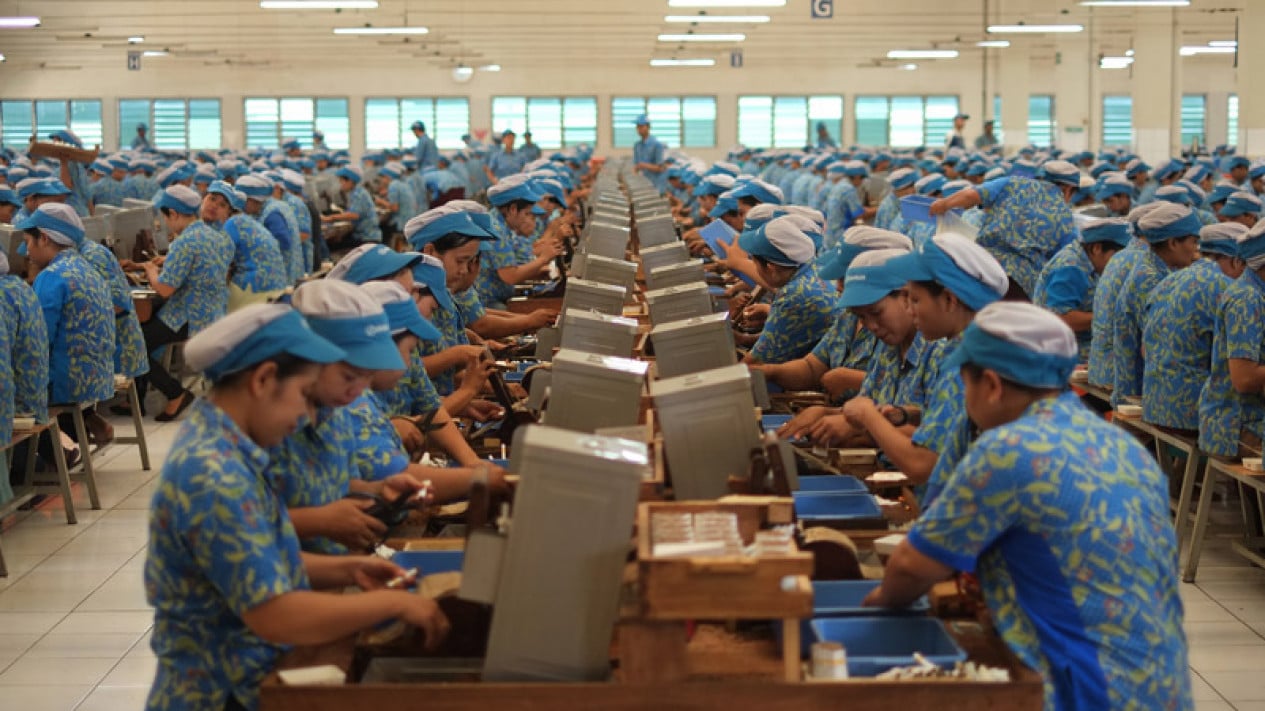
The Tobacco Products Industry (IHT) continues to face uncertainties in policy direction that are increasingly strengthening, seemingly pushing efforts to eliminate an industry long considered strategic.
Previously, control efforts were implemented through annual excise tax increases, but over the past two years, these have become more extreme with tighter restrictions on promotion and sales, discussions on plain packaging, and the latest, a ban on additional flavouring substances in conventional cigarettes and electronic cigarettes.
The issue of banning additional flavouring substances first emerged in Article 432 of Government Regulation (PP) No. 28 of 2024. This regulation mandates the Ministry of Health to further detail the prohibited additional ingredients, which in its draft include food-grade substances such as fruit extracts, menthol, sugar, and spices.
The impact is certainly significant. Indonesia’s market, dominated 97% by kretek, will be hit hard, given that kretek production depends on mixtures of additional ingredients that are the hallmark of each brand.
General Chairman of the Indonesian Cigarette Manufacturers Association (GAPPRI), Henry Najoan, stated that various fiscal and non-fiscal policies emerging in rapid succession, such as aggressive excise increases and plain packaging discussions, are now exacerbated by the ban on additional ingredients.
“The planned policy to ban additional ingredients and limit tar and nicotine will kill the uniqueness of kretek, which greatly depends on domestic tobacco and cloves,” said Henry in his statement on Monday, 11 May 2026.
He explained that one crucial point highlighted is the absence of official government infrastructure in the form of accredited laboratories to test all prohibited additional ingredients, thus creating unfairness for legal producers.
“The existence of independent, accredited laboratories recognised internationally is crucial to protect the integrity of legal IHT product brands and ensure that every policy taken by the government is truly based on scientific evidence, not assumptions or interests of certain groups,” he said.
Executive Director of INDEF, Esther Sri Astuti Soeryaningrum Agustin, highlighted the high economic risks behind the health policy ambitions. She assessed that banning additional ingredients will create shocks on the supply side and damage the absorption of local commodities.