
Tobacco Industry Criticises Government Proposal to Limit Nicotine and Tar Content
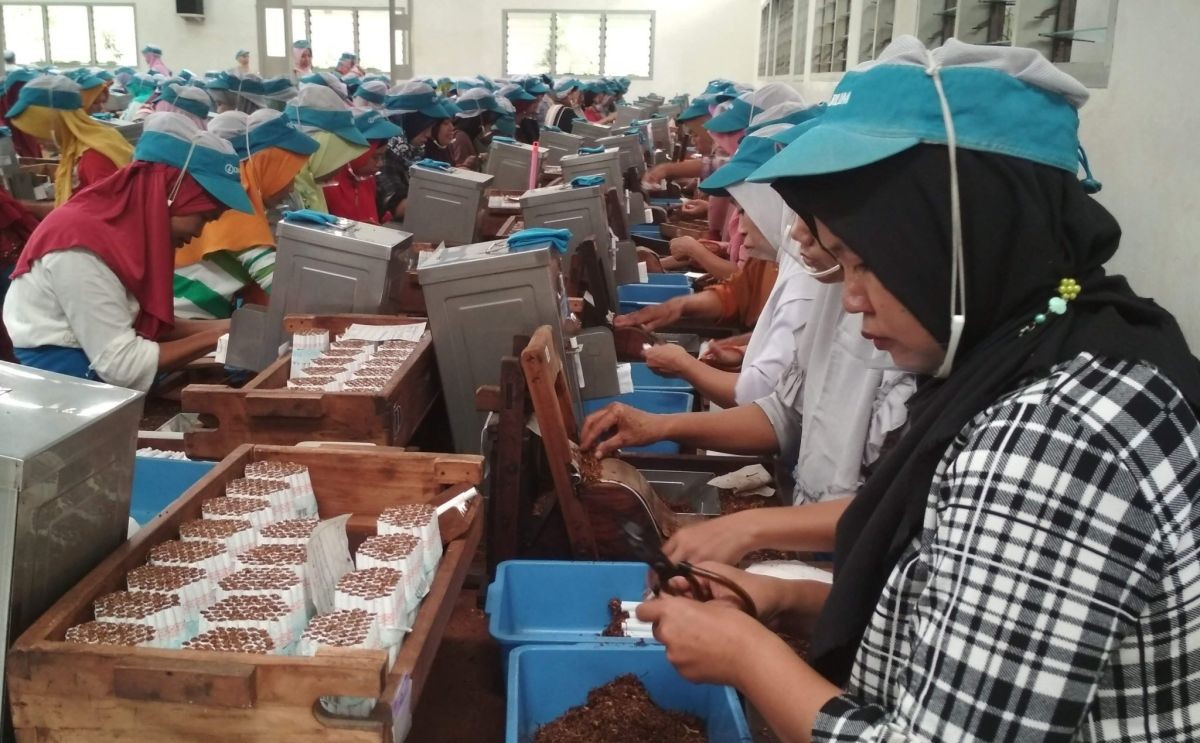
The government’s proposal to limit nicotine and tar content in tobacco products, outlined as a provision in Government Regulation (PP) Number 28 of 2024 implementing Law Number 17 of 2023 on Health, has drawn criticism from various sectors for ignoring Indonesia’s social and economic realities. Widespread objections emerged during public consultation forums on determining maximum limits for nicotine and tar, initiated by the Coordinating Ministry for Human Development and Culture (Kemenko PMK).
Multiple stakeholders attending both online and in-person sessions raised concerns, arguing that rigid nicotine and tar restrictions pose a genuine threat to the legal tobacco industry and the welfare of millions dependent on the tobacco products sector. Participants from farming communities, experts, and industry associations contended that proposed nicotine and tar limits failed to account for impacts on the broader tobacco ecosystem. They alleged that regulators established thresholds without adequate field research into local tobacco characteristics, relying solely on health literature reviews.
Eripson Sinaga, Assistant Deputy for Agro, Chemical, Pharmaceutical and Textile Industries at the Coordinating Ministry of the Economy, called for strengthened economic impact assessments to be prioritised before regulation implementation. This should include mitigation strategies for regions highly dependent on the tobacco industry. He emphasised the need for balanced policy approaches that protect employment whilst maintaining national economic stability amid global economic uncertainty.
“The goal of protecting public health must be achieved, but simultaneously economic resilience, the sustainability of labour-intensive industries, and the welfare of farmers and workers must also be preserved,” he stated.
Heru Wardhana, a participant in the consultation, highlighted a fundamental gap in the discussion materials, noting that naturally occurring nicotine levels in tobacco plants are heavily influenced by Indonesia’s geographic and climatic factors. He criticised the absence of agricultural expertise in the assessment, arguing this undermined the regulation’s purpose.
“The presentation only outlined nicotine’s negative impacts without discussing how nicotine content forms naturally in tobacco. The recommendations therefore fail to address the underlying ‘how’ and ‘why’ but only emphasise negative effects,” he said.
Concerns also emerged about potential weakening of the compliant legal cigarette industry. If tar and nicotine limits are set too low, analysts predict massive market shifts, with consumers downtrading to cheaper products, often illegal ones. Such intervention could paradoxically backfire on state revenues and regulatory compliance. “If legal products are forced to reduce tar and nicotine, consumers will not stop smoking but will seek cheaper illegal cigarettes that ignore these limits to obtain their preferred taste at lower cost,” industry representatives warned.
They further argued that imposing international cigarette standards on domestic tobacco products would devastate the economy, particularly smallholder farmers, as domestic manufacturers would reduce purchases of locally-grown tobacco with naturally higher nicotine content, forcing producers to import lower-nicotine varieties.
Against the backdrop of tobacco excise contributions reaching hundreds of trillions of rupiah and the involvement of millions of workers, the tobacco products industry faces increasingly complex policy pressures. Industry players are urging Finance Minister Purbaya Yudhi Sadewa to implement special, more affordable excise tariff schemes for tobacco products.
The tobacco products industry represents a complex sector with substantial contributions to state revenues, employment absorption, and small-to-medium enterprises. Local government coordination meetings, including that held by Pamekasan Regency involving local tobacco industry players and senior officials, have been convened to discuss excise policy matters.
Indonesian local tobacco typically contains nicotine levels between 2 and 8 percent. Recent enforcement actions by the Kudus Customs Office recorded 164 seizures involving 22.1 million illegal cigarette sticks valued at Rp 30.46 billion with estimated state losses of Rp 21.18 billion. Separately, discussions on Jakarta’s draft smoking-free zone regulation during recent provincial assembly plenary sessions have drawn serious scrutiny.