
Tobacco Industry and Farmers Protest Over Proposed Nicotine and Tar Limits
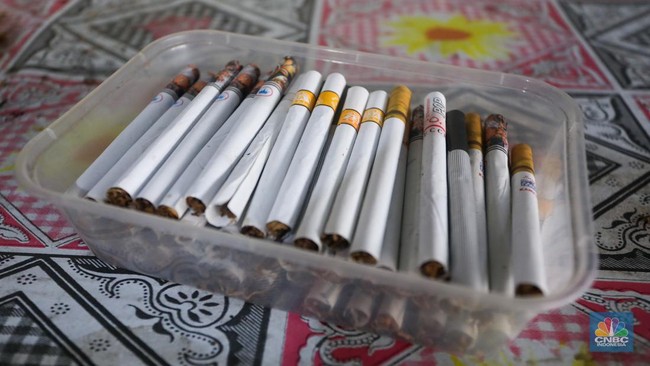
Multiple organisations representing tobacco farmers, workers, and the tobacco products industry have jointly rejected the government’s proposed regulations to set maximum nicotine and tar limits in cigarettes, which are currently being reviewed by the government. The regulation, derived from Government Regulation No. 28 of 2024, is considered potentially disruptive to Indonesia’s tobacco industry ecosystem across the entire value chain.
Under the draft regulation, the government has set maximum limits of 1 milligram (mg) of nicotine and 10 mg of tar per cigarette.
The rejection was expressed during a joint forum that brought together representatives of tobacco farmers, clove farmers, cigarette factory workers, and industry associations. They argue that the proposed policy fails to account for the real conditions of Indonesia’s clove cigarette industry, which differs significantly from other countries.
Agus Parmuji, Chairman of the Indonesian Tobacco Farmers Association (APTI), stated that for years tobacco farmers have lacked comprehensive regulatory protection. He contended that the latest proposed regulation further narrows the space for farmers to operate.
“We see the proposed regulation from the Coordinating Ministry for Human Development, Culture, and Education regarding the implementation of Government Regulation 28 of 2024 as a forced regulation that does not accommodate all interests, particularly the sustainability of tobacco farming in Indonesia,” Agus said at a press conference in Jakarta on Tuesday, 10 March 2026.
He explained that the character of Indonesia’s tobacco farming has close ties to rural economies. Therefore, policies that suppress this sector are considered to have broad impacts on rural communities’ livelihoods.
“Tobacco farming in Indonesia is laden with rural economic interests. When the government forces this regulation, what happens is a wave of economic destruction at the village level,” he said.
Beyond tobacco farmers, clove farmers also voiced objections. Ketut Budhyman Mudara, Secretary-General of the Indonesian Clove Farmers Association, stated that the commodity is a primary ingredient in clove cigarettes, which dominate the domestic market.
“In Indonesia, approximately 97% of our cigarette production is clove cigarettes, whose main ingredients are tobacco and cloves. If there are restrictions on tar and nicotine levels, then the survival of clove farmers will be threatened,” Ketut said.
He added that Indonesia’s annual clove production of approximately 120,000 to 140,000 tonnes is almost entirely absorbed by the clove cigarette industry. Should cigarette production decline because of the new regulation, farmers will lose their primary market.
Ketut also reminded that the clove cigarette industry has a long history in the national economy and has become part of Indonesia’s industrial identity.
“We hope the government will view this policy in a more holistic and prudent manner, so that the resulting regulation remains balanced for all parties,” he said.
From the industry perspective, Henry Najoan, Chairman of the Union of Indonesian Cigarette Manufacturers (GAPPRI), believes that the new policy could cause significant contraction in the tobacco products industry.
“If the maximum limits on tar and nicotine are implemented as proposed, this industry will experience very significant contraction because local tobacco has high nicotine characteristics,” Henry said.
He emphasised that the clove cigarette industry is a labour-intensive sector with high domestic component content. Therefore, the government is urged to reconsider the proposed regulation.
“We agree to reject the derivative regulation of Government Regulation 28 of 2024 such as restrictions on tar and nicotine, bans on additional materials, and uniform packaging because these can strike the national tobacco products industry,” he said.