
TOBA Accounting Loss in 2025 as it Pivots to Green Business
PT TBS Energi Utama Tbk (TOBA) reported a net loss of US$162 million in the 2025 financial year. However, this loss is primarily attributed to accounting adjustments arising from the company’s business transformation towards a more sustainable energy portfolio.
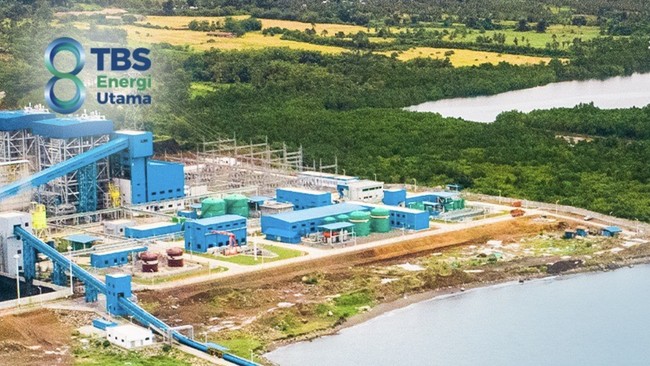
The largest impact on the net loss came from the divestment of two coal-fired power plant (PLTU) assets: PT Minahasa Cahaya Lestari and PT Gorontalo Listrik Perdana. Under accounting standards for Independent Power Producer (IPP) projects with Build-Own-Operate-Transfer (BOOT) schemes, previously recorded asset values included components for future revenue that had not yet been realised. When these assets were disposed of, the unrealised revenue component had to be written off from the books, resulting in a non-cash loss recorded in the profit and loss statement.
Ajaib Sekuritas analyst Rizal Rafly assessed that the loss does not reflect a deterioration in the company’s fundamentals. “This loss is essentially an accounting impact from asset divestment. There was no actual cash outflow from the transaction; rather, this divestment strengthens TBS’s cash position and accelerates the transition of its business to a green energy portfolio,” he said.
Beyond the accounting impact from PLTU divestments, the decline in global coal prices throughout 2025 also pressured the mining segment’s performance. Nevertheless, the company maintained an adjusted EBITDA of US$47.2 million operationally, with a cash balance of US$102.3 million—an increase of 15% from 2024.
As the transformation proceeds, TBS’s business composition is increasingly shifting towards the sustainable sector. The waste management segment generated revenue of US$155.4 million, accounting for approximately 41% of the company’s consolidated total revenue.
Operationally, TBS’s waste management business in Singapore and Indonesia manages approximately 970,000 tonnes of waste annually and serves more than 470,000 customers and thousands of companies. Through its subsidiary CORA Environment, TBS is developing a regional waste management ecosystem. Asia Medical Enviro Services (AMES) processes approximately 4,600 tonnes of medical waste, whilst ARAH Environmental manages over 11,000 tonnes of medical and domestic waste in Indonesia.
Throughout 2025, TBS undertook portfolio restructuring through strategic repositioning, reducing exposure to coal and coal-fired power generation businesses. Simultaneously, the company strengthened development of three future business pillars: waste management, renewable energy, and electric vehicles.
TOBA’s Senior Vice President of Corporate Strategy & Business Development, Nafi Sentausa, stated that the company is developing the Sumberjaya Mini Hydroelectric Power Plant (PLTMH) in Lampung with a capacity of 6 megawatts (MW), which commenced commercial operations in January 2025.
Beyond this, TOBA is accelerating construction of its floating solar power plant (PLTS) project in Batam with a capacity of 46 megawatts peak (MWp). The project is targeted to begin contributing electricity in the fourth quarter or by the end of 2026.
Most recently, in the waste management sector, which is now the largest revenue contributor after coal, TOBA has evolved into an integrated waste processing giant through acquisitions completed in 2023 and early 2025.
“Approximately 1 million tonnes of waste that we manage annually, in both Singapore and Indonesia. The operational metrics are also quite healthy, with all utilisation rates above 80%,” Nafi explained at a media discussion at TBS Energi Utama’s office in Jakarta on Monday, 9 March 2026.
The waste managed is diverse, ranging from domestic, commercial, and medical waste to hazardous materials and material recovery facilities (sorting).
“The waste management business is currently on the right track to become a new growth engine for TOBA. The market is also anticipating a greater contribution from the electric vehicle and renewable energy segments, as these two sectors have strong long-term growth prospects,” he said.
Separately, the development of the electric vehicle ecosystem is beginning to show progress. Electrum has recorded the operation of over 7,500 electric motorcycles on the road and is developing approximately 364 battery swap stations.
Meanwhile, in the renewable energy sector, the mini hydroelectric project in Lampung with a capacity of 6 MW has begun operating since 2025. The floating solar power project in Batam with a capacity of 46 MWp is currently under construction with a target to commence operations by the end of 2026.
The non-cash loss is a consequence of the portfolio restructuring process. “This type of accounting loss typically continues to be recorded through the end of the financial year. Once the non-cash impact is complete, the company has the potential to return to profitability as contributions from the waste management business and other green sectors increase,” he said.