
To Reduce Subsidies, KCI Considers Priority Commuter Rail Service and Fare Increases
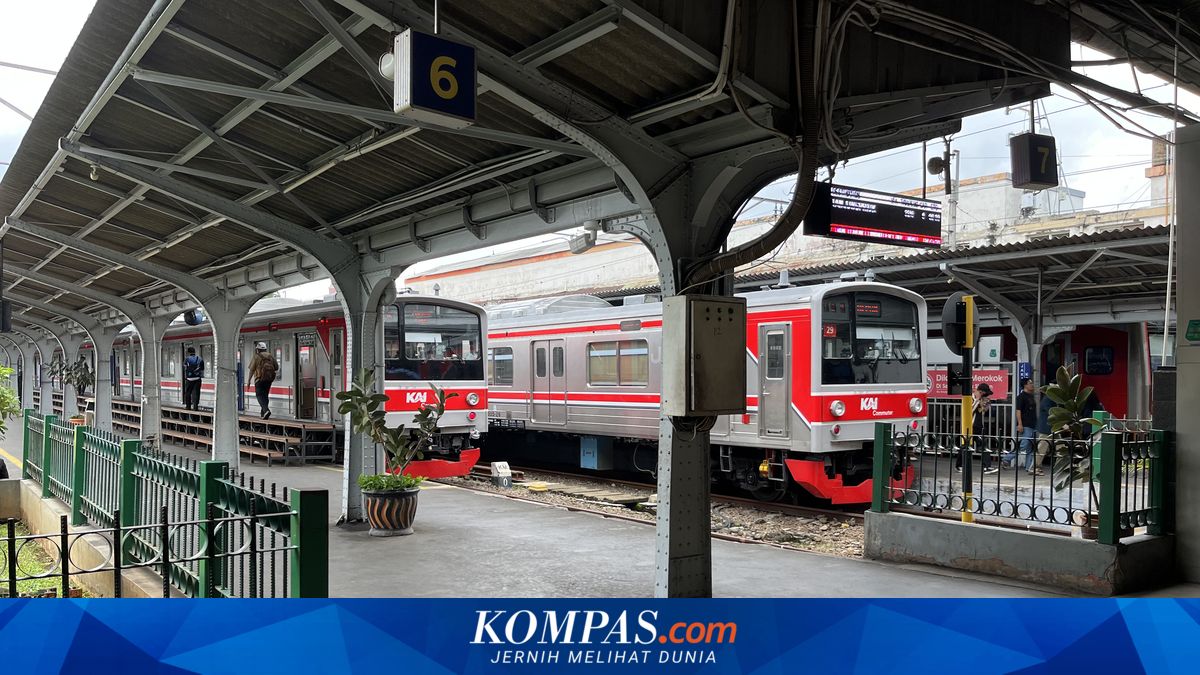
JAKARTA — PT Kereta Commuter Indonesia (KCI) is currently examining proposals for operating a priority commuter rail service as one option to reduce the burden of commuter rail fare subsidies that have been borne by the government through the state budget.
KCI Chief Executive Officer Mochamad Purnomosidi stated that the proposal is still under review and has not yet become a final decision.
“We are examining it first. But clearly there is an intention to reduce subsidies. One of the ways is through a priority KRL service,” said Purnomo at KCI Hall, Juanda, Central Jakarta, on Monday (8 March 2026).
However, he stressed that both options remain as alternatives and have not yet become a final decision.
“It is also possible that the priority KRL service may not proceed, but we raise the tariff for the economy KRL. And there are still other alternatives,” said Purnomo.
Purnomo explained that if the proposal is realised, the priority KRL service would have faster travel times compared to regular KRL.
This would be possible because the train would not stop at every station, but only at stations with large passenger volumes.
“So it would only stop at busy locations. We are currently working on this plan. The intention is how we can reduce the subsidy,” said Purnomo.
In addition, the priority KRL fares are also planned to be more expensive than the regular KRL service.
“It is like the express trains we had before to follow the economy trains. Now, we are trying not to follow, but relatively faster,” he added.
Commuter rail passengers are currently charged Rp 3,000 for the first 25 kilometres, then Rp 1,000 for each subsequent 10 kilometres.
The fare subsidy is provided by the government through a public service obligation (PSO) scheme managed by the Ministry of Transportation. So far, increases in KRL operating costs have not been matched by fare adjustments.
If this situation continues, the government’s subsidy burden has the potential to increase further and burden the State Revenue and Expenditure Budget (APBN).
In 2024, the Ministry of Transportation also previously proposed a new subsidy scheme to better target public transport users.