
To Curb Tax Leakage, Bamsoet Urges Foreign Airlines to Appoint GSA in Indonesia
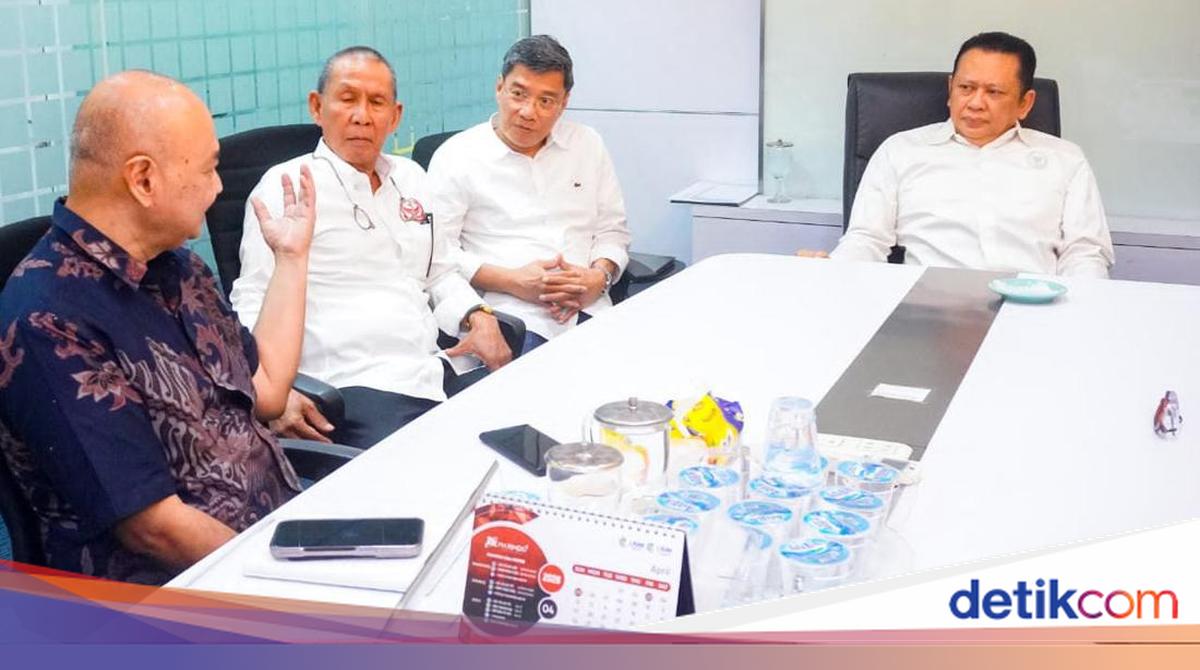
Member of the Indonesian House of Representatives, Bambang Soesatyo, is urging the government to promptly improve the working relationship between foreign air transport companies and Indonesian legal entities, particularly General Sales Agents (GSAs) in Indonesia.
Bamsoet stated that this step is crucial to protect domestic businesses while optimising the state’s revenue potential from the international aviation sector, which has so far seen significant ‘leakage’ abroad.
“So far, many foreign airlines have been selling tickets in Indonesia without appointing an official GSA. Their financial transactions flow directly abroad, causing the state to lose a substantial tax potential and weakening consumer protection,” said Bamsoet in his statement on Thursday (16/4/2026).
He conveyed this after receiving the management of the Foreign Airlines General Sales Agent (FAGA) Indonesia in Jakarta on Thursday (16/4/26).
This 15th People’s Consultative Assembly (MPR) Chairman explained that global aviation industry data shows the value of international flight ticket transactions reaching hundreds of billions of dollars annually. In Indonesia, referring to post-pandemic recovery trends, the number of international passengers in 2025 is estimated to exceed 70 million, with significant growth on Asian and Middle Eastern routes.
However, some foreign airline ticket transactions are still conducted through overseas digital platforms, so payments flow directly to foreign accounts and are not recorded in the national financial system. As a result, tax revenue potential, including VAT and income tax, is not optimal, and oversight of transactions is weakened.
“The government must require every foreign air transport company to appoint one Indonesian legal entity as a GSA. This is important so that all ticket sales activities are recorded, transparent, and provide real contributions to the national economy,” Bamsoet emphasised.
This Deputy General Chairman of the Golkar Party also stressed that the presence of a GSA is not merely a formality but an important instrument in creating a fair business ecosystem.
A GSA acts as an extension of the airline in marketing, ticket distribution, and after-sales services. Without a GSA, domestic players such as travel agents and ticket distributors lose business opportunities, while the state loses control over transactions.
“In addition to the obligation to appoint a GSA, the government also needs to regulate fair commission standards, including minimum overriding commissions and sales commissions through the IATA system, for both GSAs and travel agents,” Bamsoet explained.
Furthermore, Bamsoet highlighted confusing ticket price components that often baffle the public, such as non-transparent fuel surcharges or YQ.
According to him, simplifying the ticket price structure to base fare and government taxes would increase transparency and public trust, while also facilitating fiscal oversight.
“Applying Indonesian law as the basis for resolving disputes between foreign airlines and GSAs must also be enforced. Our business players should not be disadvantaged by having to submit to foreign jurisdictions,” Bamsoet elaborated.
On that occasion, Bamsoet also emphasised the importance of implementing non-tax state revenue (PNBP) obligations for SOTO (Sold Outside Ticketing Outside) sales schemes, which often escape state obligations.
Additionally, regulations on bank guarantees from domestic banks are considered important to ensure legal certainty and transaction security.
“Foreign ownership in GSAs should also be limited to a maximum of 49 percent. This is crucial to maintain national economic sovereignty and ensure that Indonesian business players remain the hosts in their own country,” Bamsoet concluded.