
To Accelerate Sumatra's Recovery, PRR Task Force Head Urges Inter-Regional Synergy
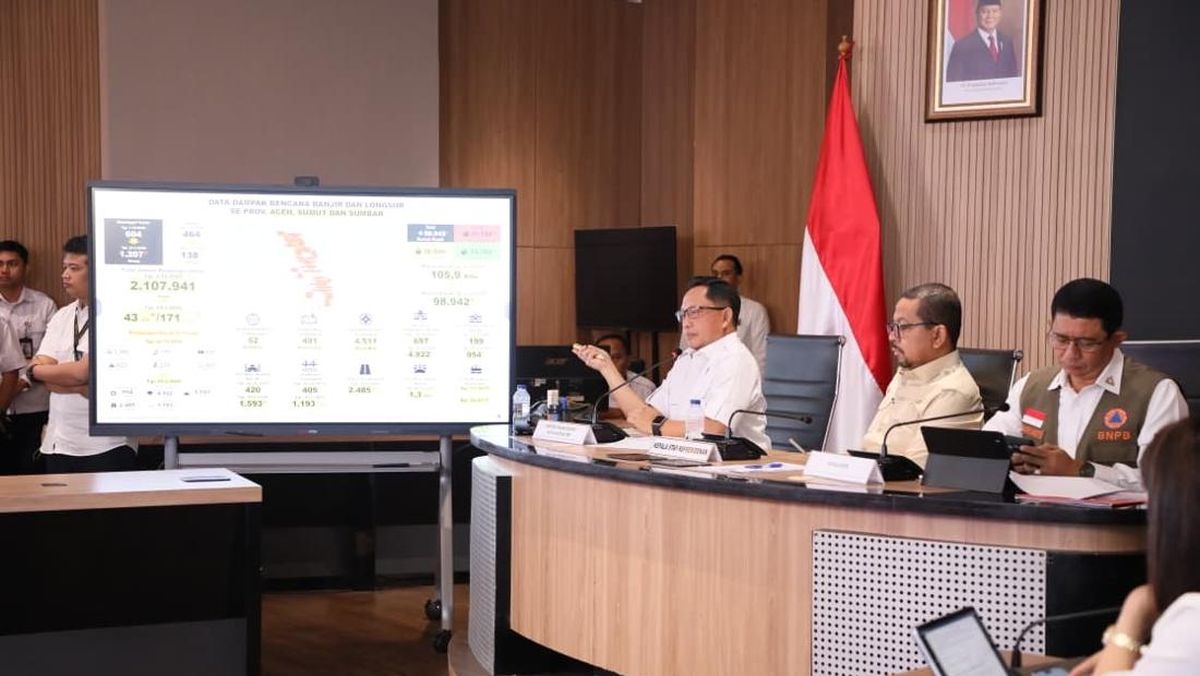
The Head of the Task Force for Accelerating Rehabilitation and Reconstruction (Kasatgas PRR), Muhammad Tito Karnavian, stated that the central government continues to encourage local governments (Pemda) to assist neighbouring regions severely impacted and heavily damaged by the recent Sumatra disaster. Tito emphasised that the recovery from the hydrometeorological disaster in Sumatra is being carried out through strengthening collaboration between local governments. “From the latest update this morning, there are already three regions that have made commitment statements to help the affected areas, namely Simalungun, Asahan, and Pematangsiantar,” Tito said during a press conference at the Presidential Staff Office in Jakarta on Wednesday (25/3). He explained that this collaboration initiative emerged following an additional allocation of transfer funds to regions for accelerating disaster response from the President amounting to Rp10.6 trillion. The budget is intended for Aceh Province, North Sumatra, and West Sumatra, which will then be distributed to all districts/cities in the three provinces, including areas not directly affected. To this end, the central government urges regional heads in relatively safe or unaffected areas, but still receiving budget allocations, to be willing to channel part of their funds in the form of grants to neighbouring regions. Tito assessed that this step is important to strengthen the capacity of regions with high levels of damage and limited budgets, such as Aceh Tamiang Regency. “We hope that these heavily affected regions will have additional budgets so they can work to resolve the issues,” Tito explained. The target completion time for rehabilitation and reconstruction post-disaster in the three related provinces is estimated to take up to three years. The development focus includes providing permanent housing (huntap), building permanent infrastructure such as bridges and roads that are currently still temporary, and restoring basic service facilities. “This process will take time that is not short, not just a few months, but could reach two to three years,” Tito concluded.