
TNI Commander Institutes Alert Status 1 for All Forces
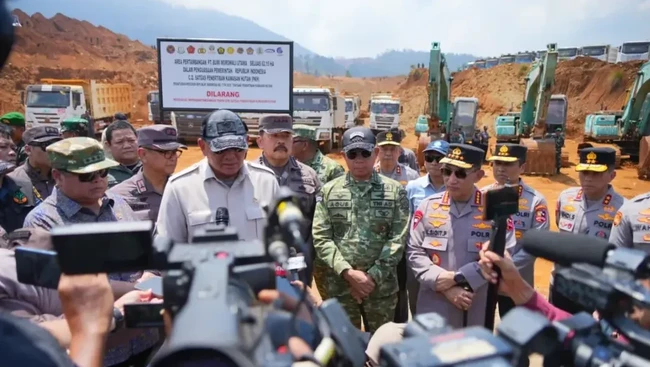
Jakarta — The Commander of the Indonesian Armed Forces, General Agus Subiyanto, explained the rationale behind implementing Alert Status 1 across all TNI personnel. The directive was issued through Official Telegram Number TR/283/2026 dated 1 March 2026.
This action comes amid escalating conflict in the Middle East. According to Agus, implementing Alert Status 1 is standard practice within military operations.
“Alert Status 1 is a military term, a common military terminology,” said Agus following the Nuzulul Qur’an commemoration ceremony at the State Palace in Jakarta on Tuesday, 10 March 2026.
“I have already implemented Alert Status 1 in units, particularly the Rapid Reaction Force for Disaster Management. So each regional military command has one battalion on Alert Status 1 should there be a natural disaster in its area,” he added.
Agus further explained that implementing Alert Status 1 was intended to test the readiness of TNI personnel. On the same occasion, Agus also addressed questions regarding tactical vehicles and military personnel in the National Monument (Monas) area.
“Yes, we are testing personnel and equipment readiness. So it is a normal matter,” he said.
The order, signed by the Operations Assistant to the TNI Commander, Lieutenant General Bobby Rinal Makmun on 1 March 2026, contains seven directives for all military branches:
The Main Command of Operations (Pangkotamaops) TNI was instructed to mobilise personnel and major weapons systems. They were also ordered to conduct patrols at strategic vital facilities and economic hubs, including airports, seaports and inland waterways, railway stations, bus terminals, and critical infrastructure such as the state electricity company headquarters.
The National Air Defence Command (Kohanudnas) was ordered to conduct early detection and continuous 24-hour aerial surveillance.
The Strategic Intelligence Agency (Bais) TNI was instructed to direct defence attachés in countries affected by the conflict to document and map the situation of Indonesian nationals. Additionally, Bais was asked to prepare evacuation plans if necessary, coordinating with the Ministry of Foreign Affairs and Indonesian diplomatic missions in the relevant countries.
Jakarta Regional Military Command (Kodam Jaya) was instructed to intensify patrols at strategic vital facilities and embassy areas across the Jakarta region to maintain security stability.
Military intelligence units were ordered to conduct early detection and prevention of potential security threats at vital facilities and embassy areas.
All TNI central implementation bodies (Balakpus) were instructed to implement readiness in their respective units.
All developments in the field were to be reported immediately to the TNI Commander.