
TMII Breaks MURI Record with 1,000 Dancers
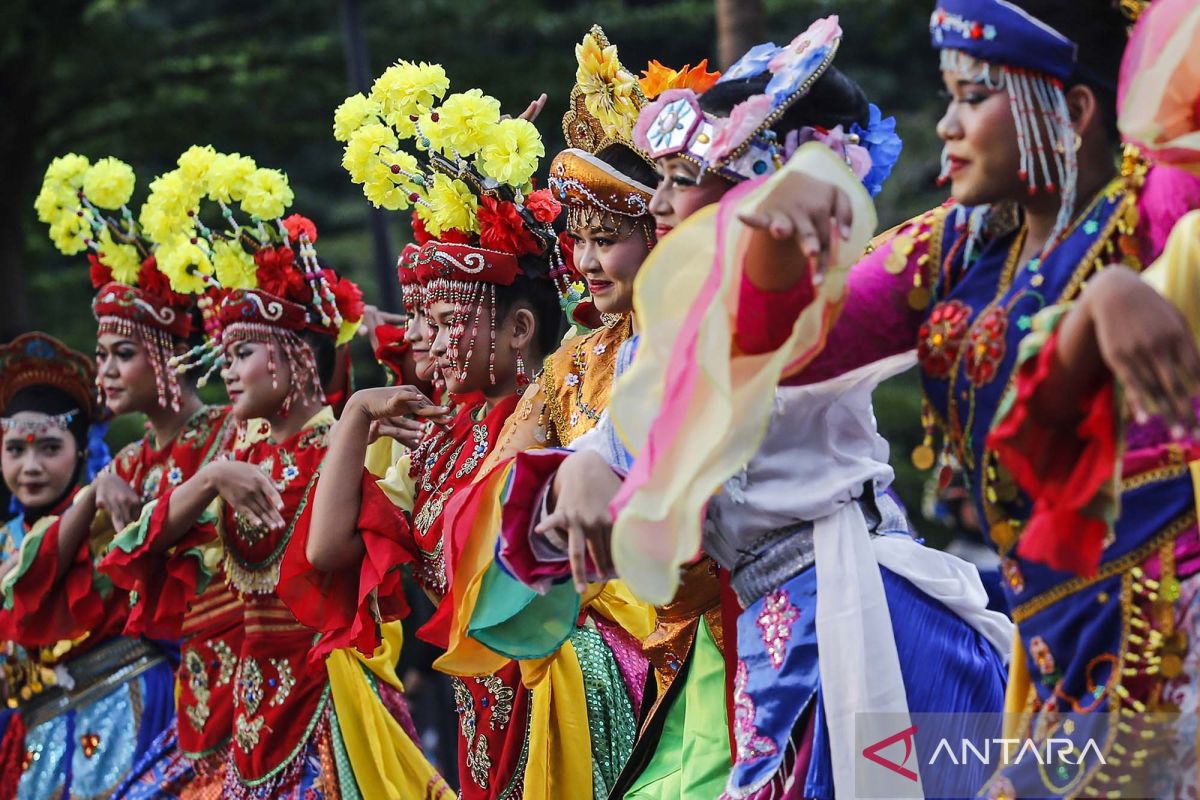
The “Gelora Nusantara” cultural event held at Taman Mini Indonesia Indah (TMII) has successfully recorded a Museum of Indonesian World Records (MURI) entry as the Dance Performance from the Most Regional Origins in Medley Format (34 Provinces) with 1,000 dancers.
The event was organised to commemorate the 51st Anniversary of TMII in Jakarta on Saturday (18/4).
“This achievement marks an important milestone in efforts to preserve and promote Nusantara culture at the national level,” said Acting Director of TMII, Ratri Paramita, in a statement received in Jakarta on Sunday.
The event is a special programme of TMII, supported by the TMII Regional Pavilions and the Dance Teachers Communication Forum.
“Through this collaboration, Gelora Nusantara is not only a performance platform but also a medium for education and promotion of Indonesian arts and culture to the wider public,” she said.
Ratri also stated that this MURI record aligns with the theme of TMII’s 51st Anniversary, “Preservation of Culture Without End”. “Through Gelora Nusantara, we aim to affirm that cultural preservation is not a one-off effort but a continuous process that must be kept alive,” she added.
According to her, the collaboration of more than 1,000 dancers from 34 provinces serves as a tangible symbol that Indonesia’s cultural diversity can be maintained collectively, inclusively, and sustainably.
“We want culture to feel close and not exclusive, but rather as part of everyday life. TMII strives to provide more inclusive, interactive cultural experiences that can be enjoyed by all segments of society, especially the younger generation,” said Ratri.
This MURI record achievement also strengthens TMII’s position as a premier cultural destination that not only showcases the richness of traditions but also serves as a living space for interaction, learning, and dynamic, contextual cultural development.
“With the staging of Gelora Nusantara, we hope to continue inspiring the public to love and preserve Indonesian culture, while expanding the reach of cultural promotion to the global level,” she explained.
More than 1,000 dancers participated in the event, presenting characteristic dances from 34 provinces in Indonesia sequentially, from the western to the eastern regions of Nusantara.
The variety of dances performed included Tari Bungong Jeumpa (Aceh), Tari Sinanggar Tulo (North Sumatra), Tari Tang Tong Tong (West Sumatra), Tari Lancang Kuning (Riau), Tari Bedana (Lampung), Tari Janger (Bali), to dances from the eastern regions such as Tari Yamko Rambe Yamko (Papua) and Tari E Mambo Simbo (West Papua).
From Java Island, iconic dances such as Tari Rek Ayo Rek (East Java), Tari Suwe Ora Jamu (DI Yogyakarta), Tari Cublak-Cublak Suweng (Central Java), Tari Manuk Dadali (West Java), and Tari Ondel-Ondel (DKI Jakarta) were also featured.
The entire series of performances culminated in a massive medley dance performance of “Kicir-Kicir” performed collectively by all the dancers, creating a harmony of movements that depicts the spirit of unity in Indonesia’s cultural diversity.