
Tito Outlines Progress on Post-Disaster Rehabilitation in Aceh, North Sumatra, and West Sumatra
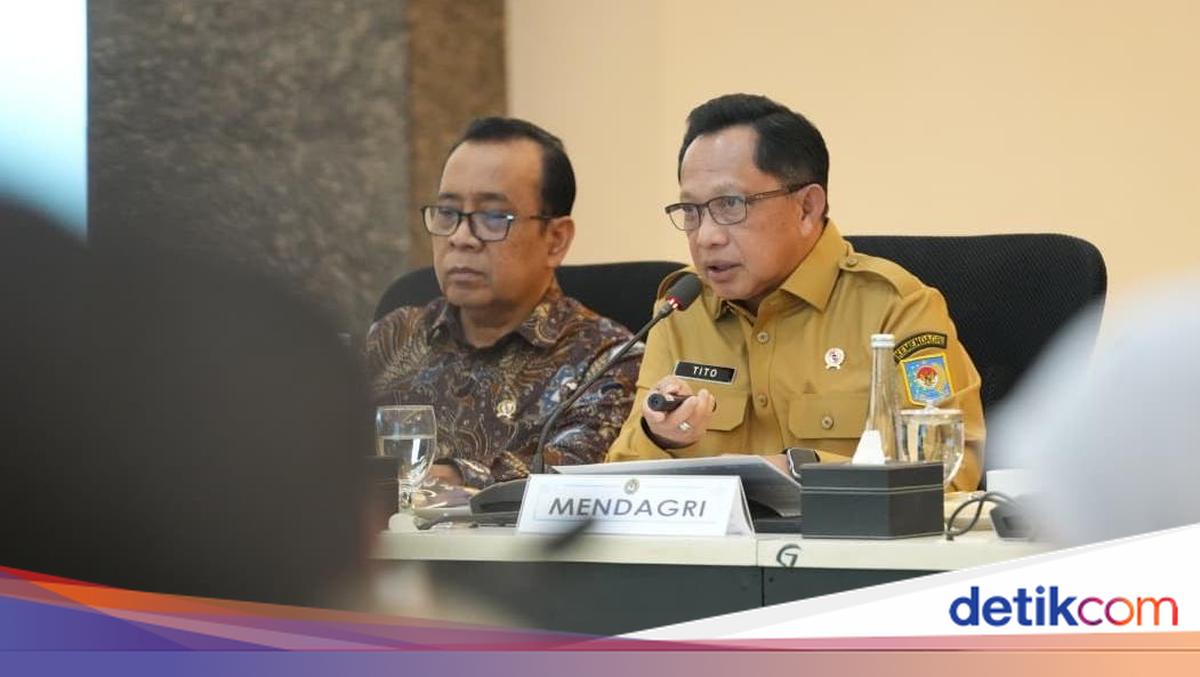
Minister of Home Affairs and Head of the Task Force for Accelerating Rehabilitation and Reconstruction Post-Sumatra Disaster, Muhammad Tito Karnavian, has conveyed the latest developments in handling the aftermath of hydrometeorological disasters in three provinces: Aceh, North Sumatra (Sumut), and West Sumatra (Sumbar).
He emphasised that recovery in affected areas is measured through various indicators, ranging from government functions, road and bridge infrastructure, healthcare and education services, community economic activities, to the fulfilment of basic needs such as electricity, clean water, and communication networks.
“We see that in West Sumatra, it is relatively the fastest, because out of 19 regencies/cities, 16 affected ones, 13 regencies/cities have government and community operations running relatively smoothly,” Tito stated in his remarks on Monday (6/4/2026).
He provided this explanation after attending the Ministerial-Level Coordination Meeting of the Post-Disaster Rehabilitation and Reconstruction Task Force Advisory Team in Aceh, Sumut, and Sumbar provinces. The meeting took place at the Office of the Ministry of Coordinating Human Development and Culture (Kemenko PMK), Jakarta, on Monday (6/4).
He added that in North Sumatra, most areas are also showing significant progress, although some regions still require special attention. Meanwhile, in Aceh, several areas are approaching normal conditions, but others still need intensive handling, such as Aceh Tamiang.
In terms of handling displaced persons, Tito assured positive progress, including the construction of temporary housing (huntara) and plans for permanent housing (huntap). He stressed the importance of accelerating huntap construction so that communities do not stay in huntara for too long.
“Huntap is the most important priority, and then urgent matters like bridges and roads, which are indeed the main routes,” he asserted.
Furthermore, Tito appreciated the synergy of various parties continuously working in the field. He cited the rapid response in handling infrastructure by the Ministry of Public Works, which immediately intervened when there were disruptions to road access.
Nevertheless, he acknowledged that much work remains to be completed, such as river normalisation, repairs to agricultural land and ponds, and the construction of permanent infrastructure. The government estimates that the overall recovery process will take up to three years.
“This is very extensive and complex… so a master plan has been prepared by Bappenas for three years,” he explained.
For information, attendees at the forum included Coordinating Minister for Human Development and Culture Pratikno, Coordinating Minister for Community Empowerment Abdul Muhaimin Iskandar (Cak Imin), Minister of Public Works Dody Hanggodo, Head of the National Disaster Management Agency (BNPB) Suharyanto, as well as representatives from other ministries and agencies.