
Time for China to Respond in Kind
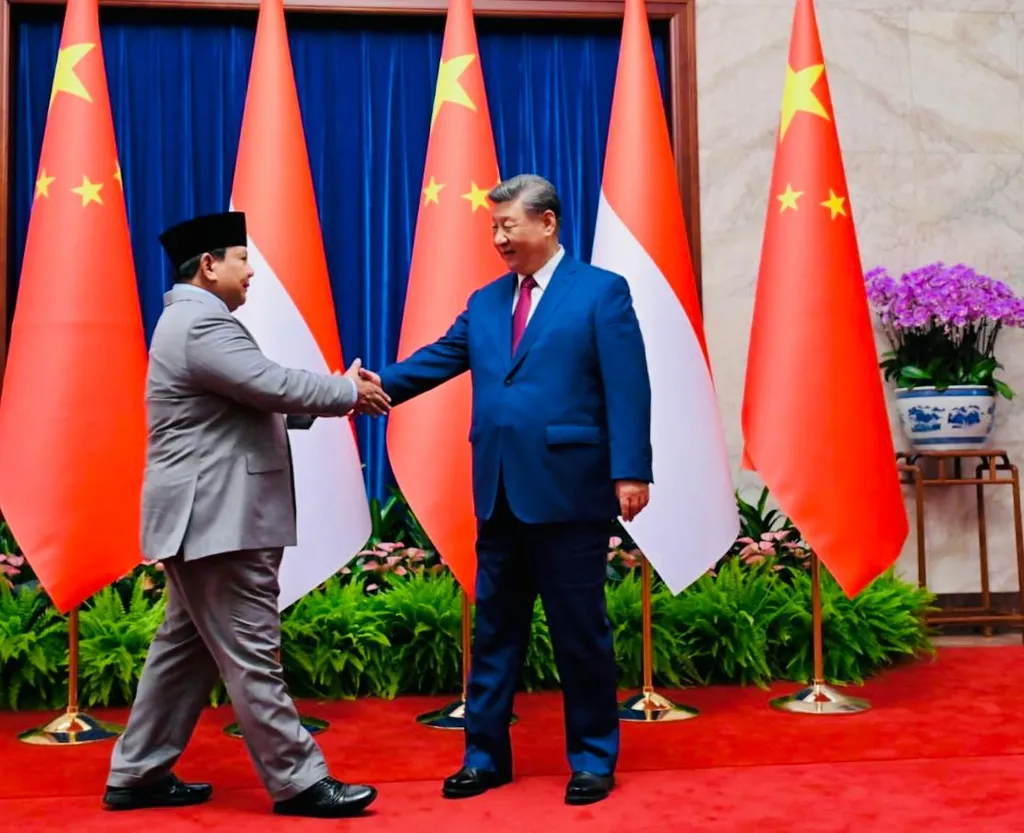
Investment interest in Indonesia remains relatively high, but an unfavourable investment climate risks distorting this interest.
Investment is a stepping stone for Indonesia to become a developed nation. However, investor confidence is being tested. Will China respond in kind with a welcoming red carpet for investors?
A glimmer of hope emerged at the Indonesia-China business forum and the establishment of the Cheung Kong Graduate School of Business (CKGSB) Alumni Association, which discussed ‘Advanced Indonesia: Digital Economy and New Regional Industry Opportunities in the Age of Artificial Intelligence’ in Jakarta on Tuesday (26 May 2026).
Attendees included Indonesian Ambassador to China Zhou Haoli, Environment Minister Jumhur Hidayat, Kadin Indonesia’s Coordinating Vice Chairman for Economic Affairs Mulyadi Jayabaya, and Deputy Trade Minister Dyah Roro Esti Widya Putri.
The forum brought alumni together to exchange ideas, including opportunities for digital financial investment, artificial intelligence (AI) and data centres, new energy industries, and company localization.
A key theme was Indonesia, as Southeast Asia’s largest economy, being a strategic destination for Chinese companies focusing on globalisation, regional industrial collaboration, and digital infrastructure development.
CKGSB Alumni Association Chairman Cheng Chenfeng said the association’s formation is a crucial first step to unite global alumni to strengthen their role in Indonesia’s market.
‘This is also a key platform for China-Indonesia economic cooperation. Over 100 alumni companies are present in Indonesia, including major ones like TikTok and Alibaba,’ he said.
Alongside TikTok/PT Tokopedia, other CKGSB alumni-affiliated companies in Indonesia include PT Global Jet Express (J&T Express), PT Gotion Indonesia, PT Well Harvest Winning Alumina Refinery (WHW), PT Bondera Global Internasional, ATM Capital, and PT Wook Global Technology.
Moving forward, we will continue to support alumni to take root and grow locally, promoting deeper and practical bilateral cooperation, welcoming more Indonesian business elites to study at CKGSB, fostering understanding through exchanges, creating mutual success through connections, and building a two-way business network.
These achievements are closely tied to China’s formula of capital and technology that empowers Indonesia’s development. In other words, business is not merely investment but also technology transfer, local talent development, and a locally-based supply chain.
Cheng added that investments and technology transfers have created jobs and boosted regional economic growth. Moreover, over 25,000 CKGSB alumni entrepreneurs, with alumni funds reaching 20 billion yuan (Rp52.79 trillion), are ready to support Indonesia’s market development.
After the event, Deputy Trade Minister Dyah Roro Esti Widya Putri stated that Indonesia-China cooperation can continue, given China is Indonesia’s largest trading partner with total trade of approximately US$154 billion.
This strategic partnership is also reflected in Indonesia’s participation in the 2026 Salon International de l’Alimentation (SIAL) Shanghai, where potential transactions were recorded at US$88.48 million (Rp1.55 trillion).
‘Since most of their investments are in Indonesia, I urge them to study local wisdom so that any form of investment benefits Indonesia and the surrounding communities,’ she said.
She stressed that the multiplier effect of investments must improve local communities’ welfare. Therefore, investments should prioritise knowledge and technology transfer.
On the other hand, China’s business community is scrutinising Indonesia’s investment climate. The China Chamber of Commerce in Indonesia has openly written to President Prabowo Subianto about numerous issues regarding investment barriers affecting Chinese businesses.
In a letter widely circulated on 12 May 2026, issues raised included stringent regulations, excessive law enforcement, and new policies such as tax and royalty hikes, export foreign exchange retention requirements, reduced nickel ore quotas, stricter foreign worker permits, and allegations of corruption and extortion by officials.
‘These issues have disrupted normal business operations, directly damaging long-term investment confidence and causing widespread concern among Chinese investment companies about the business climate and future of their operations in Indonesia,’ the letter stated (Kompas.id, 14/5/2026).
China is one of the largest sources of foreign direct investment in Indonesia. According to data from the Ministry of Investment and Downstreaming/BKPM, China’s total FDI over the past two years reached US$15.6 billion.
During the 2024-2025 period, China ranked third as