
Timau National Observatory Set to Become Indonesia's Most Advanced Space Research Centre
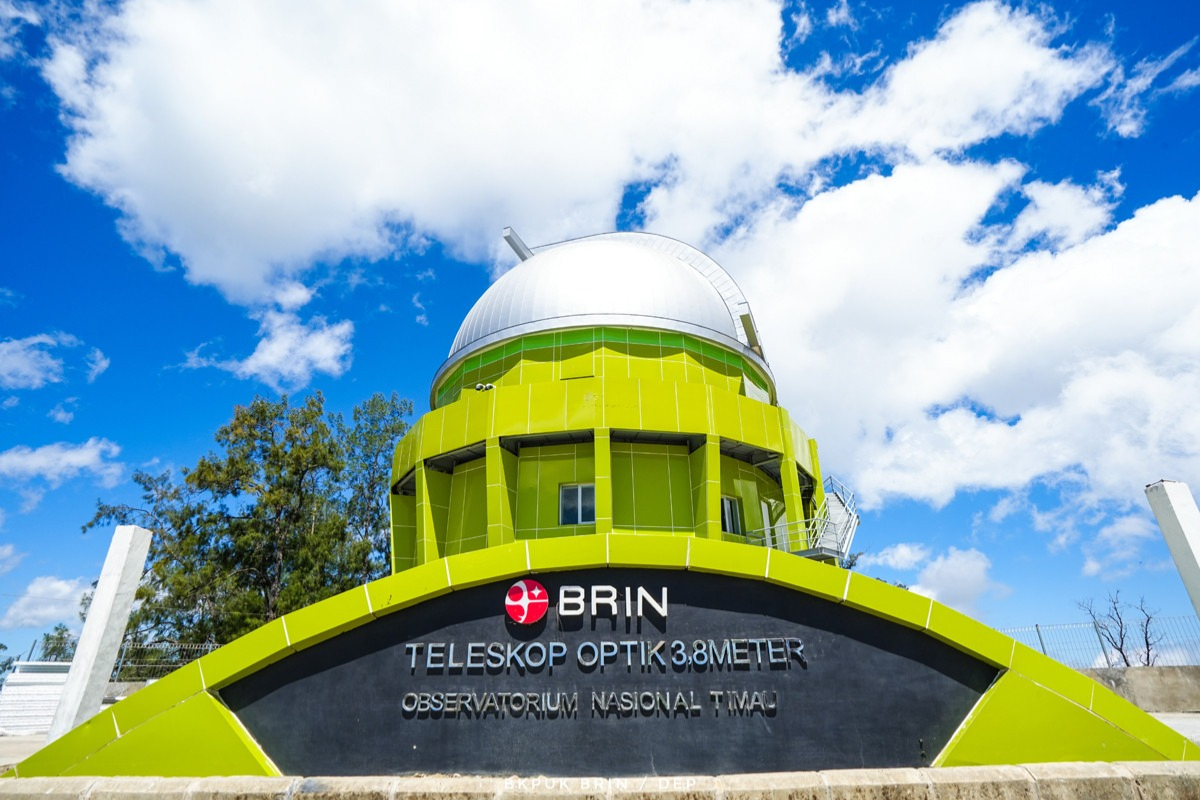
The National Research and Innovation Agency (BRIN) targets the Timau National Observatory (Obnas), located in Amfoang, Kupang Regency, East Nusa Tenggara, to become fully operational in 2026. This facility is projected to serve as the most advanced space research centre in the country, capable of supporting multi-wavelength research and global monitoring of the space environment. In addition to scientific benefits, the presence of Obnas Timau is expected to directly impact the people of NTT through space education and the utilisation of data for weather and climate predictions. The site’s selection is based on the geographical conditions of the region, which features dry and clear skies, making it ideal for modern astronomical observations. Head of BRIN’s Aviation and Space Research Organisation, Robertus Heru Triharjanto, emphasised that this project represents a major mandate for the institution in advancing science. “BRIN has a mandate to conduct various research, including in the fields of science and space. One of the efforts undertaken is building the National Observatory in Timau, Amfoang, Kupang, East Nusa Tenggara.” Currently, the main focus of construction is preparing the operation of a giant 3.8-metre diameter optical telescope, targeted to become fully functional this year. In addition to the optical telescope, the development of radio telescopes is also a priority agenda. Researcher at BRIN’s Space Research Centre, Peberlin Sitompul, explained that this facility is not only for studying stars and galaxies but also serves a function in protecting the Earth. “The Timau National Observatory is built to support the development of multi-wavelength astronomy, as well as monitoring space debris using observations in both optical and radio wavelengths,” stated Peberlin. Based on initial testing, the developed radio system has even successfully detected solar radio activity or solar radio bursts. To maintain the quality of research data, BRIN is now preparing special regulations to ensure the area around Mount Timau remains free from technical disturbances. Robertus Heru Triharjanto explained that environmental aspects are crucial for the success of this observatory, so BRIN is preparing special regulations to keep the observatory area free from light pollution and radio interference to support astronomical research, particularly radio astronomy. In the future, this facility will be strengthened with a 20-metre diameter parabolic antenna capable of operating in high frequency ranges up to 50 GHz. Head of BRIN’s Space Research Centre, Emanuel Sungging Mumpuni, holds great hopes that this development will become a catalyst for international research collaborations. He affirmed the grand vision behind this project. “Through the construction of the radio telescope at the Timau National Observatory, Indonesia is expected to enhance its astronomical research capacity while contributing to global space environment monitoring.”