
Ticking Time Bomb Beneath America: Major Cities Beginning to Sink
Ticking Time Bomb Beneath America: Major Cities Beginning to Sink
Jakarta, CNBC Indonesia - The phenomenon of land subsidence is not only a threat to coastal cities in developing countries. A recent study shows that several major cities in the United States are also experiencing land subsidence, which could increase the risk of flooding, infrastructure damage, and long-term economic losses.
Around 25 of the 28 major cities in the United States are experiencing land subsidence, creating a hidden but growing property risk.
Houston, Fort Worth, Dallas, New York, and Chicago are all experiencing land subsidence at a rate of more than 2 mm per year.
Many other major cities, including Seattle, Detroit, and Denver, are experiencing land subsidence at a rate of between 1.5 and 2.0 mm per year.
Even slow subsidence at the millimeter scale can cause long-term infrastructure damage and create challenges in terms of insurance.
The latest Visual Capitalist data shows that major cities such as Houston, Dallas, Fort Worth, New York, and Chicago are experiencing land subsidence of more than about 2 millimeters per year. Although it seems small, this gradual subsidence can worsen the risk of flooding and building damage if it continues.
Major Populous Cities Also Affected
Satellite radar-based research has found that 28 of the most populous cities in the United States are experiencing land subsidence to varying degrees. New York, Chicago, Los Angeles, Houston, Phoenix, Philadelphia, San Antonio, and Dallas are home to more than 60% of the population living in areas affected by subsidence.
This phenomenon is not only occurring in coastal areas. Some inland cities are also experiencing subsidence due to factors such as urbanization, massive construction, and the exploitation of natural resources.
Researchers say the main causes of land subsidence in US cities are human activities, including:
Excessive groundwater extraction
Oil and gas extraction
The weight of high-rise buildings and urbanization
Natural geological changes
These factors can cause the soil to compact and slowly sink, increasing the risk of damage to building foundations and transportation systems.
Economic and Infrastructure Impacts
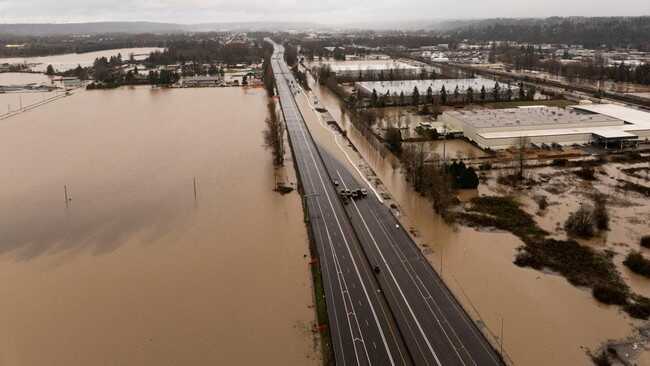
Land subsidence is not only an environmental issue, but also an economic one. The decline in urban topography can increase the frequency of flooding, damage roads, railways, bridges, and vital utility networks.
Since 2000, a number of major cities experiencing subsidence have also recorded dozens of significant flooding events, some of which were triggered by a combination of land subsidence and climate change.
In the long term, this could increase the cost of urban adaptation, property insurance premiums, and the fiscal burden on local governments.
Scientists recommend a number of mitigation steps to reduce the risk of land subsidence, ranging from stricter groundwater management, climate risk-based spatial planning, to the construction of infrastructure that is adaptive to potential flooding.
In addition, continuous satellite-based monitoring is considered important to detect land subsidence early on. Without serious mitigation efforts, land subsidence could become a major economic threat to modern cities.
CNBC INDONESIA RESEARCH
[email protected]
source on Google