
Thursday morning: Jakarta has the world's worst air quality
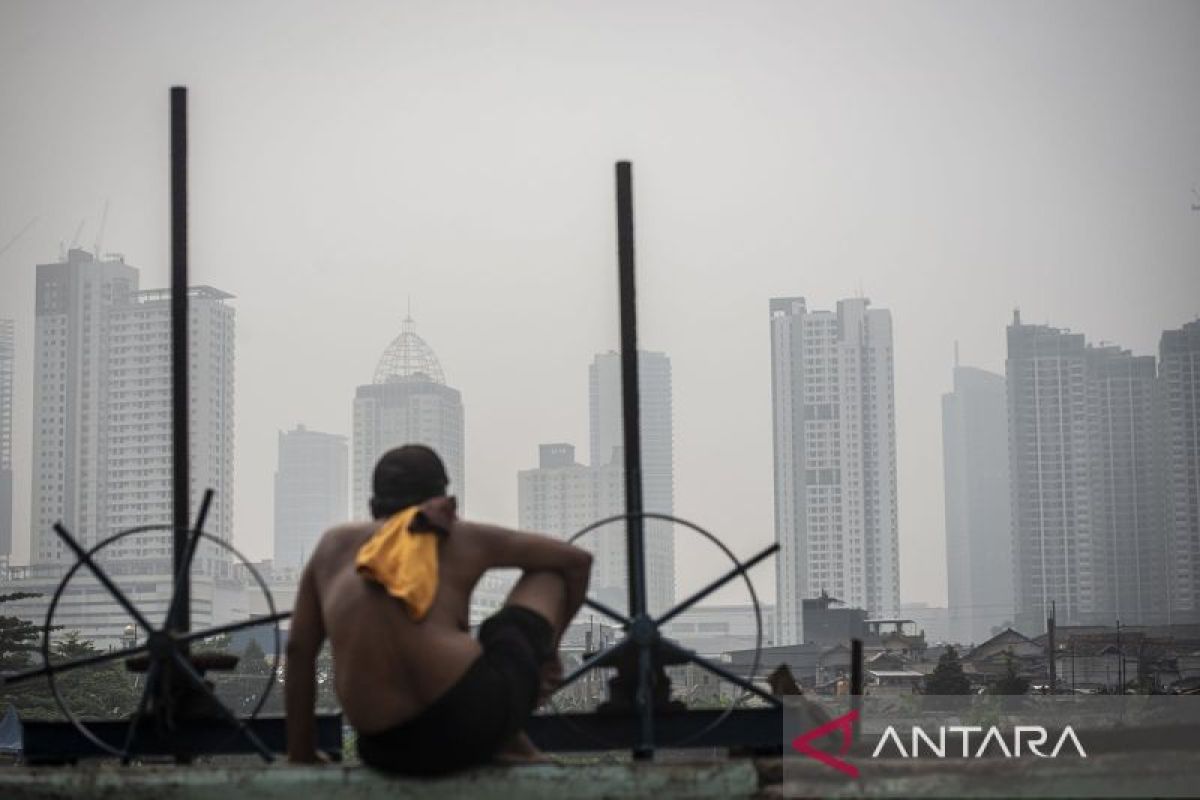
Jakarta — Air quality in Jakarta on Thursday morning was classified as unhealthy and ranked first among the world’s cities with the worst air, prompting authorities to urge residents to wear masks when outdoors.
According to data from IQAir, the air quality monitoring site, at 06:01 WIB, the Air Quality Index (AQI) in Jakarta stood at 170, placing it in the ‘unhealthy’ category with PM2.5 pollution and a concentration of 82 micrograms per cubic metre.
That level indicates the air quality is unhealthy for sensitive groups because it can harm people or sensitive animals, or cause damage to plants or aesthetic quality.
The site also recommends regarding Jakarta’s air conditions that the public should avoid outdoor activities. If outdoors, wear a mask and close windows to prevent outdoor air from entering.
In the ‘good’ category, the air quality level does not affect human or animal health and does not affect plants, buildings or aesthetics, with PM2.5 in the range 0-50.
The ‘very unhealthy’ category covers PM2.5 from 200 to 299, meaning the air quality may harm health for certain exposed segments of the population. Finally, the ‘hazardous’ category (300-500) indicates air quality that can seriously harm health across the population.
The city with the worst air quality is followed by Santiago, Chile, in second place with 157; third is Kampala, Uganda, 152; fourth Riyadh, Saudi Arabia, 128; and fifth Dhaka, Bangladesh, 126.
The Jakarta Provincial Government (Pemprov DKI) is preparing a rapid response to tackle air pollution in the capital during the dry season, predicted to run from early May to August.
The rapid-response measures for tackling air pollution during the dry season include improving the air quality monitoring system and testing motor vehicle emissions.
In addition, the DKI Provincial Government also has the Air Pollution Control Strategy (SPPU) which is being evaluated from various aspects, ranging from PM2.5 trends, emission loads per sector to health impacts.
According to the DKI Provincial Government, air pollution control cannot be done by a single area in isolation; therefore integrated action across regional devices (organisasi perangkat daerah) and cross-regional collaboration around Jakarta are required.