
Thrown Away a Pity, Stored Millions: The Secret of Old Money Now Sought by Collectors
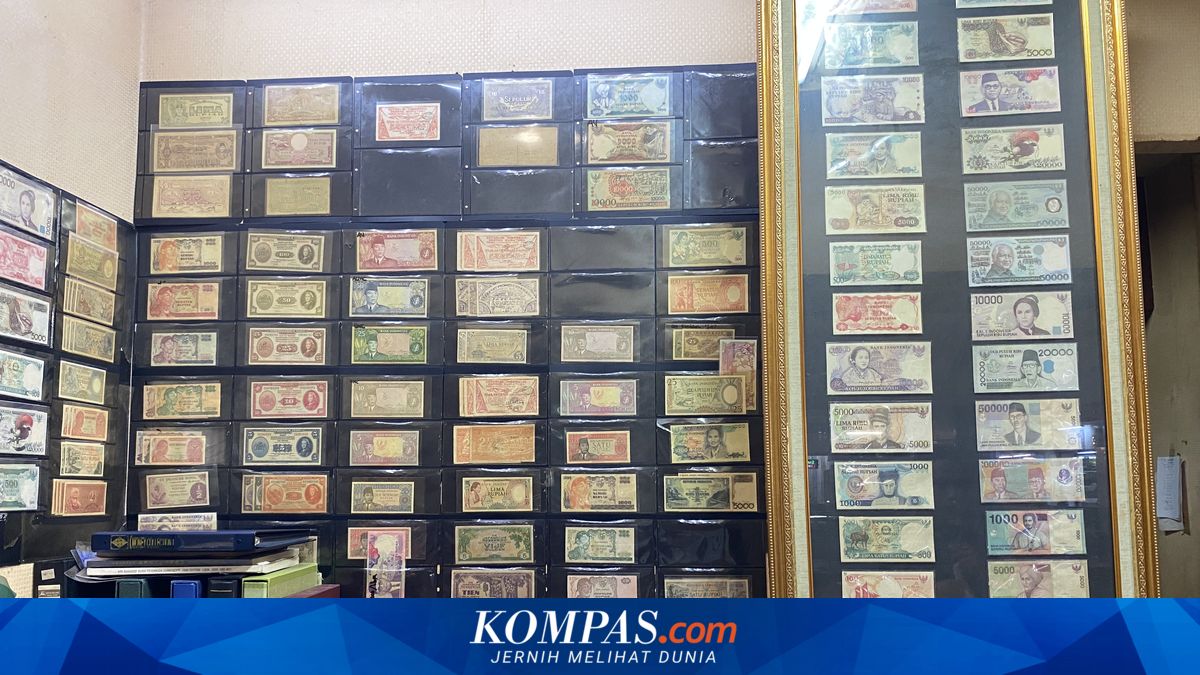
On the third floor of the Harco Pasar Baru building in Central Jakarta, a different atmosphere prevails amid rows of electronics stalls and accessory shops. In one corner of the corridor, rows of old banknotes are neatly arranged in transparent protective plastic. Faded colours from old rupiah denominations fill the walls of the small kiosk. There are banknotes featuring Indonesia’s First President Soekarno, denominations from the New Order era, and even Japanese occupation currency once used in Indonesia. In the glass display case, old metal coins are arranged in collection frames. Some appear tarnished by age, while others still gleam with clear details of numbers and national symbols. More than just a place for buying and selling collections, these stalls serve as small spaces where people reminisce about the past through rupiah notes that circulated decades ago. Nana (45), one of the antique money traders on the third floor of the Harco Pasar Baru building, has been running the business since 2010. In her small-sized kiosk, albums labelled “Money Collection” are stacked on the table. Each page of the album contains old rupiah notes from various periods. Starting from the 1958 emission, New Order era denominations, to Japanese occupation money once used in Indonesia. “The oldest ones here are from 1958,” said Nana when met by Kompas.com on Tuesday (5/5/2026). According to her, there are actually older collections, including 1938 money from the colonial era. However, such rare items are not always available. “The 1938 ones are currently out of stock. The items are hard to find,” she said. Many buyers come to reminisce about their childhood through the designs of old money that is no longer in circulation. This trend brings buyers of antique money from various ages. Not only senior collectors, but also young people interested in vintage designs or seeking unique items for display. “Many also buy for wedding dowry,” said Nana. According to her, antique money is now often used as betrothal gifts or decorations because it is considered to have aesthetic and symbolic value. “People now want things that are unique and different from others,” she said. The prices of the money sold at Nana’s kiosk vary. Some are just Rp 5,000 for 1990s issues, while certain denominations reach hundreds of thousands of rupiah. “The plastic Soeharto money can go up to Rp 100,000,” she said. Nana stated that the physical condition of the money greatly determines the price.