
Through SAF, Pertamina Introduces Energy Transition to Young Generation
Used cooking oil produced daily by households actually holds the potential to become part of the energy of the future. This message was delivered by PT Pertamina (Persero) during the IdeaFest 2026 event by introducing Sustainable Aviation Fuel (SAF), a sustainable aviation fuel that uses Used Cooking Oil (UCO) as one of its raw materials.
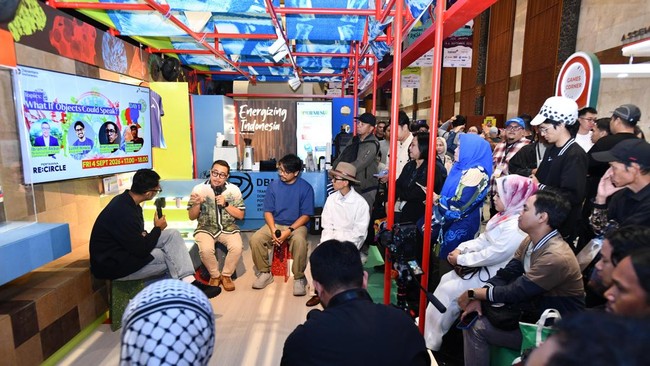
Through the Pertamina booth at the Jakarta Convention Center (JCC) Senayan, Jakarta, visitors were invited to take a closer look at the journey of used cooking oil, from collection to its utilisation as a raw material for SAF. This innovation simultaneously demonstrates how public participation in simple activities can become part of the development of a low-carbon energy ecosystem.
Pertamina’s Corporate Secretary, Arya Dwi Paramita, stated that the development of SAF is one of Pertamina’s concrete steps in implementing the energy transition while strengthening national energy independence.
“This oil is produced for aircraft fuel. However, do not worry, it is safe because the research was initiated in 2015, strictly researched, and tested from 2021 to 2025,” said Arya, as quoted on Saturday (5/9/2026).
The UCO-based SAF has also been used on flights by Pelita Air Service, a subsidiary of Pertamina, for the Jakarta-Bali route. This development serves as evidence that low-carbon energy innovation can originate from resources close to everyday life.
Ibrahim Akbar, from the SAF Project Commercial at PT Pertamina Patra Niaga, said that the concept of utilising used cooking oil was one of the most interesting topics attracting visitors at IdeaFest.
“Today, I had the opportunity to present Pertamina’s programme that transforms used cooking oil into renewable fuel. I observed great enthusiasm. Of all those who asked questions, they were all about UCO,” said Ibrahim.
According to Ibrahim, the character of IdeaFest visitors, which is dominated by the younger generation, provides space for Pertamina to introduce the energy transition in a more relatable and relevant manner. Not only by understanding the innovation, but the public can also take part through the collection of used cooking oil as raw material.
“The hope is that more layers of society become aware of this programme so that the source of raw materials, in this case, used cooking oil, can be collected in as large a quantity as possible,” he said.
Ibrahim added that the development of the SAF ecosystem requires collaboration from various parties. In addition to the technological aspects, the challenges to be addressed include price disparities, the mechanism for collecting used cooking oil, and regulatory support. Therefore, community involvement is a vital part of building a stronger UCO supply chain.
“The concrete hope is that more people become aware of the existing used cooking oil purchase programme, and the volume of used cooking oil we can collect increases,” Ibrahim concluded.