
Three Women Become Victims of Sexual Violence Every Hour
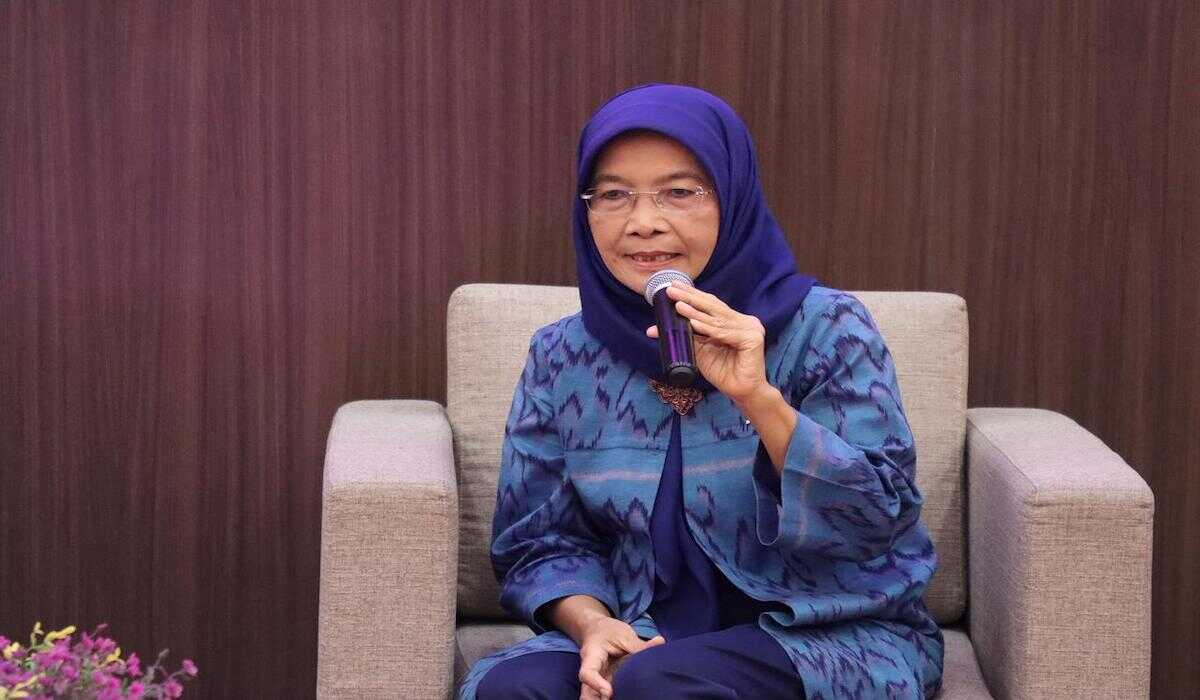
Sexual violence occurring in repeated patterns on a massive scale has now reached national emergency level. Komnas Perempuan has affirmed that the situation indicates an increasingly alarming scale of violence, where every hour, three women become victims.
Maria Ulfah Anshor, Chair of the National Commission on Violence Against Women (Komnas Perempuan), affirmed that the Sexual Violence Crimes Law (UU TPKS) emerged from a condition of national sexual violence emergency. Between 2012 and 2021, 49,729 cases of sexual violence were recorded across personal, public, and state spheres.
By August 2025, more than 17,355 cases of violence had been recorded, dominated by sexual violence in personal (domestic) and public spheres.
“Every hour, three women become victims of sexual violence,” stated Maria on Monday (2 March).
For Komnas Perempuan, this statement reflects a situation that can no longer be addressed through piecemeal approaches. Sexual violence is not merely a criminal incident but a protection crisis demanding state intervention through regulation, services, and law enforcement that favour victims.
Maria explained that before UU TPKS was enacted, the existing legal and social systems had not been able to provide comprehensive protection for victims, either substantively or structurally under the law.
This gap has led victims to face lengthy, exhausting processes from reporting to evidence gathering, whilst recovery support is often unavailable adequately.
UU TPKS itself emerged through a lengthy advocacy journey spanning one decade. The process began in 2012 but stalled repeatedly in parliament due to political obstacles. During the 2014-2019 period, discussions made no significant progress because of debate over the term “sexual violence,” which was still considered taboo by some political parties.
A turning point emerged in 2021 and the law was enacted in 2022.
According to Maria, this law brings about a change in approach through a dual-track system. Victims gain the right to more comprehensive protection and recovery, whilst perpetrators not only face imprisonment but are also obliged to undergo processes to change their mindset to prevent violence from recurring.
“This paradigm is intended to close the old gap: handling that was solely oriented towards punishment without ensuring victims truly recover and are protected,” she explained.
However, Komnas Perempuan cautioned that emergency status does not automatically end simply because the law has been enacted. Implementation on the ground is deemed still faltering.
Based on findings from Komnas Perempuan’s monitoring, supporting infrastructure such as the Regional Technical Implementation Unit for Women and Child Protection (UPTD PPA) has not been fully available across all districts/municipalities.
“The Directorate of PPA and PPO during monitoring existed only in 11 provinces and 22 cities,” she said.
This limitation directly impacts victims, especially in remote and island regions. Maria gave an example of the situation in North Maluku, where victims must cross islands simply to report cases.
In such conditions, geographical distance becomes an obstacle to victim justice, facing costs, time, and greater social risks merely to begin the legal process.
Beyond infrastructure problems, constraints also emerge from derivative regulations governing community-based service providers. Under these provisions, victim advocates must have special certification to be recognised legally in legal proceedings.
Komnas Perempuan believes that without accelerated training and certification, this provision risks narrowing victims’ access to advocacy, particularly in areas that have relied on community service networks.
Komnas Perempuan affirmed that the scale of violence and the intensity of increasing victims must be read as a loud alarm.
“Every hour, three women become victims, not merely a statistic but a picture of how close the threat is in everyday life. Therefore, Komnas Perempuan’s primary push now aims at accelerating the fulfilment of service infrastructure, evening out protection institutions in regions, and strengthening the capacity of advocates so that UU TPKS truly reaches victims, not merely strong in text but present in reality,” she concluded.
Violence against women, beyond being a human rights violation, also impacts various aspects of women’s lives and is highly complex.
The Witness and Victim Protection Agency (LPSK) affirmed it will strengthen coordination with the Ministry of Finance to ensure the mechanism for collection and provision of Victim Assistance Funds (DBK).
Deputy Chair of the People’s Consultative Assembly (MPR) RI Lestari Moerdijat urged comprehensive implementation of UU TPKS and strengthening of regional services for the protection of women and children.
A comprehensive ecosystem of protection for women and children must be realised. The active role of all parties is required to be able to realise this.
Victims of violence and sexual violence have yet to receive certain guarantees in the National Health Insurance scheme (JKN).