
Three Types of Officials in Prabowo's Latest Cabinet Reshuffle
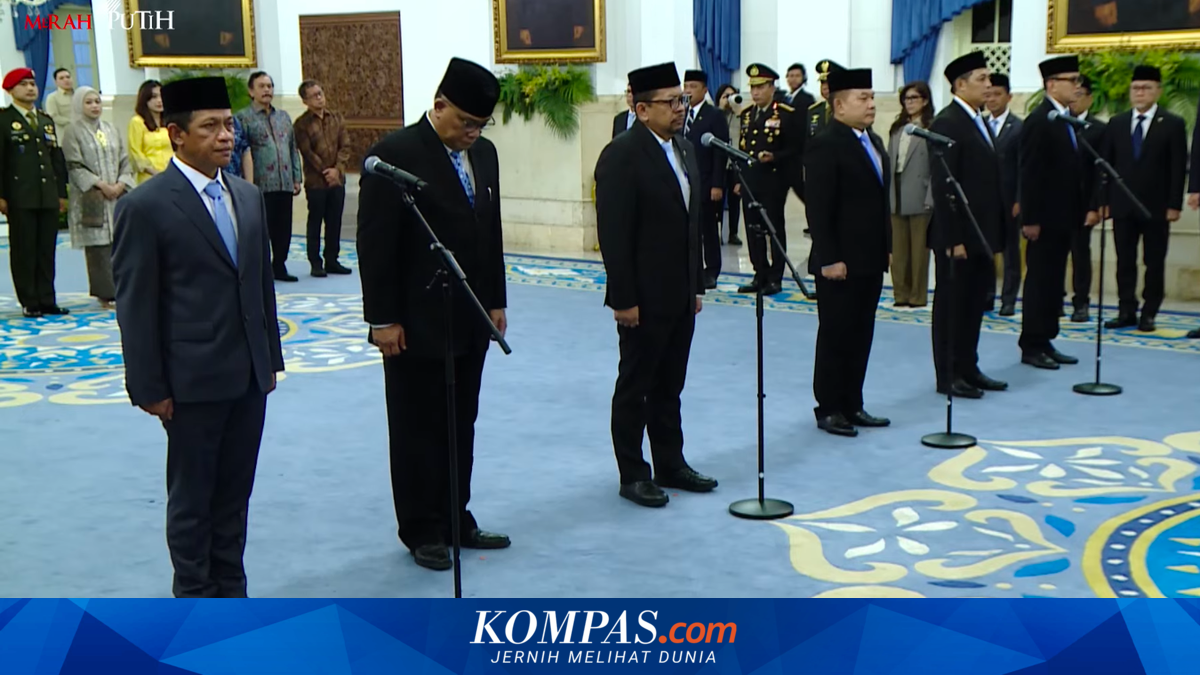
JAKARTA, KOMPAS.com - Political analyst from UIN Syarif Hidayatullah Jakarta, Adi Prayitno, assesses that there are three types of officials in President Prabowo Subianto’s latest cabinet reshuffle.
“If we look at yesterday’s reshuffle, there are three categories. First, new faces; second, positional shifts; and third, comebacks of old figures,” Adi said, quoted from the Gaspol Kompas.com programme on Friday (1/5/2026).
According to him, Jumhur’s background as a labour activist is an important factor that cannot be separated from his appointment.
“The new faces category features the name Jumhur Hidayat. Of course, many parties are wondering why Mr Jumhur. It seems because of his background as a labour activist, he has closeness to the grassroots, especially among workers, which I think cannot be detached, even though his position is, for example, Minister of Environment,” he explained.
The second category is the shifting of positions between officials.
Adi gave the example of Muhammad Qodari’s transfer from the Presidential Staff Office to Head of the Government Communication Agency.
Then Hanif Faisol from Minister of Environment to Deputy Coordinating Minister for Food.
According to Adi, this rotation shows the internal dynamics of the cabinet in adjusting to policy needs and challenges.
He mentioned the names Hasan Nasbi and Abdul Kadir Karding as examples.
“Karding was once not in office, then returned. Hasan also made a comeback as presidential communication adviser,” he said.
Adi emphasised that cabinet reshuffles are essentially not extraordinary in the presidential system.
The president has full authority to replace his aides at any time if they are deemed not to meet the expected performance.
“Because in the presidential system, where the president is directly elected by the people, the president can change whenever he wants, whether after four months, five months, a year, one and a half years; if they don’t perform, they are replaced,” he stated.
Furthermore, Adi sees a tendency in the government to embrace various groups, including activists and parties outside the government, as part of a broader political strategy.
According to him, this step is also evident from the entry of figures like Jumhur, who has a strong background in the labour movement and civil society.
“There is indeed a tendency for this administration to embrace and invite off-sider parties, from activist circles, democracy advocates, and then non-governmental groups, to be made part of the efforts to build the nation,” he revealed.