
Three Tonnes of Pangolin Scales Destined for Cambodia Seized; One Suspect Detained
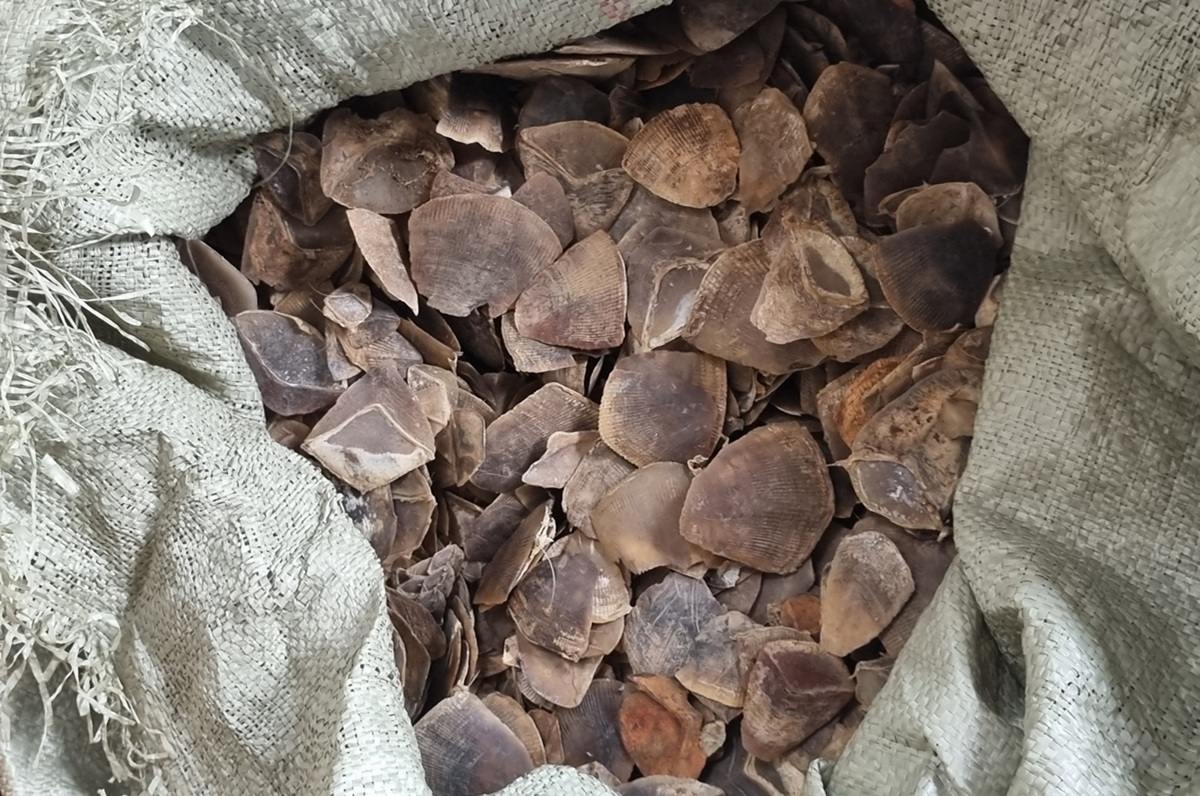
The Ministry of Forestry (Kemenhut), through its Legal and Law Enforcement Centre for the Java, Bali and Nusa Tenggara Region, has detained a suspect with the initials TT, aged 59, in connection with the smuggling of 3,053 kilogrammes of pangolin scales destined for Cambodia.
The case came to light following an inspection of a shipping container at Tanjung Priok Port in North Jakarta on 12 February 2026. The export documents declared the cargo as sea cucumber or dried food products; however, physical inspection revealed 99 cartons containing pangolin scales.
The discrepancy between the export documentation and the actual container contents exposed an alleged attempt to disguise parts of protected wildlife through official logistics channels. The investigation indicates the involvement of multiple parties in the smuggling chain, ranging from collection and storage, to the preparation of export documents, the use of specific companies as export formalities, and arrangements for shipment abroad. In addition to detaining TT, investigators have identified and are pursuing the alleged owner of the goods.
Following investigation, examination, and coordination with the Operational Command of Civil Servant Investigators at Metro Jakarta Police, suspect TT was arrested and detained, subsequently held at Jakarta Central Class I Prison (Rutan Salemba). TT faces charges under Article 40A paragraph (1) letter f in conjunction with Article 21 paragraph (2) letter c of Law Number 32 Year 2024 concerning Amendments to Law Number 5 Year 1990 on the Conservation of Biological Natural Resources and their Ecosystems, as well as related criminal provisions. The suspect faces a maximum prison sentence of 15 years and a fine of up to Rp5 billion.
The Director General of Forest Law Enforcement, Dwi Januanto Nugroho, emphasised that the protection of wildlife is a state mandate to safeguard Indonesia’s biological wealth from grassroots to cross-border trade networks. “Indonesia is one of the world’s richest countries in biodiversity. This wealth is not merely an ecological asset, but a national identity, a pillar of natural balance, and a heritage that the state must protect. Illegal wildlife trade does not begin at the port; the chain originates from hunting in nature, collection in regions, storage, entry into logistics channels and foreign markets. Therefore, the state must be present from upstream to downstream: strengthening regular patrols, area security, public information, and coordination with regional environmental bodies, national parks, forest police, local governments, and area stakeholders. Wildlife must be protected whilst still living in its habitat, not only when its body parts become evidence,” stated Dwi Januanto on Sunday (24 May).
Januanto added that Indonesia’s position as host of the Interpol forum demonstrates the nation’s active role in building a joint response to cross-border wildlife smuggling. “The Interpol Forum in Jakarta strengthens collaborative efforts to dismantle cross-border wildlife smuggling networks. Cases such as this cannot be understood from a single investigation point alone. There are interconnected flows of goods, documents, companies, transactions, ports, airports, transit countries, and destination markets. Indonesia is strengthening cooperation with the National Police, Customs, Interpol, and friendly nations’ authorities to not only intercept shipments but to dismantle the business structure, controllers, and beneficiaries of these networks,” he said.
The Ministry of Forestry has positioned wildlife crime handling as part of the national policy for protecting Indonesia’s biological wealth. Protection spans from grassroots to logistics channels by preserving habitats, strengthening routine patrols, enhancing coordination with area stakeholders, and closing smuggling loopholes through warehouses, documents, companies, ports, airports, and shipping networks. Simultaneously, the Ministry of Forestry is strengthening cross-border coordination with the National Police, Customs, Interpol, and friendly nations’ authorities to trace commodity flows, money flows, controllers, and beneficiaries of illegal wildlife trade. “The illegal wildlife trade chain must be cut at its source, its controllers must be dismantled, and Indonesia’s biological wealth must remain a living inheritance for future generations,” he stated.
The handling of this case occurs within the context of strengthened cross-border cooperation through the Interpol Coordination Meeting on Wildlife Crime held in Jakarta on 19–21 May 2026. The forum brought together law enforcement officials from Indonesia, Singapore, Vietnam, and Cambodia to strengthen intelligence exchange, joint investigations, tracking of commodity and money flows, and international legal cooperation in dismantling cross-border wildlife smuggling networks. The case of three tonnes of pangolin scales destined for Cambodia attracted significant attention as it demonstrates how parts of protected wildlife can be disguised as legal commodities and channelled to black markets abroad through legitimate logistics channels.
Data from the Forest Law Enforcement Centre shows a shift in pangolin trafficking patterns. In the early period, cases handled were primarily related to live pangolin trade. In recent years, the pattern has evolved towards trafficking in body parts, particularly pangolin scales, in increasingly large quantities. This shift indicates that pangolin trafficking can no longer be viewed as small-scale local transactions but represents a more organised supply chain spanning hunting, collection, storage, commodity disguise, and logistics channels. In the case of 3,053 kilogrammes of pangolin scales destined for Cambodia, this dimension is more pronounced because the goods were allegedly directed abroad, requiring sophisticated smuggling arrangements.