
Three Strategic National Waqf Agendas Held at Istiqlal
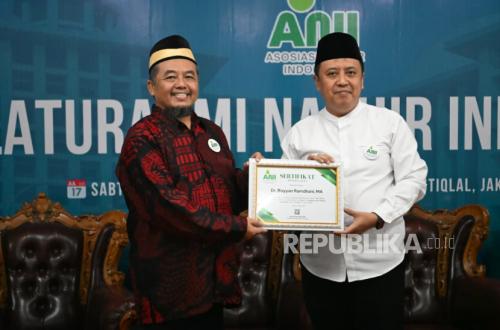
Masjid Istiqlal in Jakarta became the focal point of the national waqf ecosystem on Saturday (11/4) when the Indonesian Nazhir Association (ANI) held three strategic agendas simultaneously: the Indonesian Nazhir Gathering, the launch of the Indonesia Nazhir Academy (INA), and the Waqf Amendment Talk Show.
The event was attended by nazhir from various regions, from Java, Sumatra, Kalimantan, to Sulawesi. Notably, the dominance of the younger generation in this forum indicates that waqf is increasingly seen as a space for service and innovation, no longer viewed as a static and traditional sector.
Committee Chairman Ahmad Faisal explained that this series of activities represents the peak of national consolidation, previously initiated with the Online National Working Meeting (15/2) and the Nazhir Insight Series (NIS) webinar during Ramadan. “Today marks the culmination through the Indonesian Nazhir Gathering at Masjid Istiqlal. In the future, all regions in Indonesia are expected to become increasingly involved,” he stated.
Professional Development Centre
One of the main achievements of this event was the launch of the Indonesia Nazhir Academy (INA). This institution is designed not merely as ordinary training, but as a centre for learning and developing nazhir oriented towards mindset transformation, strengthening trustworthy character, enhancing competency, and expanding waqf literacy.
Ahmad Faisal emphasised, “INA is not just a training programme, but part of a strategic effort to build a new foundation for waqf management. We want Indonesian nazhir to not only be trustworthy but also professional, adaptive, and capable of addressing contemporary challenges.”
Regulatory Leap
The Waqf Amendment Talk Show session featured speakers from various strategic institutions: KNEKS, Bank Indonesia, the Indonesian Waqf Board (BWI), BSI, the Productive Waqf Forum, and a representative from Pondok Modern Darussalam Gontor as a respondent.
Dr. Dwi Irianti Hadingnidyah from KNEKS asserted that Indonesia’s waqf potential is enormous, but the main challenges lie in asset productivity, human resource quality, and governance. “Waqf must be positioned as a strategic economic instrument, not just worship in a limited sense,” she said.
Siti Rochmawati from DEKS Bank Indonesia highlighted the need for professionalising nazhir as a primary profession requiring managerial and business competencies. Meanwhile, Dr. KH. Ahmad Zubaidi from BWI emphasised the importance of visionary and applicable regulatory renewal.