
Three Months into Iran War: Who's Laughing and Crying the Most?
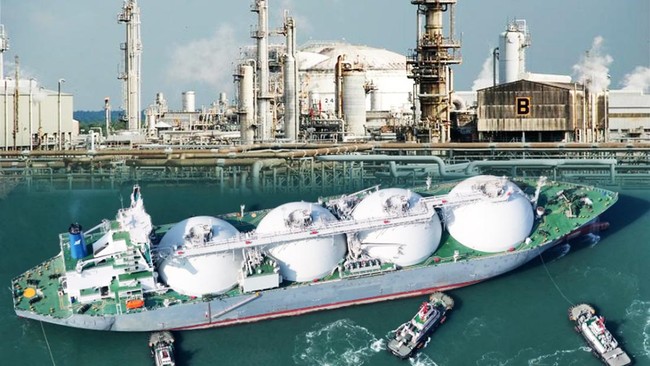
Jakarta, CNBC Indonesia – Global commodity markets have undergone drastic changes since the Iran war erupted in late February 2026. After nearly three months of conflict, global energy trade routes remain disrupted, fertiliser supply chains are strained, logistics costs have surged, and global investors are shifting funds to perceived safe-haven assets.
The Iran war has shifted global commodity pricing mechanisms. Markets are now far more sensitive to geopolitical disruptions than normal supply-demand dynamics.
The Strait of Hormuz is the epicentre of pressure. This route accounts for about a fifth of global oil and LNG trade. When distribution is disrupted, the effects ripple through energy, metals, food, and fertilisers.
Oxford Economics forecasts over two-thirds of global commodities will see price rises throughout 2026. However, the strength of each commodity’s rally varies. Some have surged aggressively due to supply and energy factors, while others are being held back by the US dollar and interest rate expectations.
Oil Prices Remain Elevated
Oil is the most sensitive commodity to the Iran war. Oxford Economics previously forecast Brent crude to stay above $100 per barrel due to around 10 million barrels per day of supply disruption from Strait of Hormuz bottlenecks.
Brent crude prices hit $126.41 per barrel on 30 April 2026.
However, markets began shifting direction following signals of US-Iran peace negotiations.
Brent crude prices rose 44.3% since the Iran war began, a sharper increase than the 15.6% rise seen 58 days into the Russia-Ukraine conflict.
The decline followed US President Donald Trump stating Washington and Tehran had ‘largely negotiated’ a peace memorandum.
Markets immediately interpreted the potential reopening of the Strait of Hormuz as a sign of easing global supply pressures.
Nevertheless, the oil market remains unsettled. Trump has urged US negotiators not to rush the agreement.
Analyst Saul Kavonic of MST Marquee said markets are seeing ‘light at the end of the tunnel’, but energy distribution normalisation is expected to take a long time due to infrastructure damage from the war.
That means geopolitical risk premiums remain embedded in oil markets, even as the rally euphoria subsides.
LNG and Gas: Still the Hottest Commodities
While oil prices have corrected, LNG and gas continue to face strong pressures.
Natural gas has emerged as the most vulnerable energy commodity due to disrupted Qatari LNG exports and Gulf region distribution.
According to Trading Economics, the Japan Korea Marker (JKM) LNG price stood at $18.81 per MMBtu on 22 May 2026, surging 14.77% in a month and over 50% year-on-year.
German gas prices also remain elevated at €49.79 per MWh, up 33.65% year-on-year.
The gas market remains tight as LNG distribution recovery is incomplete. Asian nations such as Japan and South Korea continue to secure supplies to maintain energy security.
This situation has also sustained strong demand for thermal coal.
Coal: Supported by Asian LNG Disruptions
Australian Newcastle coal closed at $137.55 per tonne on 21 May 2026, rising 0.77% in a week.
Coal movements have not been as aggressive as at the war’s outset, but prices remain high as Asian power utilities increase coal consumption amid expensive LNG.
South Korea increased thermal coal imports by 40% to 5.7 million tonnes in April, while Japan raised imports by 2.5% to 7.9 million tonnes.
Markets are also monitoring Chinese supply risks following a Shanxi mine explosion that killed at least 90 workers. Concerns over stricter safety inspections have reignited worries about potential Chinese coal imports.
Aluminium: King of Industrial Metals
Oxford Economics previously forecast aluminium as the industrial metal most benefiting from the Iran war, given the Gulf region’s significant global supply contribution and its energy-intensive production process.
That forecast is now evident in the market.
Aluminium prices stood at $3,650.90 per tonne on 22 May 2026, a 47.67% year-on-year increase.
Rising energy costs are the main driver. As gas and electricity prices increase, global aluminium production costs rise accordingly.
Markets also face risks of metal distribution disruptions from the Middle East.
Copper Remains Strong Due to AI and Clean Energy
Differing from aluminium’s energy-driven rally, copper’s gains are largely supported by long-term demand prospects.
Copper futures rose to around $6.4 per pound, the highest in over a week.
US-Iran peace sentiment has improved market mood as inflation risks and interest rate pressures ease slightly.
However, copper’s core foundation stems from surging AI investments, data centres, electrification, and global clean energy transitions.
Demand for cabling and electrical infrastructure continues to grow alongside AI-driven technological expansion.
Markets are also monitoring sulphur supply disruptions for copper smelters caused by Middle East conflicts.
Sulphur and Fertilisers: War Effects Reach Food
One of the war’s most significant impacts has emerged in the fertiliser market.
Oxford Economics forecasts global fertiliser prices to rise nearly 20% year-on-year due to Strait of Hormuz distribution disruptions.
Recent sulphur market pressures indicate these risks are materialising.
According to Trading Economics, sulphur futures hit a record CNY7,500 per tonne. Nearly half of global sulphur production comes from the Middle East.
Sulphur is a key component in sulphuric acid used for phosphate fertilisers for corn and soybeans.
As Middle East distribution is disrupted, fertiliser producers are competing with mining and metals industries for supplies.
Markets are increasingly concerned that fertiliser pressures will affect planting costs and production