
Three Months into Iran Conflict: How Many US Weapons Have Been Depleted?
JAKARTA — The US-Iran conflict has entered its third month. Despite a ceasefire between the two nations, the conflict has already depleted a significant portion of Washington’s key weapons stockpiles.
Over the three months of fighting, the US has deployed its major weapons systems to attack Iran and repel counterattacks, including Tomahawk cruise missiles, JASSM air-to-surface missiles, PrSM tactical missiles, and defence systems such as Patriot, THAAD, SM-3, and SM-6.
The usage of these weapons has been substantial, with some estimated to have consumed a large portion of the US’s pre-war stockpiles. For certain ammunition types, the quantity used has reached hundreds to over a thousand units.
Citing a report from the Center for Strategic and International Studies (CSIS), the use of key US weapons in the Iran conflict has been extensive. During the 39 days of air and missile strikes before the ceasefire, the US deployed numerous long-range missiles and expensive air defence systems.
Thousands of Missiles Fired
Among the most heavily used US weapons in the conflict are Tomahawk and JASSM. Tomahawk is a cruise missile launched from warships or submarines to strike land targets. It is a key weapon for the US due to its ability to engage targets from a distance without deploying troops near enemy territory. In the Iran conflict, Tomahawk usage has been extensive. CSIS, citing The Wall Street Journal, reported that the US fired over 1,000 Tomahawk missiles. This is significant given that the US’s pre-war stockpile was estimated at around 3,100 units — meaning more than a third of the initial stock has already been used.
Another widely used weapon is the Joint Air-to-Surface Standoff Missile (JASSM), which is launched from aircraft to strike distant targets. CSIS estimates JASSM usage in the Iran conflict has exceeded 1,100 units, compared to a pre-war stockpile of approximately 4,400.
According to CSIS data, seven key US ammunition types are of particular concern. These weapons are crucial for striking strategic targets and intercepting Iranian missile attacks. The most significant strain on stockpiles is seen in air defence and anti-missile systems, particularly Patriot and THAAD.
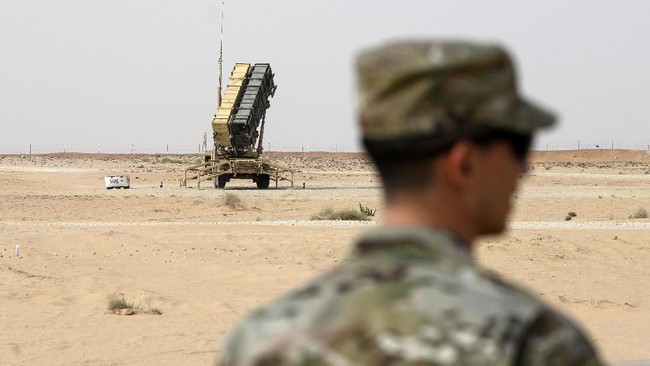
Patriot systems intercept aircraft, ballistic missiles, and cruise missiles. In the Iran conflict, CSIS estimates the US has used between 1,060 and 1,430 Patriot missiles. With a pre-war stockpile of approximately 2,330 units, this means up to half of the Patriot stock could be depleted.
THAAD is equally critical. The Terminal High Altitude Area Defense system intercepts ballistic missiles at higher altitudes. CSIS estimates the US has used 190 to 290 THAAD interceptors from an initial stock of around 360 units. At the higher estimate, over 80% of pre-war THAAD stock could already be exhausted.
Missiles Fired in an Instant, Replacements Take Years
The biggest issue isn’t just how many missiles have been fired, but how long it takes to replace them. CSIS data shows new deliveries for seven key US ammunition types could take 42 to 64 months — meaning 3.5 to over five years to replenish depleted stocks. For example, Patriot replacements take around 42 months, Tomahawk 47 months, JASSM 48 months, while SM-3 could take up to 64 months. This highlights that modern warfare isn’t just about having the most advanced weapons; countries must also produce them in large quantities quickly. For the US, this is a significant challenge, as demand isn’t limited to the Iran conflict. Ukraine requires Patriots to counter Russia, Japan needs Tomahawks to bolster Pacific defence, and other allies are also in line to purchase US weapons.