
Three Months After Disaster, Aceh Still Struggling to Recover
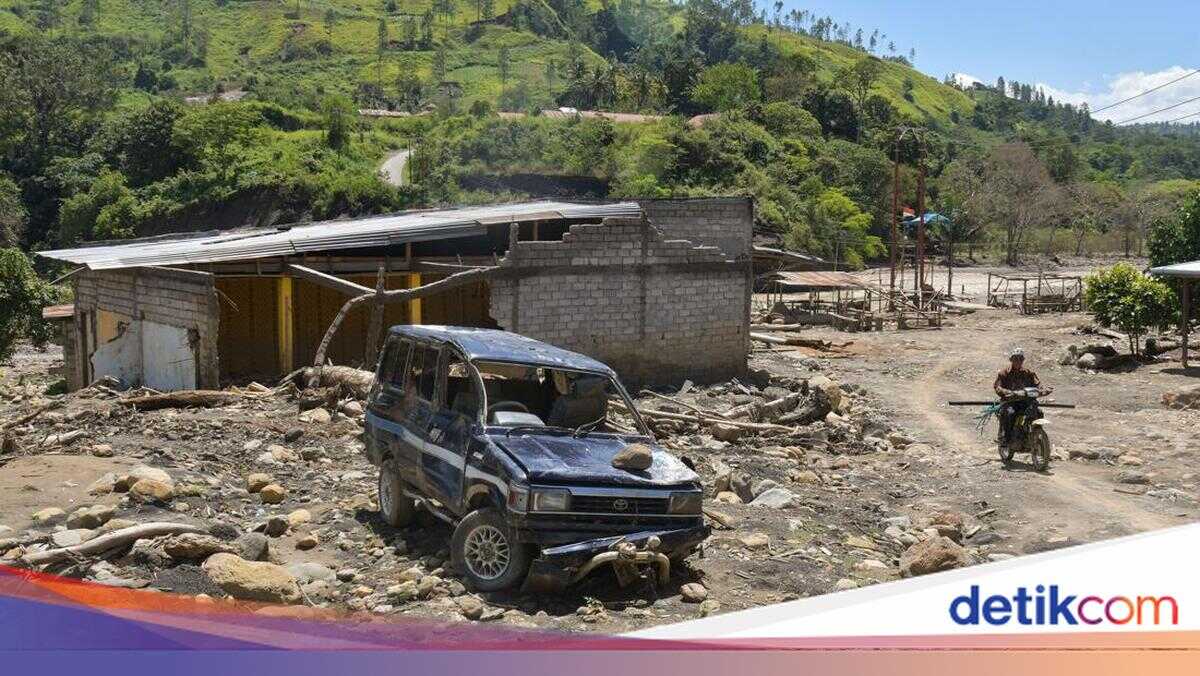
Sumiadi, a 24-year-old man, and his family have had nowhere to return to since massive floods struck his home in Aceh Tamiang in November 2025. All that remains of his house are foundation pillars and remnants of tiles buried under mud.
“Destroyed, everything was destroyed,” Sumiadi told detikX.
As of at least last weekend, Sumiadi was still sheltering in a tent erected by the non-profit Asia Muslim Charity Foundation (ACMF) in the highlands of Serba Village, Bandar Pusaka subdistrict, Aceh Tamiang. Alongside Sumiadi and his family, at least 74 other residents of Serba Village remain displaced. They share the same fate — their homes were swept away by logs carried in the floodwaters, leaving only rubble behind.
Their lives now depend entirely on aid from the government and philanthropic organisations. Without it, they would likely go hungry.
Nearly all displaced residents of Serba Village have lost their livelihoods, whilst the economic foundations of Aceh Tamiang have yet to return to normal.
“We used to farm, sir. The flooding lasted too long. The fruit rotted. It will take a year before we can harvest again,” said Sumiadi.
Aceh Tamiang district government spokesman Muhammad Farij said that a total of 8,190 families remain displaced to date. Around 850 are living in temporary shelters. The rest are staying with relatives or in evacuation tents.
Their lives, Farij said, remain heavily dependent on government assistance, particularly capital support and equipment to revive Aceh Tamiang’s economic arteries during the Ramadan period. Logistical needs for feeding the displaced have been relatively well met.
“For instance, there are women who used to sell cakes before the fasting month. In the temporary shelters, they lack the equipment to produce cakes. During the floods, much of their equipment was damaged or lost. So that also needs attention,” Farij told detikX by telephone.
Although approximately 98 per cent of micro, small and medium enterprises in Aceh Tamiang have resumed operations, capital and equipment assistance remain necessary. Such aid is expected to accelerate economic recovery whilst curbing the sharp rise in staple goods prices across Aceh caused by the disaster.
Data from the Central Statistics Agency shows that Aceh Tamiang was the second-highest contributor to inflation in December 2025, reaching 6.17 per cent — well above the national average of approximately 2.92 per cent.
The government, through Home Affairs Minister Tito Karnavian, recently claimed to have successfully stabilised staple goods prices in disaster-affected areas. Inflation in disaster-hit cities, Tito said, had been addressed thanks to continuous logistical aid provided by the government to Aceh, West Sumatra and North Sumatra.
“Through the extraordinary hard work of the government, especially the central government, including Bulog and the Food Agency, combined with the respective local governments,” Tito said in a written statement on Tuesday, 27 January.
However, for the people of Aceh, these claims represent success only on paper. According to Iskandar, 45, a resident of Blang Panjoe, Bireuen, staple goods prices remain considerably high. Acehnese communities are still unable to afford market prices for essential goods.
According to data from the Ministry of Marine Affairs and Fisheries, fishermen were among the hardest hit economically by last November’s floods. In Aceh, at least 7,981 fishermen and 3,210 boats were affected. In North Sumatra, 354 fishermen and 369 boats were impacted, whilst in West Sumatra, 33 fishermen and 33 boats were affected.
“The economy is still difficult. Sometimes there isn’t even money to buy rice,” Iskandar told detikX.
The slow recovery of staple goods prices in disaster areas was also acknowledged by the Head of the Communications and Information Agency of Bener Meriah district, Ilham Abdi. He said prices in Bener Meriah had begun to gradually recover but remained unaffordable compared with pre-disaster levels.
One contributing factor is the persistently low purchasing power of the population. This stems from the loss of livelihoods among Bener Meriah residents, the majority of whom are coffee farmers. As a result, purchasing power in Bener Meriah has fallen by more than 50 per cent.
The Bener Meriah district government has undertaken several measures to restabilise prices, including conducting market operations ahead of Ramadan the previous week.
“We will do it again ahead of Eid. So when demand increases, we conduct these market operations to suppress prices and restore stability ahead of the holiday,” Ilham told detikX.
The Regent of East Aceh, Iskandar Usman Al-Farlaky, expressed similar sentiments. The loss of livelihoods among East Aceh residents due to the floods has caused economic recovery to proceed at a sluggish pace.
Moreover, the National Disaster Mitigation Agency (BNPB) has tended to delay disbursement of cash assistance to affected residents. The BNPB, Iskandar said, has argued that cash disbursements must be phased and accompanied by receipts for building material purchases.
Yet, Iskandar stressed, this money is urgently needed by communities to revitalise their economies. The majority of East Aceh residents work in the agriculture and plantation sectors and can no longer earn a living due to flood damage to their fields and rice paddies.
“We still very much hope for support from all parties because residents’ livelihoods have not recovered,” Iskandar wrote.