
Three Former Subordinates of Nadiem Demanded 6-15 Years in Prison in Chromebook Corruption Case
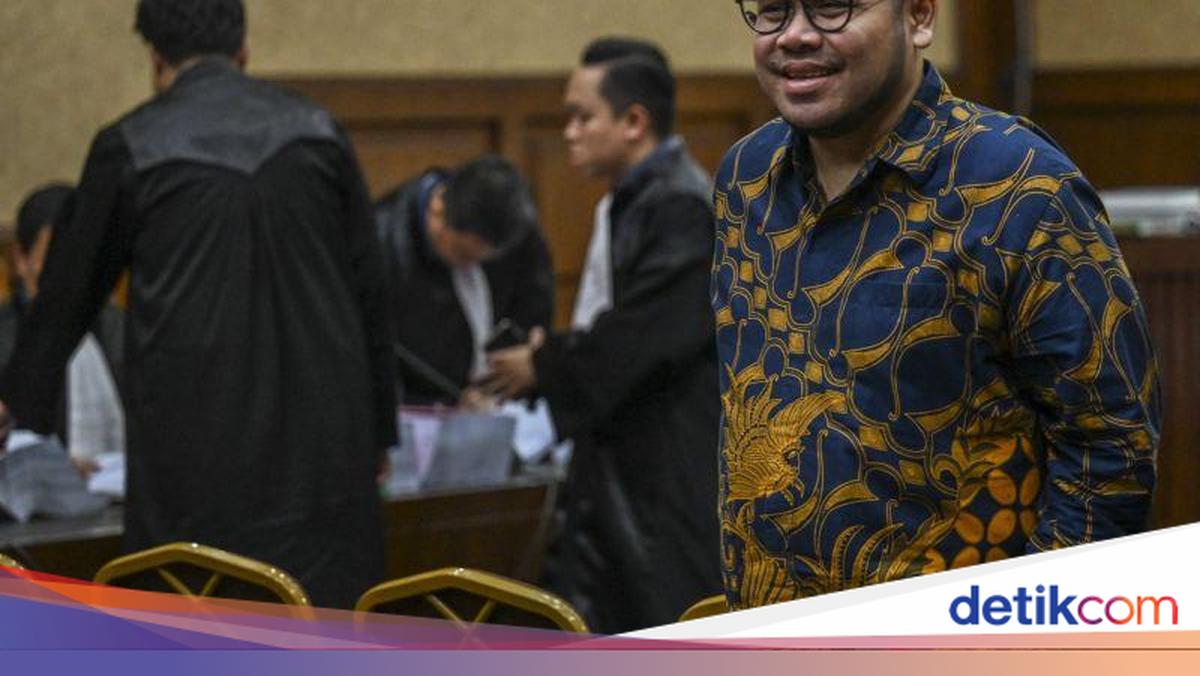
Three defendants, former subordinates of ex-Minister of Education, Culture, Research, and Technology Nadiem Makarim, have been demanded prison sentences of 6 to 15 years. Prosecutors are convinced that the defendants are guilty of corruption in the procurement of Chromebook laptops and Chrome Device Management (CDM), which caused a state loss of Rp 2.1 trillion.
“We demand that the panel of judges declare the defendants proven guilty legally and convincingly of committing the criminal act of corruption jointly,” stated public prosecutor (JPU) from the Attorney General’s Office Roy Riady during the trial at the Jakarta Corruption Court, as reported by Antara news agency on Friday (17/4/2026).
The three former subordinates of Nadiem are Sri Wahyuningsih, former Director of Primary Schools at the Directorate General of Early Childhood Education, Basic Education, and Secondary Education from 2020-2021; Mulyatsyah, former Director of Junior High Schools at the Ministry of Education, Culture, Research, and Technology in 2020; and Ibrahim Arief (IBAM), a consultant for the Ministry during Nadiem’s era.
Ibrahim faces a 15-year prison demand. Meanwhile, Sri Wahyuningsih and Mulyatsyah each face a 6-year prison sentence.
In addition to prison terms, all three are demanded to pay criminal fines: Ibam Rp 1 billion, with the stipulation that if not paid, it will be replaced (subsidiary) with 190 days in prison.
Sri and Mulyatsyah each face a fine of Rp 500 million, subsidiary 120 days in prison.
Specifically for Ibam and Mulyatsyah, they are also demanded to pay additional restitution of Rp 16.92 billion for Ibam, subsidiary 7 years and 6 months in prison, and Rp 2.28 billion for Mulyatsyah, subsidiary 3 years in prison.
The JPU believes the defendants are guilty of violating Article 603 jo. Article 20 of the Criminal Code jo. Article 18 of Law No. 31 of 1999 on the Eradication of Criminal Acts of Corruption as amended and supplemented by Law No. 20 of 2001.
Aggravating factors include the defendants not supporting the government’s programme for clean and corruption-free state administration free from Corruption, Collusion, and Nepotism (KKN).
“Mitigating factor: the defendants have never been convicted,” stated the JPU.
In the alleged corruption case of the education digitalisation programme involving the procurement of Chromebook laptops and Chrome Device Management (CDM) within the Ministry of Education, Culture, Research, and Technology from 2019-2022, the three defendants are suspected of causing state financial losses of Rp 2.18 trillion.
In detail, the state losses include Rp 1.56 trillion related to the education digitalisation programme at the Ministry, as well as USD 44.05 million or equivalent to Rp 621.39 billion due to unnecessary and unbeneficial CDM procurement in the education digitalisation programme.
It is stated that the three defendants committed these unlawful acts jointly with the Minister of Education, Culture, Research, and Technology for the 2019-2024 period, Nadiem Anwar Makarim, and former Special Staff of the Ministry, Jurist Tan.
The unlawful acts committed by the defendants include jointly with Nadiem and Jurist conducting the procurement of information and communication technology-based learning facilities in the form of Chromebook laptops and CDM for the 2020, 2021, and 2022 fiscal years, which did not align with the procurement planning and various procurement principles.
Furthermore, Nadiem, through Ibam, Mulyatsyah, Sri, and Jurist, conducted a review of studies and needs analysis for information and communication technology equipment (ICT) in the education digitalisation programme, leading to Chromebook laptops using the Chrome operating system (Chrome OS) and CDM.
However, the review of studies and needs analysis was not based on the identification of primary and secondary education needs in Indonesia, resulting in failures, especially in 3T areas (outermost, underdeveloped, frontier).
The defendants, jointly with Nadiem and Jurist, also prepared unit prices and budget allocations for 2020 without supporting surveys and accountable data.
The preparation of unit prices and budget allocations was done in the budgeting for Chromebook laptop procurement using the Chrome operating system (Chrome OS) and CDM, which served as the reference for unit prices and budget allocations in 2021 and 2022.
In addition, the defendants, together with Nadiem and Jurist, are also suspected of procuring Chromebook laptops at the Ministry through e-Catalogue or the School Procurement Information System (SIPLah) application in 2020, 2021, and 2022 without price evaluation of the procurement implementation and without supporting price references.
For their actions, the three face penalties under Article 2 paragraph (1) or Article 3 jo. Article 18 of Law No. 31 of 1999 on the Eradication of Criminal Acts of Corruption as amended and supplemented by Law No. 20 of 2001 jo. Article 55 paragraph (1) first of the Criminal Code.