
Three foreign nationals arrested at Soetta Immigration for using forged passports
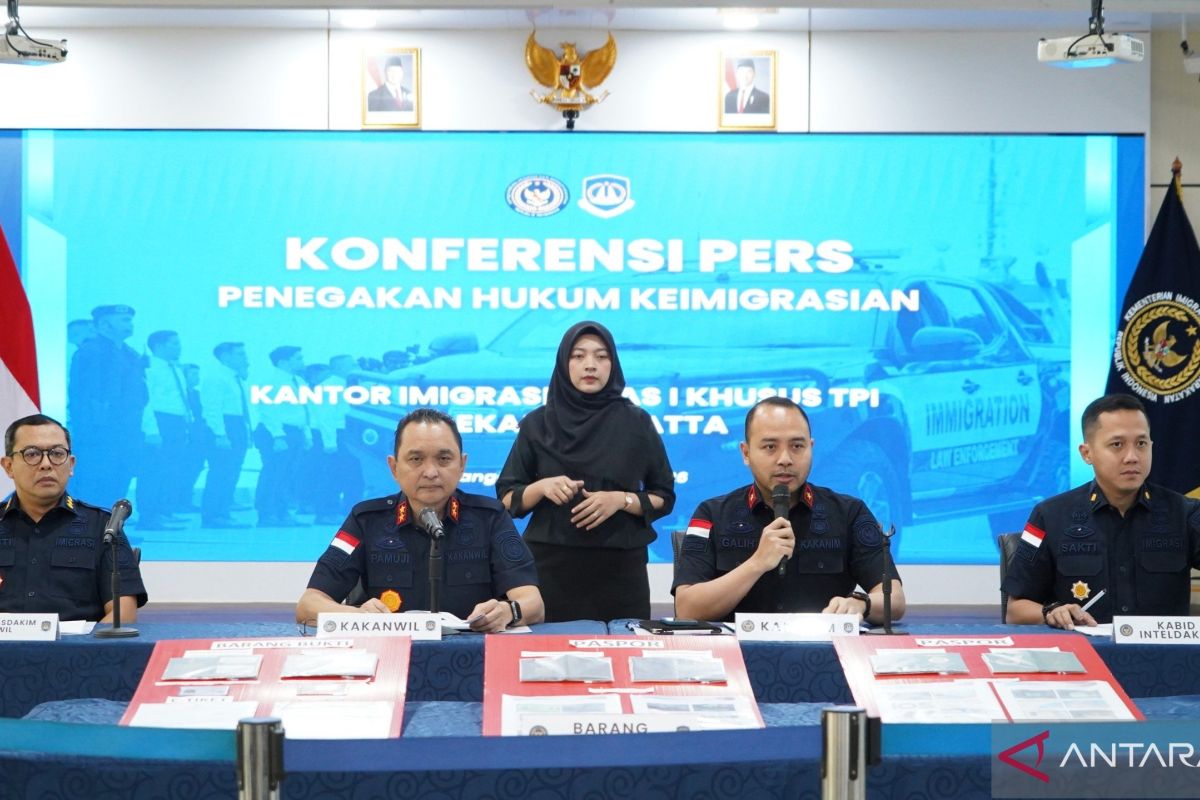
The Immigration Office Class I Special at Soekarno-Hatta (Soetta) Airport in Tangerang, Banten, has arrested three foreign nationals (WNA) after they were discovered using forged passports whilst entering Indonesian territory.
The three WNA comprised ADA (28), an Iraqi national; HS (31), a Moroccan national; and AI (52), a Nigerian national. All three were apprehended by officials during immigration checks at Soekarno-Hatta International Airport.
“The use of forged travel documents constitutes a serious violation with the potential to threaten national border security. Immigration will take firm action against any misuse of travel documents in accordance with applicable legal provisions,” said Galih Priya Kartika Perdhana, Head of the Soekarno-Hatta Immigration Office, in Tangerang on Wednesday.
He stated that the case was uncovered during routine inspection at the Immigration counter at Soekarno-Hatta International Airport, where officers grew suspicious of the passports being presented. The passports were subsequently submitted to the Immigration Intelligence and Enforcement Division (Inteldakim) for further investigation using forensic laboratory examination.
According to Galih, the first case involved a Moroccan national identified as HS, who allegedly used a forged Saudi Arabian passport. The second case involved a Nigerian national identified as AI, who used a forged Burkina Faso passport. The third case involved an Iraqi national identified as ADA, who allegedly used a forged Australian passport. All three will now face deportation.
The modus operandi employed by these three individuals involved using forged passports to facilitate onward travel to Europe or Australia. The case was uncovered through vigilant document inspection by officers and the application of the Passenger Analysis Unit (PAU) at the immigration checkpoint.
For their actions, the three foreign nationals accused of using forged travel documents are suspected of violating Article 119 Paragraph (2) of Law Number 6 of 2011 on Immigration, which carries a maximum penalty of five years imprisonment.
“Particularly given the conflicts and tensions occurring in the Middle East region, these conditions not only impact regional stability but also have the potential to trigger various transnational crimes, including the misuse and forgery of travel documents,” Galih explained.