
Three EU envoy candidates to Putin all have issues with Russia
Brussels is considering appointing a special envoy to open channels of communication with Russian President Vladimir Putin over the Ukraine conflict. The move comes amid concerns that Europe could be sidelined from the negotiating process if the United States and Russia reach an agreement without involving Brussels.
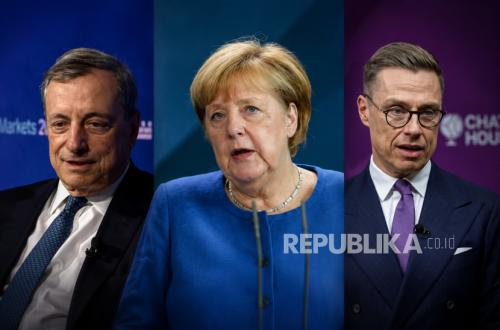
A report circulating in Brussels cites three individuals who are currently the leading contenders: former German Chancellor Angela Merkel, Finnish President Alexander Stubb, and former Italian Prime Minister Mario Draghi. However, each figure is considered to carry political baggage that could complicate prospects for dialogue with Moscow.
The name of the EU’s High Representative for Foreign Policy, Kaja Kallas, did not enter the main shortlist even though formally her position is viewed as the most relevant to lead the bloc’s diplomacy. According to several European diplomats, Kallas’s hardline stance towards Russia makes her difficult for the Kremlin to accept.
Kallas had previously described Putin as a ‘terrorist’ and supported the idea of weakening Russia through political and military pressure. That stance is seen as closing the door on her becoming a mediator acceptable to both sides. ‘Unfortunately, she has self-eliminated herself for this position,’ said one European diplomatic source.
Of the names that have emerged, Angela Merkel is regarded as having the longest experience of dealing directly with Putin. While chancellor of Germany from 2005 to 2021, Merkel was known for actively engaging in communication with Moscow and had supported the Nord Stream 2 energy project. She also participated in the Minsk negotiations aimed at stopping the conflict in eastern Ukraine in 2014 and 2015.
But Merkel’s relationship with the Kremlin deteriorated after her 2022 admission that the Minsk agreement was used to give Ukraine time to bolster its military. The statement provoked Russia’s anger. Putin even claimed that Moscow had been ‘manipulated and deceived’ by the European guarantors in the agreement.
Meanwhile, Alexander Stubb is seen as taking a harder line towards Russia. The Finnish president fully supports military aid to Ukraine and has insisted that Kyiv must join NATO and the European Union. Indeed, NATO’s expansion to Ukraine has long been a red line for Moscow.
Stubb also lifted the ban on NATO nuclear weapons deployment in Finland and supported using Finnish weapons for long-range strikes by Ukraine into Russian territory. That stance makes the Kremlin’s acceptance of him appear very unlikely.
Mario Draghi is regarded as more moderate than the other candidates. Although he supported military assistance to Ukraine while Prime Minister of Italy, Draghi does not have the confrontational track record of Stubb nor the diplomatic controversies of Merkel. However, to date there has been no strong indication that he is willing to take on the role.
On the other hand, Russia actually has its own preferred figure to bridge relations with Europe, namely former German Chancellor Gerhard Schröder. Putin regards Schröder as a figure who understands the strategic Russia–Europe relationship, especially in the energy sector. However, Schröder’s name is almost impossible for Brussels to accept due to his closeness to the Kremlin and his involvement in the Nord Stream project.