
Three Cargo Ships Attacked in Strait of Hormuz; Iran Threatens Global Oil Prices Surge to US$200
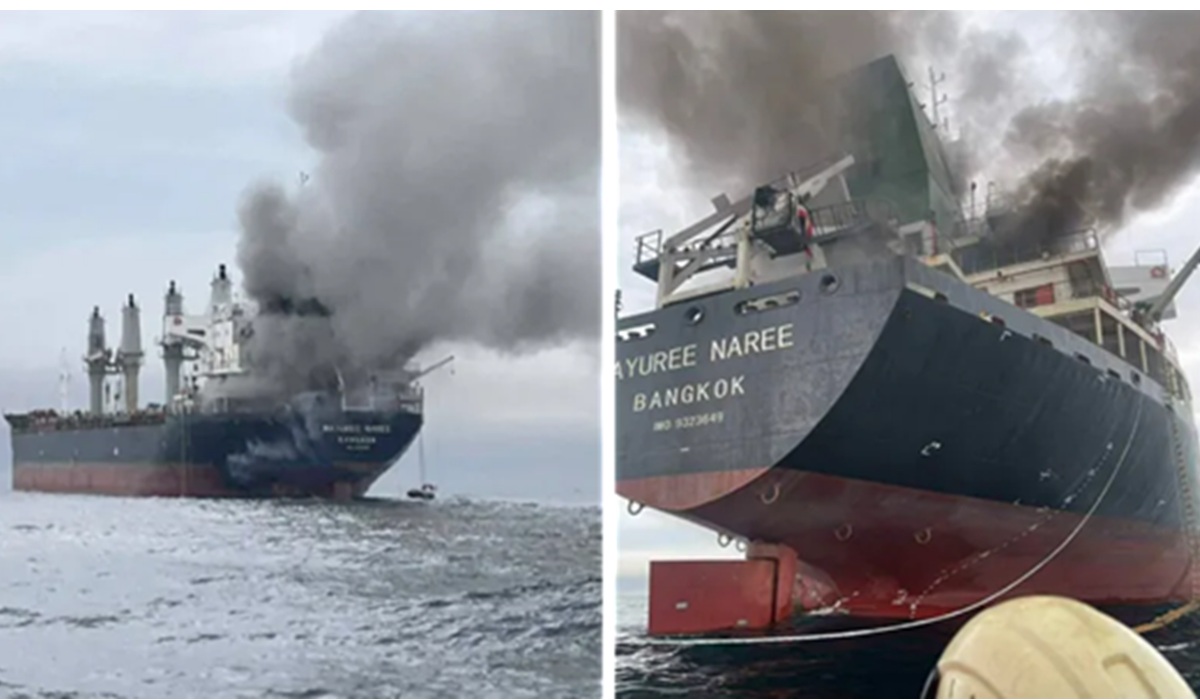
The situation in the Strait of Hormuz, one of the world’s most vital shipping lanes, continues to deteriorate. Maritime authorities reported three cargo ships struck by “unknown projectiles” on Wednesday local time. The incident occurred amid escalating military pressure following the outbreak of open conflict between Israel, the US, and Iran since late February.
This tension has had direct consequences for the global economy. Traffic flow through the critical oil corridor has plummeted sharply, triggering energy price spikes on international markets.
Reports of the attacks began with a Thai-flagged vessel struck by projectiles north of Oman, causing a massive fire on board. The Thai Navy immediately deployed emergency assistance to rescue 23 crew members. Iran subsequently acknowledged responsibility for the attack, claiming the crew had ignored its warnings.
Shortly thereafter, a Japanese-flagged container ship sustained minor damage after being attacked off the coast of the United Arab Emirates. A third cargo vessel was also reportedly struck northwest of Dubai. The UK Maritime Trade Operations (UKMTO) has now urged all vessels to transit with heightened vigilance.
Iran demonstrated a confrontational stance by stating it would block every drop of oil destined for the United States, Israel, and their allies. Iran’s government spokesperson, Ebrahim Zolfaqari, affirmed that any vessel heading to these countries is a legitimate target.
“Prepare yourselves for crude oil prices to reach US$200, as oil prices depend on the regional stability you have destroyed,” Zolfaqari stated via state television.
In response to this blockade threat, US President Donald Trump previously issued stern warnings through Truth Social.
“If Iran does anything to stop the flow of Oil in the Strait of Hormuz, they will be hit by the United States TWENTY TIMES HARDER than the attacks they have received so far,” Trump wrote.
The escalation has extended beyond the seas. Iran’s Islamic Revolutionary Guards Corps (IRGC) has claimed to have launched massive missile strikes against several US bases in Qatar, Kuwait, and Iraq. Iran’s state media, IRIB, has described this as the “most devastating operation” since the conflict began.
The conflict has also affected civilian facilities. Two drones crashed near Dubai International Airport, injuring four people and forcing travellers to seek shelter in secure areas. Meanwhile, Lebanon’s Ministry of Health reported at least 570 deaths since Israeli airstrikes began in early March in response to Hezbollah rocket attacks.
The International Energy Agency (IEA) has now announced the release of 400 million barrels from its reserves—a record in history—as an emergency effort to stabilise the increasingly volatile global market.