
Three Arab Experts Reveal Why the US Attack on Tehran is Actually a Deadly Trap
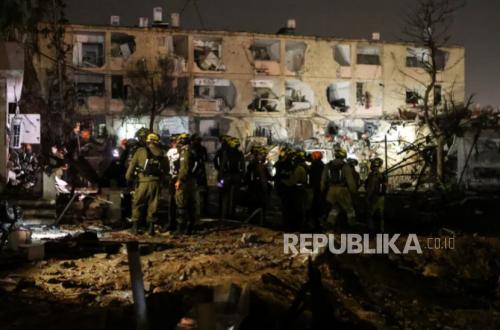
When US and Israeli bombs began raining down on Tehran on the first day of Operation Epic Fury, Donald Trump delivered a message to the Iranian people: this is your chance for freedom. Take control of your country. A new world awaits.
That message sounds familiar. Two decades earlier, George W. Bush delivered a nearly identical one to the Iraqi people. And the result, as history has proven in the most brutal way, was not democracy blooming in the desert, but a civil war that claimed hundreds of thousands of lives and instability that has yet to fully subside to this day.
Now, three intellectual voices from the Arab world—a social scientist based at Al Jazeera, a senior Saudi columnist, and an economic analyst at Al Arabiya—offer differing yet complementary readings of the conflict that is once again reshaping the face of the Middle East.
Read together, the three form an argument that is hard to refute: that the United States is repeating its old mistakes with new packaging, while the Arab world itself is not yet fully able to read the true threat looming before it.
Blank Slate and Historical Arrogance
Hisham Jaafar, a social science expert and consultant on conflict resolution for several international organisations, begins his analysis from a concept he calls the “blank slate.” This concept, he writes in Al Jazeera, encapsulates “the historical arrogance underlying American foreign policy interventions in the Middle East.”
Jaafar’s argument rests on a simple yet piercing premise: that successive US administrations have treated societies with millennia-old civilisations as if they were blank pages that could be rewritten by military might. “Institutions, loyalties, and political behaviours are products of centuries of cultural and social evolution,” he asserts, “not structures that can be exported and reshaped by foreign military intervention.”
In the case of Iraq, the Bush administration proceeded from an assumption that, if not so fatal in its consequences, almost feels naive: that once Saddam Hussein was removed, the Iraqi people would naturally and enthusiastically build Western-style democracy. In reality, America did not pave the way for democracy. What happened instead: the disbandment of the Baathist state apparatus ignited the fuse of sectarian civil war that had been held in check for decades by the iron fist of the regime.
What makes Bush’s failure more tragic, according to Jaafar, is that the officials sent to “rebuild Iraq” were selected not based on local expertise, but on political loyalty to the Bush administration. He notes an absurdity that illustrates the entire problem: “Candidates were asked about their views on US domestic abortion laws before being sent to manage a country in the Middle East.”