
Three Advocates Petition Constitutional Court to Place National Police Under Home Affairs Ministry
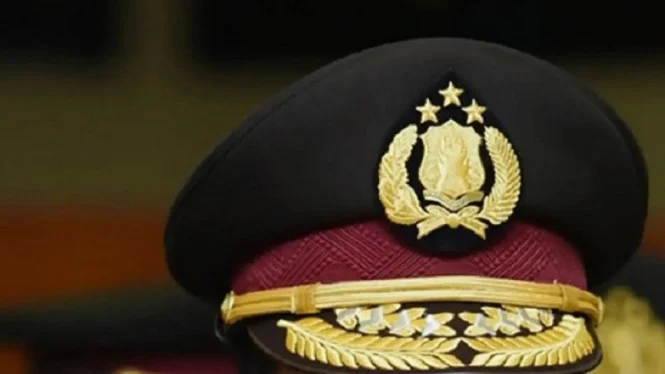
Jakarta — Three advocates challenging Law Number 2 of 2002 on the Republic of Indonesia National Police (Polri) at the Constitutional Court have petitioned for the police force to be placed under the Ministry of Home Affairs.
The petitioners — Christian Adrianus Sihite, Syamsul Jahidin, and Edy Rudyanto — argue that placing Polri directly under the President carries the risk of discrimination against those holding differing views, including advocates actively defending the legal interests of the public.
“Advocates defending the opposition or parties at odds with the government would be treated differently compared to advocates handling cases on behalf of the government or its supporters,” Jahidin said during a preliminary hearing at the Constitutional Court in Jakarta on Thursday, 19 February 2026.
According to the petitioners, advocates are entitled to professional legal proceedings free from external interests. If law enforcement officials become entangled in the political interests of those in power, the three advocates argued, the integrity of investigations and prosecutions involving their clients could be compromised.
The criminalisation of advocates is deemed to infringe upon the petitioners’ constitutional right to equal protection before the law, thereby contravening Article 27 paragraph (1) and Article 28D paragraph (1) of the 1945 Constitution.
In case number 63/PUU-XXIV/2026, the petitioners are challenging Article 8 paragraph (1), which stipulates that “the Republic of Indonesia National Police shall be under the President.”
They are also challenging Article 8 paragraph (2) of the Police Law, which states: “The Republic of Indonesia National Police shall be led by the National Police Chief, who in the discharge of duties shall be accountable to the President in accordance with prevailing laws and regulations.”
Beyond the lack of legal certainty, the advocates further argued that placing Polri directly under the President without going through the relevant ministry would give rise to problems concerning oversight, coordination, and institutional accountability.
According to them, the President — who simultaneously holds the political function of the executive — would find it difficult to conduct detailed technical supervision of police operations. Consequently, there are concerns that Polri’s core duties, which should focus on serving the public interest, could be drawn into the political interests of those in power.
The President, the petitioners stated, holds executive power whilst also occupying a political office, and therefore the direct relationship between Polri and the President would blur the lines of institutional oversight and accountability.