
Threat of World War Three Looms; Indonesia at Risk of Energy Crisis
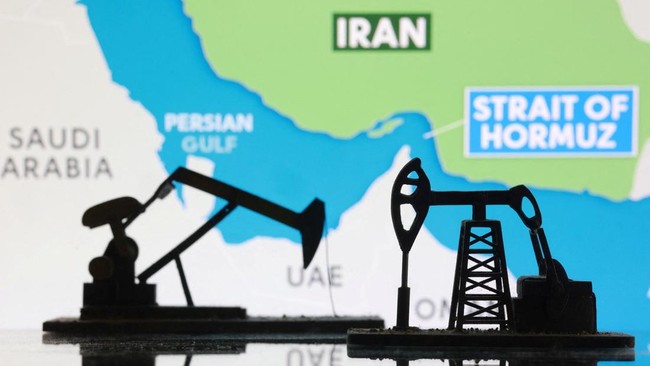
Jakarta — The blockade of shipping routes through the Strait of Hormuz resulting from the Iran-Israel conflict, involving the United States, has raised concerns about Indonesia’s domestic energy supply. Indonesia currently lacks a strategic petroleum reserve (SPR) buffer that many developed nations maintain.
Bhima Yudhistira, Executive Director of the Center of Economic and Law Studies (CELIOS), assesses that Indonesia’s domestic energy resilience remains vulnerable due to high dependence on oil imports. This represents one of the primary causes of potential fuel shortages during global energy crises.
Bhima explained that Indonesia’s current energy reserves are relatively limited, so when global disruptions occur, their impact can be immediately felt in domestic fuel availability. However, plans to increase reserves from around 20 days to three months are not the principal solution.
“Indonesia’s energy reserves are vulnerable, which is why an oil crisis can trigger fuel shortages. But the solution of increasing reserves from 20 days to three months is not the answer,” Bhima told CNBC Indonesia.
According to him, expanding storage capacity will merely increase reserves but will not resolve the underlying problem, as Indonesia will remain heavily dependent on oil imports.
“The option should instead be accelerating electrification in the transport system and energy transition. Public transport using electric buses across all regions, reducing fuel consumption in private vehicles. What matters is making public transport affordable and comfortable so people shift to it,” he said.
Separately, Komaidi Notonegoro, Executive Director of ReforMiner Institute, stated that globally, most countries maintain strategic energy reserves averaging between three to six months to manage potential supply disruptions.
Developed nations maintain even larger energy stockpiles. However, establishing large energy reserves relates not only to managing crises but also to a nation’s fiscal capacity and infrastructure readiness.
“Ideally in this context, it involves multiple aspects — not only ideal to prevent crises but ideal considering fiscal capacity as well. Then whether the infrastructure is ready. This ideal scenario differs between countries,” Komaidi explained.
Komaidi detailed that fuel storage costs are substantial. For example, storing one day’s fuel supply requires a budget allocation of approximately Rp2.5 trillion to Rp3 trillion.
This means if Indonesia wants energy reserves for 30 days, budget requirements could reach around Rp60 trillion to Rp90 trillion just for storage costs and commodity value.
“Currently we have 20-25 days of reserves, but this is not state-owned stock but operational inventory of business entities that remain unsold. For businesses, maintaining such long-term reserves is burdensome as it ties up significant capital,” Komaidi said.