
Threat of Fuel Crisis and Vulnerability of Indonesia's Energy Storage Capacity
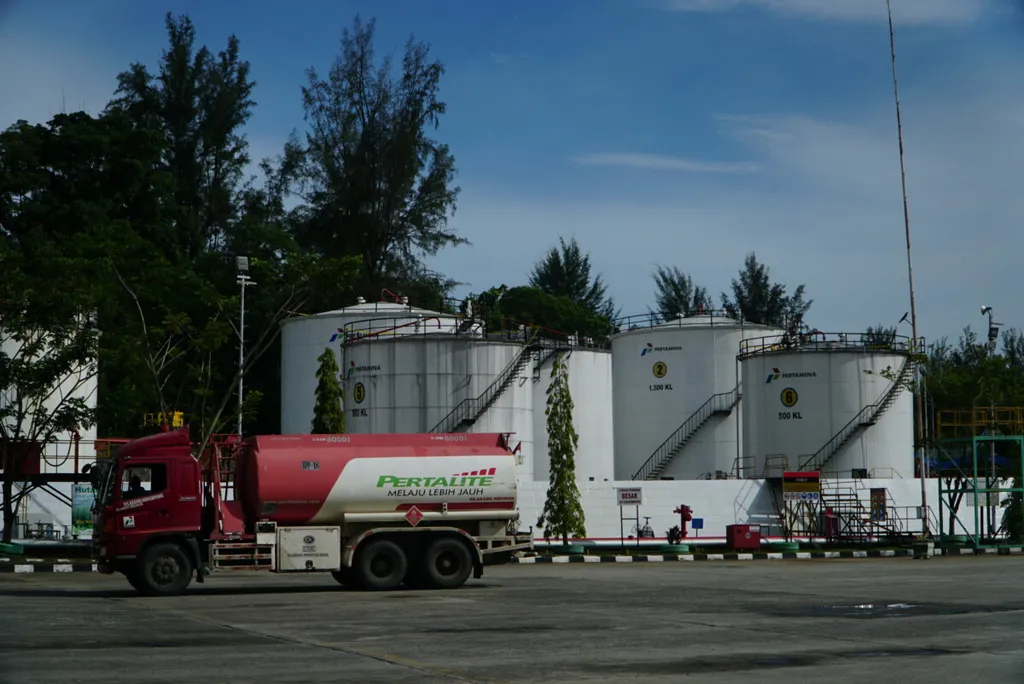
The impact of the escalating conflict between the United States and Israel against Iran in the Middle East since late February 2026 on energy commodity trade has been felt in Indonesia. Rather than manifesting as higher energy prices, it has triggered public anxiety over national fuel reserves.
Parts of Aceh, North Sumatra, and Riau began experiencing a fuel crisis in the first week of March. Motorcyclists and large vehicle drivers queued for hours at filling stations, with long lines persisting until petrol and diesel stocks were exhausted. Some consumers in North Sumatra reported experiencing fuel shortages, particularly diesel, over recent weeks. However, panic escalated dramatically after Energy and Mineral Resources Minister Bahlil Lahadalia announced on Tuesday, 3 March 2026, that energy stocks—comprising fuel, crude oil, and liquefied petroleum gas (LPG)—stood at only 23 days.
Public anxiety intensified further with Eid al-Fitr (Idul Fitri) approaching within weeks. The Eid holiday period typically drives increased fuel consumption for homebound travel and family visits. State-owned Pertamina, which supplies the majority of national fuel, has predicted a 12 per cent rise in petrol consumption during Ramadan and Eid, and has assured that supplies will be secure heading into the festival.
However, the public has recognised the vulnerability of Indonesia’s fuel storage capacity, which falls below 30 days. Indonesia must import nearly two-thirds of its total daily oil and fuel requirements. Current oil consumption reaches approximately 1.7 million barrels per day, with only around 600,000 barrels produced domestically.
This compounds concerns that Middle Eastern conflict will disrupt Indonesia’s energy supply—25 per cent of which is sourced from the region—with projections suggesting prolonged disruption to shipping activity in the Strait of Hormuz.
Energy Minister Bahlil acknowledged that Indonesia currently lacks fuel storage facilities with a capacity exceeding one month. “Storage isn’t sufficient,” he stated after a limited meeting with President Prabowo Subianto at the Presidential Palace in Jakarta on Wednesday, 4 March 2026.
The government will therefore promptly construct additional fuel storage to ensure energy security. In the near term, the government will redirect energy imports away from the Middle East towards other countries.
Kholid Syeirazi, a member of the National Energy Council (DEN), explained that current national energy stock availability varies by fuel type and derives from operational storage capacity held by operators, the majority owned by Pertamina.
2025 data shows diesel stocks at 18 days, aviation fuel at 29 days, Pertalite (RON 90 petrol) at 19 days, Pertamax (RON 92) at 26 days, and marine fuel oil (MFO) at 33 days. LPG national stocks stand at approximately 15 days.
Other energy types hold relatively longer reserves: Pertadex diesel brand at 39 days, kerosene at 38 days, and Pertamax Turbo (RON 98) at 29 days.
“When averaged out, our reserves stand at 20–23 days,” Kholid stated.
This represents circulating stock that continuously moves. Energy stocks do not halt at these figures because supply mechanisms ensure constant inflow and outflow.
Storage capacity has improved somewhat with additional facilities added by operators and Pertamina. Since Indonesia became a net petroleum importer in 2004, energy reserve capacity has typically hovered around the teens of days.
Indonesia currently lacks a strategic petroleum reserve (SPR) facility, as mandated by Presidential Regulation No. 96 of 2024. Such facilities must be state-owned and are crucial for establishing national energy reserves deployable during emergencies.
According to international standards employed by developed nations, including the Organisation for Economic Co-operation and Development (OECD) and the International Energy Agency (IEA), minimum oil reserves should equal 90 days of imports.
As of November 2025, IEA member states generally maintain high fuel stock resilience despite importer status. Estonia, for example, has the highest fuel stock resilience, capable of sustaining operations for 11,000 days without importing oil.
In Asia, the highest fuel stock resilience is in South Korea and Japan, at approximately 200 days. Australia is the only IEA member with fuel stock resilience below 90 days, at just 47 days.
Indonesia remains significantly below this benchmark. Kholid identified funding constraints as a key challenge for the government in maximising energy resilience.
Regarding the SPR, regulations mandate construction using the state budget (APBN). Given increasingly constrained public finances, Kholid acknowledged that the government requires private sector funding assistance.
The national roadmap targets strategic reserve availability of 25–30 days initially, achieved by 2035.
“Progress is limited because everything depends on the state budget. Strategic petroleum reserves constitute state assets, making private sector participation difficult. The private sector wants storage that contains not only static reserves but also dynamic reserves to support commercial demand, including for private business operators,” he stated.