
THR Payment Violation Cases Still Prevalent, DPR: Evidence of Weak Supervision
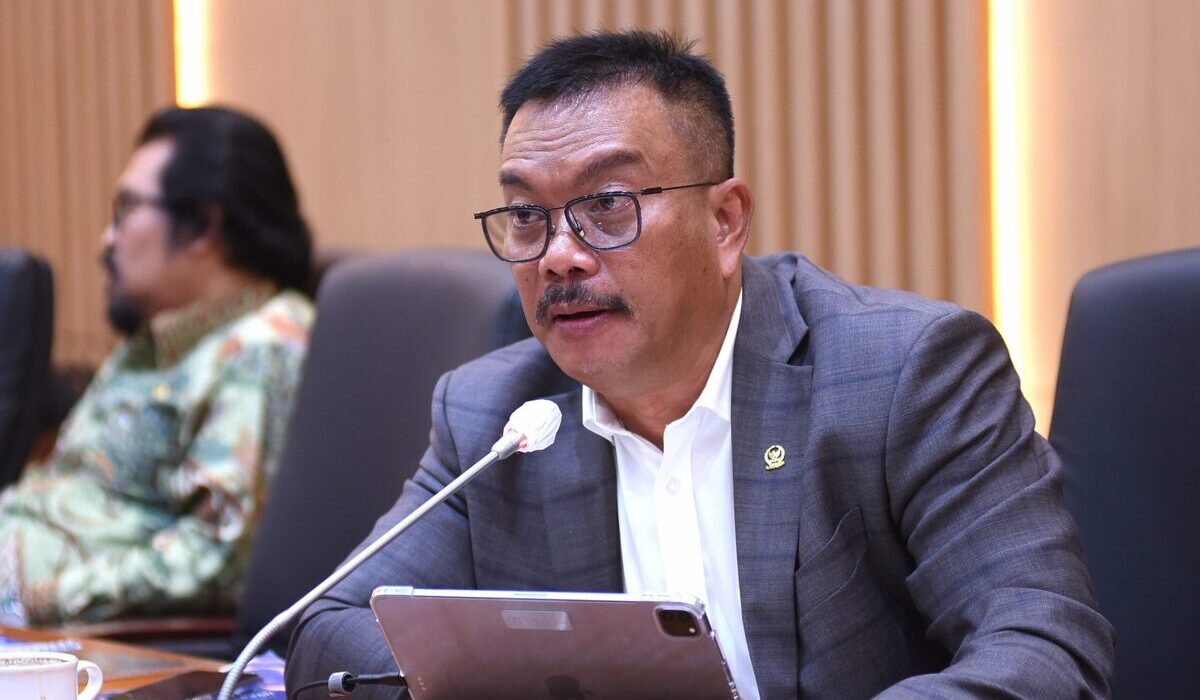
A member of the DPR RI’s Commission IX, Edy Wuryanto, has spotlighted findings from the Ministry of Manpower (Kemenaker) regarding the prevalence of violations in the payment of Holiday Allowance (THR). As of 25 March 2026 at 3:00 PM WIB, Kemenaker recorded 1,461 THR cases still in the process of handling, while 173 cases have been resolved. To date, supervisors have issued 200 Performance Audit Reports, 7 Audit Notes I, and 4 recommendations concerning THR violations.
Edy assesses this situation as more than a mere technical issue, but as clear evidence of weak supervision and law enforcement in the labour sector. “Every year, THR problems recur. This is not coincidental, but the result of weak oversight and unassertive law enforcement. The state seems to be losing to rogue companies,” Edy stated in a comment in Jakarta on Friday (27/3).
According to him, the root of the problem lies in sanctions that do not provide a deterrent effect. So far, THR violations have only been subject to administrative sanctions, such as restrictions on public services up to business cessation. However, in practice, he said, these sanctions are rarely fully implemented.
“Even if implemented, the government hesitates for fear of leading to layoffs. As a result, administrative sanctions become ineffective. This must be acknowledged: this approach is no longer relevant,” Edy remarked.
The politician from the PDI Perjuangan Faction added that the legal route through the mechanism for resolving industrial relations disputes as regulated in Law No. 2 of 2004 on the Settlement of Industrial Relations Disputes also does not provide quick solutions.
“The process is lengthy, potentially taking up to two years, and court decisions are often not enforced by companies. Workers ultimately choose to stay silent because the process is exhausting and does not guarantee results. This is an unfair situation,” Edy said.
Therefore, Edy urges a fundamental change in approach. In his view, THR payment violations should be considered criminal offences, not just administrative ones.
“This concerns workers’ rights. If it continues to be treated as an administrative violation, the perpetrators will never be deterred. The state must be more assertive,” he emphasised.
Meanwhile, the Ministry of Manpower assures that all complaints related to 2026 THR payments received at the complaint post will be handled seriously. Manpower Minister Yassierli emphasised that reports from workers must not merely stop at administrative desks but must lead to concrete resolutions in the field.
“Amid the still high number of 2026 THR payment reports, Kemenaker urges central and regional labour supervisors to act quickly to examine every complaint so that workers’ rights are promptly fulfilled,” Yassierli stated in Jakarta, quoted by Antara on Thursday (26/3).
Yassierli asked governors to immediately deploy labour supervisors in their respective regions to follow up on reports, whether received through the Kemenaker THR Post or local employment services. According to him, the presence of the state is crucial when workers’ economic rights are threatened by non-fulfilment from companies.
“I ask the governors to immediately deploy labour supervisors to examine every incoming report. The state must not allow workers’ complaints to pile up without certainty of resolution,” Yassierli stressed.