
Thousands of PPPK vent fears to NTT Governor over possible dismissal
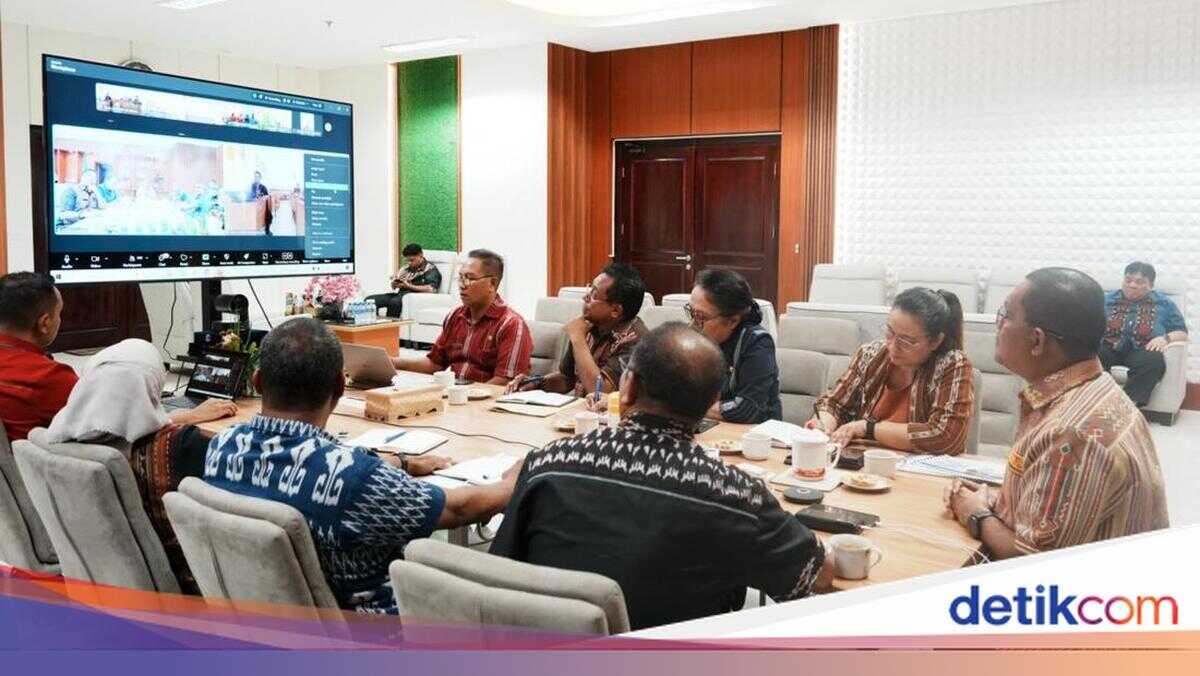
Thousands of Pegawai Pemerintah dengan Perjanjian Kerja (PPPK) in the province of East Nusa Tenggara (NTT) have voiced their anxiety to the NTT Governor, Emanuel Melkiades Laka Lena. The concern was raised in a virtual dialogue held on Thursday 5 March 2026. The forum included PPPK personnel from five OPD (organisasi perangkat daerah) across NTT, spanning sectors from education to health. ‘Today I have invited five OPD together with PPPK from across NTT in the 22 regencies. We will use Zoom so everyone can connect, participate, and join from anywhere,’ Melki said in a press statement received by detikBali. Melki wants to hear directly what the PPPK want to convey to us or how we respond to Law Number 1 of 2022 on the Financial Relations between the Central Government and Local Governments (HKPD). ‘I want to hear directly what you all think, or how we should respond to Law Number 1 of 2022 on the Financial Relations between the Central Government and Local Governments,’ he explained. In the dialogue, one major issue dominated: the PPPK voiced concerns about the possibility of being laid off due to local fiscal constraints and caps on payroll expenditure set out in local government finance regulations. One PPPK, Abdullah Ajid Dewa Zena, a PJOK teacher at SMK Negeri Ndora in Nagekeo Regency, said he feared being laid off someday. Abdullah explained that at his school the teaching staff formation is already filled by PPPK across almost all subjects. However, if a policy of PPPK staff cuts is implemented, the impact on teaching and learning would be immediate. ‘If I, as a PJOK teacher, am laid off, the school will automatically be short of a teacher for that subject. We beg the Governor to find a solution,’ he wrote in the discussion room. In addition, other participants shared the same concerns; teachers noted that if PPPK are laid off, many schools in remote areas will face teaching shortages. A PPPK at SMK Negeri Basmuti described the school’s heavy reliance on PPPK. He said there are only three teachers who are PNS, while eight others are PPPK. ‘If we eight are laid off, can the three PNS teachers manage the entire education process at the school?’ he asked. Besides voicing concerns, many PPPK also proposed policy solutions the government could adopt. ‘One of the most common requests is for the central government to re-examine Law Number 1 of 2022 on the HKPD,’ he noted. Meanwhile, a teacher participant from SMK Negeri 1 Kota Kupang, Endang, suggested to the government that the central government consider revising the HKPD to ensure payroll expenditure restrictions do not directly affect the sustainability of PPPK staff. He also proposed that PPPK salaries should not be rigidly included within the 30 per cent cap on payroll expenditure of the regional budget (APBD). ‘I propose that PPPK salary payments could be transferred to the central government,’ Endang said. The dialogue also featured personal stories illustrating the social impact of regional fiscal policy. For example, Tini, a PPPK staff member from UPTD PKDLHP, spoke of her anxiety as she has a child in higher education. ‘I have one child who is now in their second semester of study. We are very sad if I have to be laid off. We are PAD fighters, and we are still working even though there is talk of PPPK layoffs,’ Tini said. Responding to the various aspirations, Melki said the dialogue had been opened deliberately to seek joint solutions and to avoid extreme policy moves. ‘This must be a shared effort. Our hope is that none of you will be laid off. Therefore I am opening this discussion openly so that this issue receives national attention,’ he said. He emphasised that the regional government wants to prevent sudden decisions without clear discussion. ‘I do not want to reach the end of the road with no discussion and then suddenly a decision that harms you all. That is why we are starting this early so we can prepare and seek solutions together,’ he added. The NTT provincial government is pushing to reassess and, if possible, change the national regulations, including the cap on payroll expenditure. ‘We will work together to ensure that this law can be reviewed. If there are changes, for example relaxing the payroll cap from 30 per cent to 40 per cent, we will of course adjust regional policies to accommodate those needs,’ the Golkar party politician said. He noted that the provincial government is also preparing steps to broaden the region’s fiscal space, firstly through increased transfers from the centre to the region and secondly by boosting the region’s own-source revenue (PAD). ‘If our PAD increases, we will more easily use it for a range of activities related to regional development,’ he added. According to Melki, this issue is not confined to NTT but is shared by many regions across Indonesia facing fiscal capacity constraints. He plans to convene regional heads in NTT to meet with the central government, including the Ministries of Home Affairs, Finance, and PAN-RB.