
Thousands of Interfaith Worshippers Participate in Pilgrimage Tradition in Wanasari Village
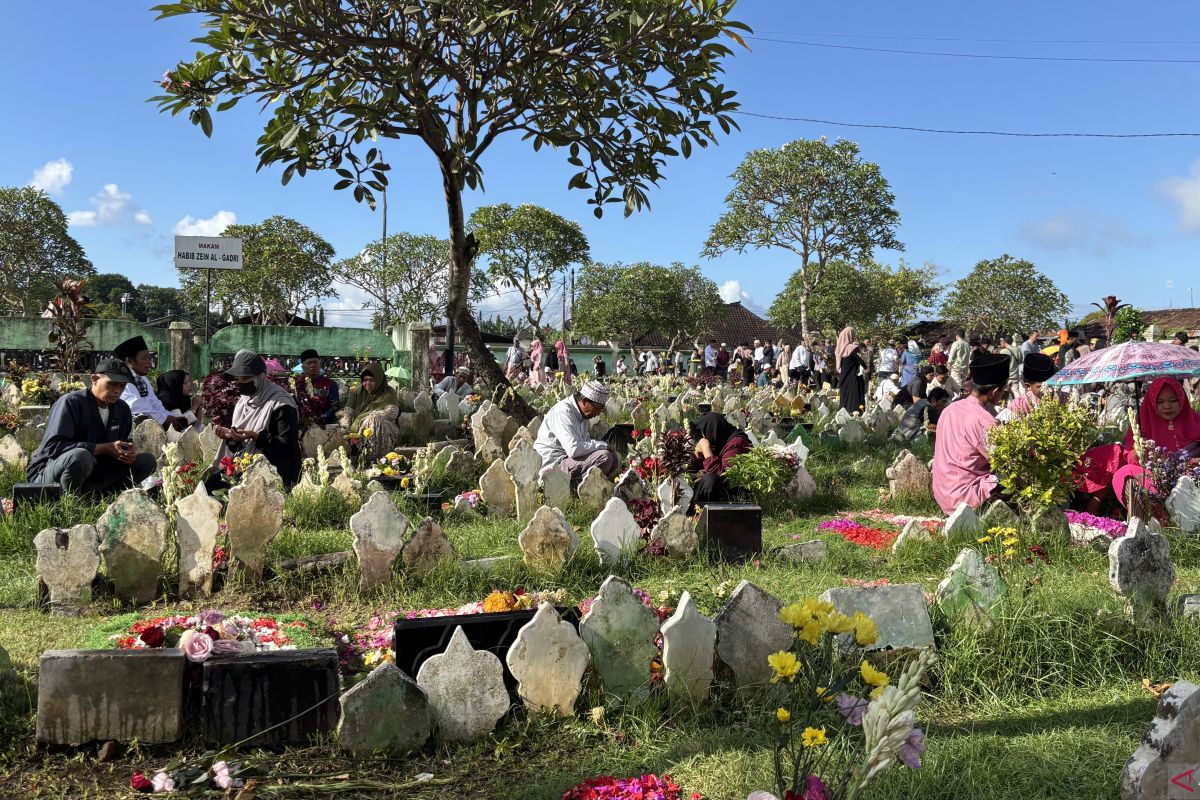
Denpasar (ANTARA) - Thousands of worshippers, not only Muslims but from various religions, carried out the pilgrimage tradition at the Muslim Wanasari Maruti 13 Cemetery, also known as Wanasari Village, in Denpasar City, Bali, during Eid al-Fitr 1447 Hijriah on Saturday.
“This cemetery is indeed intended for Muslims, where Muslims are buried, but in Bali, due to its diversity, there are those whose parents, children, or siblings have Islamic descent, so when they pass away, their non-Muslim families join in the pilgrimage,” said the Chairman of the Muslim Wanasari Maruti 13 Cemetery in Denpasar City, Abdul Hakim, in Denpasar on Saturday.
He stated that there are no restrictions in this tradition; all religious communities are allowed to visit, provided they dress modestly and neatly.
Usually, pilgrims begin arriving a week before Eid al-Fitr to clean the graves of deceased family members or scatter flowers early.
Moreover, two days prior was Nyepi Day, so the Muslim community had planned their schedules well, as no pilgrimages or other preparations could be done during Nyepi.
The peak of the tradition occurs on Eid Day, after Muslims perform Eid al-Fitr prayers, when crowds flock to the Wanasari Village cemetery to pray for deceased family members.
“The series of pilgrimages sees visitors arriving H-1 week before Eid al-Fitr, but the peak is on Eid al-Fitr day because usually to avoid crowds, those coming today are those who did not go home for Eid, those who deliberately came to Bali to visit family graves, or those residing in Bali—many Balinese Muslims have descendants of different religions,” he said.
On normal days, Abdul noted that the number of people visiting the Wanasari Village cemetery is 100-150, while on Thursday (19/3) or Friday night it can reach 500 people. However, during Ramadan approaching Eid, the number can reach thousands.
To accommodate those attending the pilgrimage tradition, the cemetery management opens the site until 6:00 PM WITA. This is supported by facilities and drinking water to assist the crowds entering the cemetery.
It is estimated that the number of pilgrims will decrease by H+3 after Eid.
The atmosphere of interfaith tolerance among worshippers is not only evident inside the cemetery but also in front of it, as the MSMEs selling flowers in front of the cemetery are not only run by Muslims but also Hindus.
“These MSMEs are mostly local residents, but there are Hindus among them, even some have been selling flowers for generations, some for 20 years. They usually stock up on flowers, especially since it coincides with Nyepi Day, so they prepare a lot because many people buy; this brings blessings to all faiths,” he said.
One of the pilgrims named Nyoman Menu shared that her family is among those who still uphold the pilgrimage tradition despite being interfaith.
On this Eid al-Fitr, she attended with her children and grandchildren, including those of different religions, to pray for her late husband.
“This is a routine we carry out, not only during Eid al-Fitr and Ramadan. I am with my children; all of them are diverse here. Even those from abroad are present. I myself am originally from Bali but followed my husband, and the important thing is the purpose of coming here is to pray and pay respects to the deceased,” she said.