
Thousands Attend Grand Session in China, Global Investors Wary
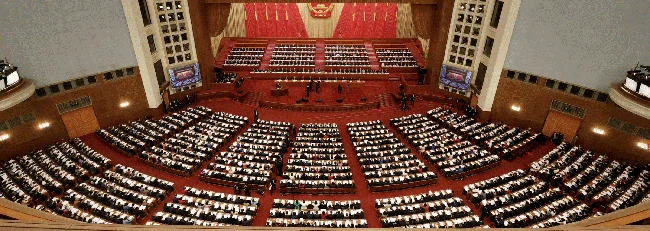
China’s government will stage its annual political agenda, the Two Sessions (Lianghui), from 4-12 March 2026. The annual Chinese political forum can set policy directions for the economy, fiscal policy, and industry, while signalling important expectations for global markets.
Two Sessions are the two major annual sessions in China that almost always attract investors, businesspeople, and governments in many countries.
This year, Two Sessions will run from 4-12 March 2026, with the session of the Chinese People’s Political Consultative Conference (CPPCC) opening first on Wednesday 4 March 2026, followed by the National People’s Congress (NPC) a day later on 5 March 2026.
The NPC was established in 1954 and meets once a year. This year, nearly 3,000 delegates from across provinces, autonomous regions, sub-provincial cities, state institutions, and Chinese military officials are expected to gather in Beijing for the session.
However, not all will have major influence. The main focus will be on the NPC’s Standing Committee of 175 members. The Standing Committee is currently led by Zhao Leji, who is also a member of the Politburo Standing Committee of the Communist Party of China.
From these meetings, the Chinese government typically outlines targets for economic growth, the direction of national spending, inflation objectives, job creation, and sectors to prioritise.
This year, market attention is higher as the Two Sessions also mark the start of the 15th Five-Year Plan for 2026-2030, i.e., China’s five-year development plan.
In other words, what is discussed is not only the short-term targets for this year, but also the broad direction of China’s economy for the next five years.
Two Sessions are China’s biggest political agenda each year with the schedule: the National Advisory body session starts on 4 March; the National Congress convenes on about 5 March; the meetings run until around 10-11 March; the period 2-6 March is the opening phase and early discussion of the strategic agenda.
The most crucial agenda is to set the direction of China’s economy for the current year and the coming years. President Xi Jinping is one of the most anticipated figures to attend during the event.
Therefore, there are several key aspects that markets are most looking forward to from this year’s Two Sessions in China.
- Fiscal stimulus and Budget Deficit: Reading the direction of China’s growth
The first thing investors are waiting for is how boldly the government will open the fiscal taps. This matters because China’s economy still faces significant challenges, from weak domestic demand and low inflation pressure to a weak property sector.
This is evident in China’s economy growing 5% in 2025. While in line with government targets, the pace in Q4 2025 slowed to 4.5% year-on-year. This has led markets to wonder whether Beijing will provide bigger fiscal support in 2026.
In such a situation, markets will look to see whether China will be more aggressive in supporting growth through government spending, incentives, and additional debt issuance. Beyond growth targets, investors will also scrutinise the size of the budget deficit and how far the government is willing to use fiscal instruments to sustain the economy.
If the announced stimulus is modest, markets will regard the government as adopting a conservative approach. Conversely, if fiscal space is opened wider, that will be read as a signal that Beijing believes the economy still needs a further push.
- Direction of Support for Domestic Consumption
Next, markets are keen to see whether China will provide more tangible support to household consumption. So far, China’s growth has remained heavily reliant on investment, manufacturing, and exports. Yet for growth to be healthier and more sustainable, many analysts say China needs to strengthen domestic household spending.
This issue matters because without improving purchasing power, China’s growth will struggle to rebound strongly from within.
Therefore, markets will look to see whether this year’s government work report includes more concrete steps, such as income support for households, stronger social safety nets, or policies that reduce the burden on the public.
Thus, it is not just about whether consumption is named a priority, but whether Beijing is truly preparing policies that will encourage people to spend more. If domestic consumption remains weak, China’s economy will remain highly dependent on exports and investment as the main growth drivers.
- The fate of the Property Sector and Local Government Debt
Markets are also waiting for signals regarding the property sector and local government debt. This matters because property remains one of the biggest sources of pressure on China’s economy. Problems in this sector affect not only developers but households, consumer confidence, local governments, and the financial system.
When the property sector softens, asset prices fall, households become more cautious in spending, and local government finances are strained because they have long relied on land sales.
Thus, these two key meetings will be watched for any additional support to stabilise the property market and ease the debt burden of local governments.
Many analysts do not expect a dramatic surprise.
However, the direction of policy in these two areas remains crucial because it will determine how quickly China’s economy can emerge from structural pressures that have already persisted.