
"Those Who Struggle Remain Untouched" — A Blind Masseuse's Confession: Yet to Receive Government Assistance
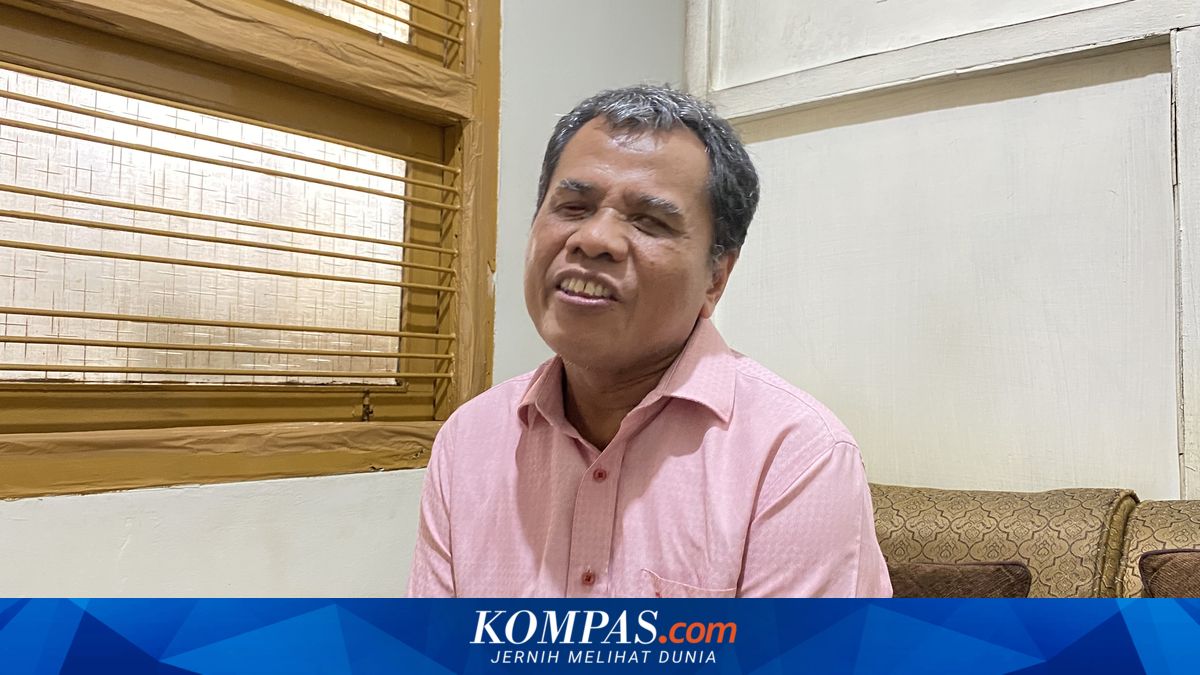
In Jakarta’s East, along Jalan Raya Bogor, Kramat Jati, a sign reading Panti Pijat Tuna Netra ‘Wahyu’ hangs by the roadside. Its paint is dull, the iron frame rusted with age. Yet for Suparwi, 58, the sign is not just a marker of a business but a symbol of a decades-long life of struggle.
Behind the modest massage room with two wooden beds and white curtains, Suparwi, a blind masseur, has persisted amid shrinking clients, the rise of online massage services, and social assistance schemes that he believes are often mis-targeted.
‘What is truly hard is that many people do not touch assistance,’ he told Kompas.com during a visit to his clinic on Wednesday, 20 May 2026.
Conversely, there are recipients deemed more self-sufficient who still receive aid. ‘In my neighbourhood I sometimes feel envious. Neighbours get this and that, while I know nothing about it. Perhaps because I am not registered,’ he said.
For Suparwi, the main problem lies in inaccurate data. He mentions the decile system used by the government to determine aid recipients. ‘Well, I don’t know how they decide the decile. It feels like most of it is by guesswork.’
He believes on-the-ground verification should be more thorough because the situation of people with disabilities cannot be equated with the general public. ‘If a proper survey is done, those living in relatively better houses should not be the priority for aid. Those like us often do not receive it.’
However, he notes many blind people live alone, are single parents, or rent homes, and still do not fall into priority categories. He argues that the cost of living for the visually impaired tends to be higher than the general public. ‘If we have to go somewhere, we often need a companion, which adds extra costs,’ he said.
Suparwi’s disappointment also extends to the Jakarta Disability Card (KPDJ) programme. He says not all people with disabilities can obtain the card, even among those with similar physical limitations. ‘There is also the Jakarta Disability Card. But many fellow disabled people who should receive it do not,’ he said.
He recalls when the programme was launched under Governor Anies Baswedan. The government said people with disabilities have higher living needs and require special support. ‘If it is a disability programme, it should be accessible to all disabled people, not selectively like the poor.’
According to Suparwi, many blind recipients become weary of handling the bureaucratic processes, which are long and convoluted. Accessing government offices is not easy for the blind either. ‘Just going to a government office is a heavy undertaking for us,’ he said.
Hence, he hopes the government will be more active in the field rather than just receiving administrative reports. ‘My hope is that the government truly goes down to the ground, not just taking reports. It must be checked in person.’
Another blind masseur, Sumadi, 57, also laments the lack of government attention to disabled people, especially those working in informal sectors like massage. Speaking to Kompas.com at his massage clinic in Gang Keamanan III, Tebet, South Jakarta, on Wednesday, 20 May 2026, Sumadi said blind masseurs still fight on their own to survive amid increasing competition.
‘In my view, it is still insufficient. The government does not appear to pay enough attention to people with disabilities, including those who work as blind masseurs,’ said Sumadi, a native of Jepara, Central Java. He says the economic situation for blind masseurs has worsened since the Covid-19 pandemic, with customers dwindling while the cost of living in Jakarta rises.
‘There used to be 80 to 100 customers a month. Now it is far lower,’ he said. He criticises government attention to blind massage professionals as lagging behind the growth of modern massage services and the proliferation of digital apps. ‘There are now many online massages. That has eroded customers,’ he said.
Although he briefly joined GoMassage in 2015, Sumadi says the platform stopped operating during the pandemic. Since then, he has relied on old customers and home visits.