
Thomas Djiwandono: Digital Risks Could Shake the Global Financial System
JAKARTA - Digitalisation of the financial sector is seen as bringing new challenges to the stability of the global financial system. Amid increasingly strong interconnections between institutions and across countries, financial risks are now considered capable of spreading more quickly and having a broader impact.
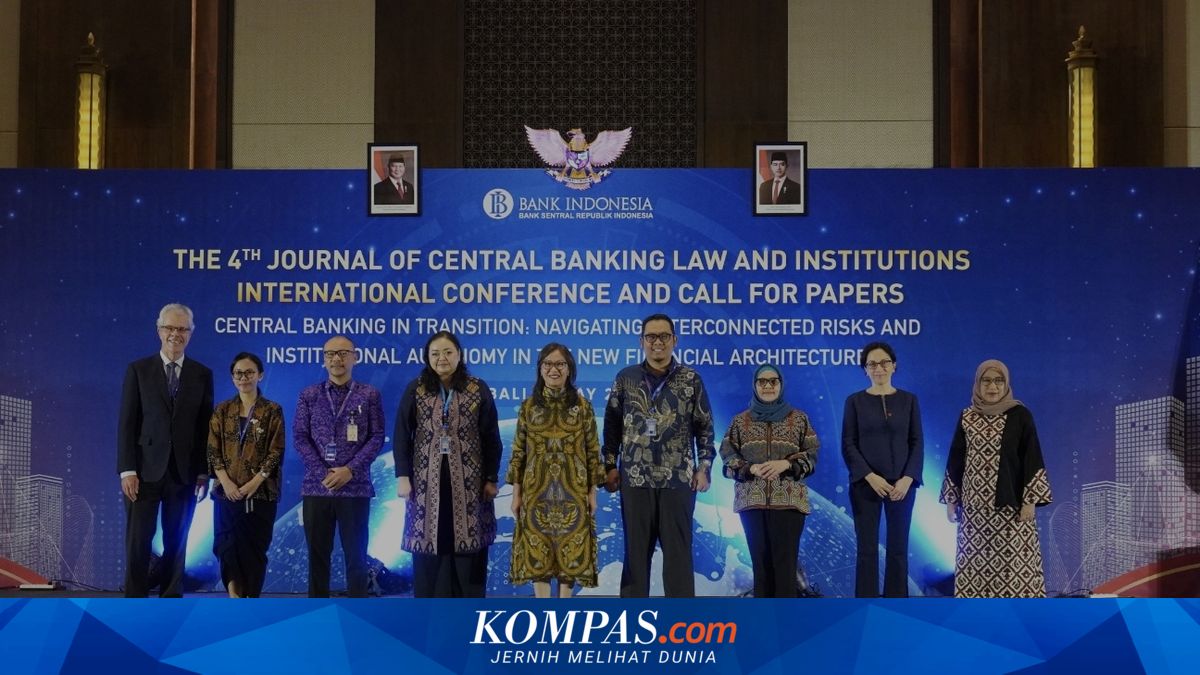
This view was expressed by Bank Indonesia Deputy Governor Thomas A.M. Djiwandono when opening the 4th International Conference and Call for Papers Journal of Central Banking Law and Institutions (ICFP-JCLI) in Bali on Friday (8/5/2026).
“The world is entering a new financial architecture marked by increasingly strong interconnections between institutions, sectors, and policy domains,” said Thomas, via a BI release, quoted on Saturday (9/5/2026).
He stated that the boundaries between monetary, fiscal, and macroprudential policies are now increasingly blurring. On the other hand, digitalisation and cross-border interconnections also accelerate risk transmission and enlarge the potential for shocks to the financial system.
Therefore, according to Thomas, every policy now has interconnected and multidimensional impacts, requiring more integrated policy responses.
In such conditions, Thomas assessed that an integrated policy framework, close inter-agency coordination, and clear legal mandates among respective institutions are needed.
According to him, institutional autonomy is now becoming increasingly crucial, not only for central banks but also for regulators and other financial sector supervisory authorities.
This year’s ICFP-JCLI conference raised the theme “Central Banking in Transition: Navigating Interconnected Risks and Institutional Governance and Autonomy in the New Financial Architecture”.
The forum brings together researchers, academics, and practitioners from various countries to exchange ideas in the fields of law, institutions, economics, and central banking.
The broad attention to issues of central bank governance and global financial architecture is reflected in the participation of this year’s JCLI Call for Papers, which received 291 papers from authors in 34 countries.
In the discussion forum involving authorities and academics, it was also concluded that the acceleration of digital transformation in the financial sector not only opens up space for innovation but also demands strengthened governance and readiness to face crises.
In addition, an adaptive supervisory framework is considered important for maintaining financial system stability amid the increasingly dynamic changes in the global financial architecture.