
This Type of Vehicle Will Break Indonesia's Dependence on Imported Fuel
Jakarta, CNBC Indonesia - PT PLN (Persero) has revealed that the use of electric vehicles could spur a reduction in imports of petroleum fuels. This is because Indonesia’s electricity sector relies entirely on domestic resources, unlike the BBM sector which remains dependent on foreign supply.
PLN’s Chief Executive Darmawan Prasodjo emphasised that mass adoption of electric vehicles could transform the national energy consumption structure from import-based to domestic-based. He said the shift to electric vehicles would strengthen the country’s energy security because the electricity supply is produced domestically.
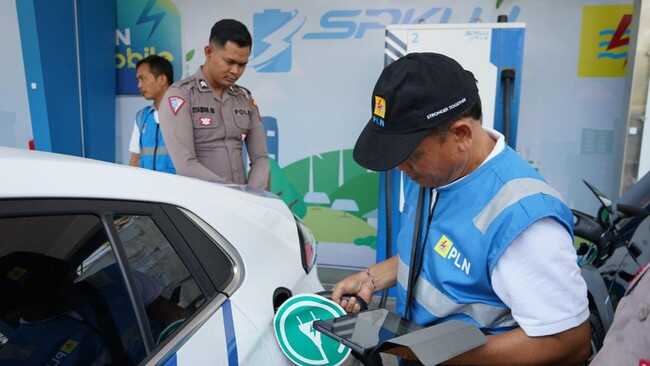
‘BBM today is largely import-based, and electricity is energy based on domestic strength. In other words, shifting from import-based energy to domestic-based energy,’ Darmawan said at the inauguration of the Public Electric Vehicle Charging Station (SPKLU) at the Ministry of Trade, Jakarta, on Thursday (5 March 2026).
Darmawan explained that besides energy sovereignty, electric vehicles also offer far higher technical efficiency. An electric motor can convert energy into motion with efficiency above 85%.
‘The electricity, when converted into kinetic energy, is highly efficient. Its efficiency is more than 85%. What is the proof? Please look at an electric fan: from front to back, left to right, is there an exhaust pipe? There isn’t one,’ he added.
Meanwhile, petrol-powered vehicles have an efficiency of around 13%-15% because most energy is lost as heat through the exhaust. In contrast, electric vehicles can convert energy into motion without wasting much energy as heat, making them much more energy-efficient. Consequently, driving electric cars/motorcycles becomes cheaper.
‘If the distance is the same, 10 km would use only 1.5 KWh of electricity, costing around Rp 2,600 per 10 kilometres. So the cost could be reduced by up to 70% compared with using a petrol car,’ he added.
For comparison, Darmawan stated that to cover 10 km a car would need one litre of petrol, priced at around Rp 13,000.
‘And the emissions, one litre of petrol emits 2.4 kilograms of CO2. 1.5 KWh of electricity if emitted from coal-fired plants would be about 1.5 kilograms of CO2. So the emissions reduction is also very drastic even if the plant is coal-fired,’ he said.
(hsy/hsy)