
This Plant is Abundant in Indonesian Gardens, Sought After by Ice Cream and Luxury Perfume Factories
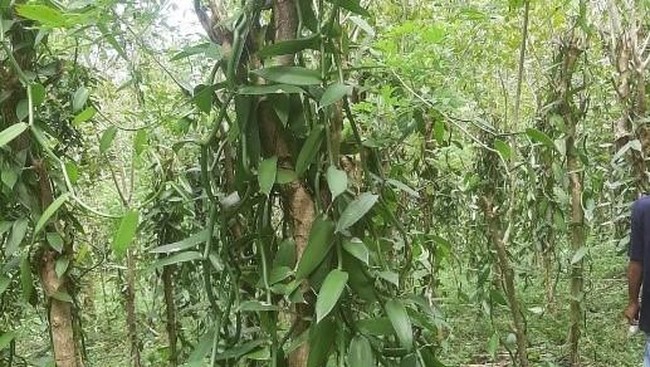
Soft, warm, sweet, and hard to replicate, on the shelves of premium ice cream in Paris, in the pastry kitchens of New York, and in the production lines of artisan perfumes in Europe, there is one aroma that continues to be pursued: vanilla. The world knows it as a luxury raw material. Indonesia knows it as an old commodity that still holds significant bargaining power. According to data from the Ministry of Trade, Indonesia’s vanilla exports from January to December 2025 reached US$11.62 million, a 11.72% decline compared to the previous year. This decline gives the impression that the market is weakening. However, when examined in more detail, the export destinations reveal a different picture. The United States is the largest buyer with a value of US$8.25 million. This is followed by France with US$616,000, Germany with US$521,000, the Netherlands with US$330,000, and China with US$289,000. These countries are centres of the global processed food, premium bakery, cosmetics, and fragrance industries. They are not buying ordinary materials. Indonesian vanilla is sought after because of its distinctive aroma profile. The natural vanillin content from Indonesia’s tropical vanilla is known for its intense sweet, creamy character, with a thin smoky layer in some origins. In the premium food industry, such characteristics are highly valued because they provide a deeper flavour than synthetic flavours. Producers of chocolate, ice cream, pastry, beverages, and even perfumes require a consistent taste identity. As global consumers become increasingly sensitive to the “natural ingredients” label, the position of natural vanilla is elevated. Data from the Central Statistics Agency shows that exports of whole vanilla or neither crushed nor ground continue to form the backbone. In 2025, its value reached US$9.77 million, while processed vanilla crushed or ground was US$1.85 million. This means the world market still values the original raw material form that can be reprocessed according to each manufacturer’s standards. In terms of volume, exports of whole vanilla reached 201,744 kg, while processed vanilla was 56,033 kg. Major buyers appear to still want to control their own curing, grinding, blending, and extraction processes to suit their recipes. If traced back five years to 2021, the value of Indonesia’s whole vanilla exports was still US$35.15 million with a volume of 304,000 kg. In 2025, the value is down to US$9.77 million even though the volume is still around 201,000 kg. The volume has not fallen as sharply as the export value, meaning the average world price has dropped significantly from its peak. This is common for premium spice commodities that surged when global supplies were disrupted, then adjusted when production in competing countries returned to normal. However, it is precisely in this phase of more rational prices that industrial buyers tend to re-enter the market. When prices are too high, many producers replace part of their needs with synthetic flavours. When prices drop, natural vanilla becomes competitive again. That is why exports to the United States dominate so greatly. The US food and beverage industry is a giant consumption engine, and they are sensitive to consumer tastes leaning towards natural ingredients. There is also a historical factor that is rarely discussed. Indonesia has long been known as a spice producer with a supply chain that is familiar to global importers. Indonesia’s name in the spice market has been built from nutmeg, cloves, pepper, cinnamon, to vanilla. The real homework lies downstream. The value of Indonesia’s vanilla exports still relies heavily on raw materials. Yet, the big margins are in vanilla extract, vanilla paste, flavour blends, and branded products for the bakery and horeca industries. As long as Indonesia sells beans and basic powder, most of the added value will be enjoyed by processing countries.