
This Plant Grows Wild in Indonesian Forests and Could Become Fuel
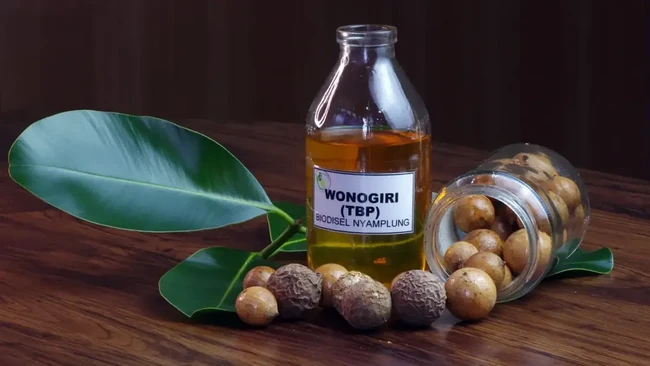
Jakarta – Indonesia’s National Research and Innovation Agency (BRIN) is developing innovations to utilise forest biomass as a source of biofuel to reduce dependence on crude oil imports. One of the commodities being researched is nyamplung (Calophyllum inophyllum), an Indonesian native species that represents a potential bioenergy source from forests.
BRIN’s research has covered aspects of seed production, intensive silvicultural techniques, and tree breeding to increase seed productivity, as well as improvements in oil yield and technology for processing crude oil into biofuel to meet technical and economic standards as an alternative to conventional fuel.
“Nyamplung oil, or Tamanu crude oil (TCO), has significant potential to be processed into biofuel or environmentally friendly fuel such as biokerosene, biodiesel, and bioavtur/sustainable aviation fuel (SAF),” said Budi Leksono, researcher at BRIN’s Applied Botany Research Centre, in a statement on Saturday, 28 February 2026.
According to Budi, this approach is not intended to exploit forests but to optimise biomass from science-based sustainable forest management systems. In addition to its high potential as non-edible oil biofuel feedstock and year-round fruiting, biofuel industry waste from nyamplung plants, such as fruit husks, seed cake, resin/gum, glycerol, and others, can be utilised or processed into high-value economic products such as activated charcoal and pellets with high calorific value, high-protein animal feed, biopharmaceuticals (herbal medicines and cosmetics), herbal soap, and so forth.
BRIN is also urging that research results do not stop at laboratory scale but are connected to policy and industry needs. “Biomass conversion technology has been extensively studied and proven to be technically feasible. The challenge is how to accelerate downstream development and ensure consistent policy support,” he explained.
In the context of reducing crude oil imports and strengthening the national energy mix, Budi noted that forest biomass innovation is considered strategic because it utilises abundant domestic resources, generates added economic value domestically, supports carbon emission reduction and clean energy transition commitments, and strengthens energy resilience based on biological resources towards national energy independence.
Budi added that Indonesia has significant renewable energy potential from tropical forest resources. “Indonesia actually does not lack energy. We simply have not yet optimally utilised the potential of forest biomass as a renewable energy source,” he said.
According to him, the development of forest biomass into biofuel is part of BRIN’s research and innovation agenda in the field of new and renewable energy. Through a multidisciplinary approach, BRIN develops innovations from upstream to downstream, covering aspects of cultivation of bioenergia-producing plants, productivity optimisation, and process engineering to convert into efficient and environmentally friendly liquid fuel.
The momentum of national energy transition represents an important opportunity to position biofuel based on forest plants as part of Indonesia’s energy roadmap. Through integrated research and innovation and collaboration between research institutions, government, and industry, BRIN aims to present sustainable energy solutions based on Indonesia’s biological advantages.
“Energy independence is realistic and a necessity. We have adequate resources and scientific capacity. What is needed is research consistency, innovation, and policy synergy. This also opens opportunities for Indonesia to become an oil producer or exporter once again – if previously we were a crude oil exporter, in the future it will be in the form of biofuel,” Budi concluded.