
This Is Why Trump Finally Extended the US-Iran Ceasefire
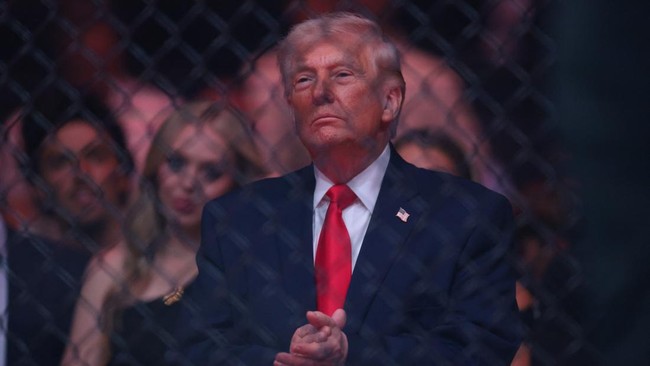
Jakarta, CNBC Indonesia - United States President Donald Trump held an impromptu meeting with his national security team at the White House on Tuesday afternoon local time. This occurred as Trump faced a crossroads in deciding whether to pursue military action or diplomacy against Iran, with the ceasefire deadline approaching.
Citing a report from CNN International on Wednesday (22/4/2026), the situation grew increasingly tense as Air Force Two, belonging to Vice President JD Vance, was already on the runway preparing to depart for Pakistan. However, the US government faced a major puzzle due to Iran’s complete silence on the points of the agreement previously sent.
Iran’s lack of response raised significant suspicions about the effectiveness of the planned direct meeting in Pakistan. High-ranking US officials, including Secretary of State Marco Rubio and CIA Director John Ratcliffe, continued to monitor the situation without any signs of communication from the opposing side.
Trump’s chief aides believe the main reason for Tehran’s silence is a severe split within Iran’s internal leadership. According to reports from Pakistani mediators, Iran is considered to lack consensus on its position regarding uranium enrichment, a crucial point in the peace talks.
This inconsistency was further exacerbated by the attitude of the new Supreme Leader, Mojtaba Khamenei, who chose to remain hidden. This is believed to have left Iranian officials confused, as they must guess instructions without specific guidance from their superior.
Despite the obstacles appearing very significant, one official stated there is still a small chance for the two countries to meet in the near future. However, Trump ultimately chose to extend the ceasefire for two weeks to avoid further military escalation, though without setting a definite end date.
Through a post on social media platform Truth Social, Trump stated that the Iranian government is currently in a very fractured condition. He appeared to still desire a diplomatic solution, reluctant to revive a conflict that he has long claimed was won by the United States.
However, these negotiations continue to hit a wall because Iran insists on the lifting of the blockade in the Strait of Hormuz as an absolute condition. Trump firmly rejected that demand before any final agreement is signed.
“We will not open that strait until we have a final agreement,” Trump said in an interview with CNBC on Tuesday morning.
This step to extend the ceasefire aims to give Iran time to unify its internal position under Khamenei’s approval. Nevertheless, the president’s advisers warned that this leniency could be exploited by Iran to stall for time in order to regroup their military strength.
Iran itself responded coolly to Trump’s diplomatic move and continued to show a confrontational attitude. They view the ceasefire extension as a meaningless step as long as the economic blockade persists.
“Trump’s ceasefire extension means nothing. The losing side cannot dictate terms. The continuation of the siege is no different from bombing and must be met with a military response,” stated Mahdi Mohammadi, adviser to Iranian Parliament Speaker Ghalibaf.
Trump himself continues to display high confidence that he can achieve a much better deal than in previous eras. He even boasted about his negotiating skills amid this complex war situation.
“What I think is that we will end up with a great deal. I think they have no choice. We have crippled their navy, their air force, and their leader, who, honestly, complicates things in one way,” Trump said.