
This is Why the 2026 Super El Niño Could Be Extremely Terrifying, the World is Anxious
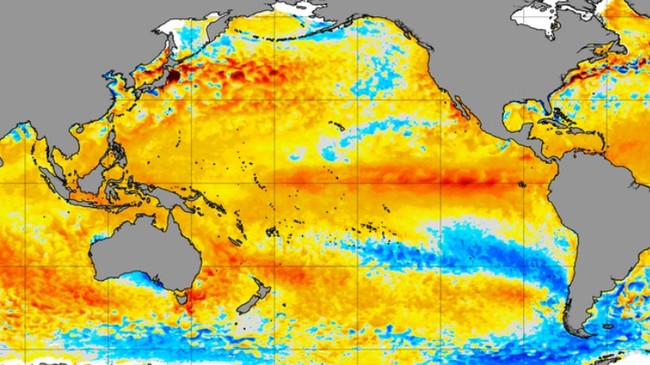
The world is once again confronted with the threat of an extreme climate phenomenon. El Niño is predicted to emerge in the coming months, with the potential to develop into a “super El Niño” that could trigger a surge in global temperatures and extreme weather across various parts of the world.
The US National Oceanic and Atmospheric Administration (NOAA) notes a 62% chance of El Niño’s appearance during the June to August period.
Even more concerning, there is about a one-third likelihood that this phenomenon will strengthen significantly by the end of the year.
In Indonesia, warnings have also been issued by the National Research and Innovation Agency (BRIN). BRIN has released predictions of extreme weather in the form of a Godzilla El Niño potentially striking Indonesia during the 2026 dry season. In response, agricultural observer Eliza Mardian from the Center of Reform on Economics (CORE) has urged vigilance against the impacts that could arise from this climate phenomenon, namely the potential rise in rice prices due to threats of domestic production disruptions.
This is because, she added, Indonesia’s agricultural structure remains highly vulnerable to climate change, particularly drought.
“Our agricultural structure is still heavily dependent on rainfall, with many rain-fed paddy fields, and the irrigation system is not yet fully capable of anticipating large-scale droughts,” Eliza told CNBC Indonesia on Thursday (26/3/2026).
However, the Meteorology, Climatology, and Geophysics Agency (BMKG) holds a different view. Current conditions actually give only a 15-20% chance of reaching super strong levels, or what is called Godzilla. Based on current calculations, the highest probability is only up to moderate levels.
If the super El Niño scenario occurs, the world could face major climate pressures again, even potentially exceeding the 2023-2024 episode, which was recorded as one of the hottest conditions in history.
What is “Super El Niño” and Why is it Dangerous?
Super El Niño is an extreme condition of the El Niño phenomenon, when sea surface temperatures in the Pacific Ocean rise far above normal for a sufficiently long period.
This phenomenon has the potential to push the Earth’s average temperature to levels never recorded before. In the context of already warming climate change, the presence of super El Niño could serve as an “additional trigger” that exacerbates the situation.
This means that if super El Niño occurs, severe droughts and floods could happen in various regions at the same time.
The impacts could be particularly felt in the agricultural sector. The risk of crop failures and livestock deaths becoming higher could lead to shortages of commodities, impacting food price surges.
High Uncertainty, Real Risks Remain
Although various weather models are increasingly pointing towards the emergence of El Niño, forecasters are not yet fully agreed on how strong this phenomenon will develop.
AccuWeather estimates the chance of super El Niño at around 15% until the end of the storm season in November. Meanwhile, NOAA assesses the chance of a strong El Niño at about 33% during the October to December period, but with a still high level of uncertainty.
This means that the worst-case scenario may not be certain to occur, but the risk is significant enough to warrant caution.