
This Is Why Indonesia Has Not Yet Built a Strategic Energy Reserve
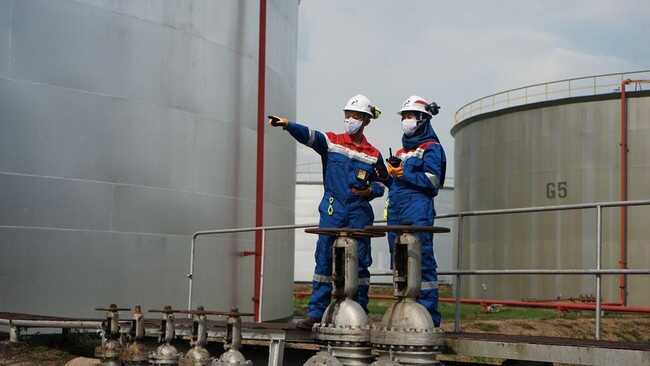
Jakarta, CNBC Indonesia – Indonesia to date apparently has not yet owned a strategic energy buffer reserve or Strategic Petroleum Reserve (SPR) as many developed countries do. This is partly because the government would need to allocate a very large budget to build such a facility.
Executive Director of the ReforMiner Institute, Komaidi Notonegoro, explained that building a strategic energy reserve requires a very large budget, even reaching tens of trillions of rupiah.
For example, to provide stockpiles of fuel for just one day, the budget needed is around Rp2.5 trillion to Rp3 trillion. If Indonesia wanted to hold energy stocks for 30 days, the funds required would be about Rp60 trillion to Rp90 trillion.
‘Right now we have 20-25 days of stock, but that stock is not owned by the state; it is the operational stock of a business entity whose inventory has not yet been sold, and for a business entity it’s heavy to let its money idle there for such a long period,’ Komaidi told CNBC Indonesia, quoted on Friday (6 March 2026).
In addition to the budget, building a strategic energy reserve involves other aspects such as the readiness of storage infrastructure and the state’s fiscal capacity. ‘And then, is the infrastructure ready or not? In this context, what is ideal for one country may not be the same as another,’ Komaidi said.
Separately, Bhima Yudhistira, Executive Director of the Center of Economic and Law Studies (CELIOS), assessed that Indonesia faces potential energy crises, especially if global conflicts or even world wars occur. He said this occurs because national energy resilience remains vulnerable due to heavy reliance on oil imports. Therefore when there is a disruption to global supply, the impact on domestic fuel availability can be felt immediately.
‘T Indonesia’s energy reserve is vulnerable. That is why an oil crisis can trigger a shortage of fuel stocks,’ Bhima told CNBC Indonesia.
Nevertheless, Bhima argued that the solution of increasing energy reserves to three months is not the answer to strengthening energy resilience. After all, Indonesia remains heavily dependent on oil imports. ‘The root problem is that we import oil and are vulnerable to price volatility. The option is instead to accelerate electrification in the transport system and the energy transition,’ he said.