
This is the Reason Purbaya Rejects IMF Debt Offer
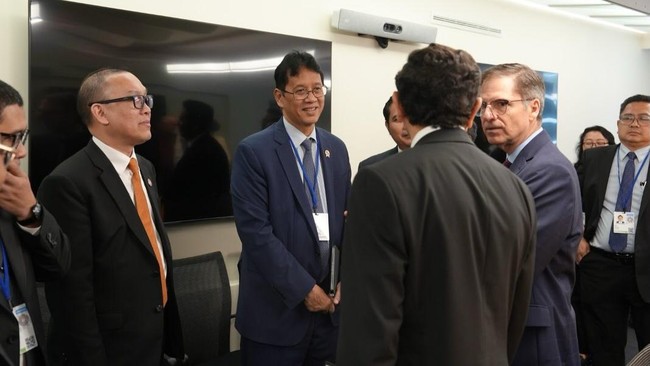
Jakarta, CNBC Indonesia - Finance Minister Purbaya Yudhi Sadewa has rejected an offer of debt financing assistance from the International Monetary Fund (IMF) amid global economic shocks that are pressuring many countries at present.
The offer was conveyed during a meeting between the government and IMF Managing Director Kristalina Georgieva in Washington DC, United States, last week (14/6).
To the IMF, Purbaya stated that the State Revenue and Expenditure Budget (APBN) remains sufficiently strong. This strength is partly supported by the Budget Surplus (SAL) amounting to Rp420 trillion.
“I asked them if there is any specific policy from the IMF to help reduce uncertainty. She said the IMF does not have the authority to do that, but they provide assistance funds for countries that need it. Of course, Indonesia does not need it because our budget is quite good and we still have a large buffer, namely Rp420 trillion,” Purbaya said in his official statement, quoted on Monday (20/4/2026).
The IMF even questioned how Indonesia manages to remain solid amid the not-so-easy situation. Purbaya responded that this resilience is the result of policy changes implemented by the government since last year.
These policy reforms are considered to have made Indonesia’s economy more prepared to face external shocks.
“Why can we withstand the global situation like this. But I explained that we have indeed changed policies since last year, and it seems clear. So we are experiencing acceleration when shocks come from global uncertainty, from high oil prices. Thus, we can absorb the shocks that occur,” he said.
The IMF predicts that at least a dozen countries will seek new loan programmes to address the surge in energy prices and supply chain disruptions caused by the war in the Middle East, with several sub-Saharan African countries requesting assistance.
Kristalina warned of deepening supply disruptions due to the closure of the Strait of Hormuz even if the conflict ends quickly and urged countries to take steps to reduce their fuel consumption.
“Disruptions due to war could trigger large new demands for financial support, either in the form of new loans or additions to existing programmes,” Georgieva said in a press conference during the IMF and World Bank Spring Meetings in Washington, as quoted by Reuters, on Thursday (16/4/2026).
According to her, disruptions due to war could trigger new demands of US$20 billion to US$50 billion in financial support that could include new loans and additions to some of the 39 existing country financing programmes from the global lender.
Unfortunately, she did not mention specific countries that have requested assistance, although Kristalina said the IMF is currently not discussing an addition of an US$8 billion loan programme for Egypt despite the war impacting its economy.