
This Is the Astronomical Fee for Ships Wanting to Cross the Strait of Hormuz
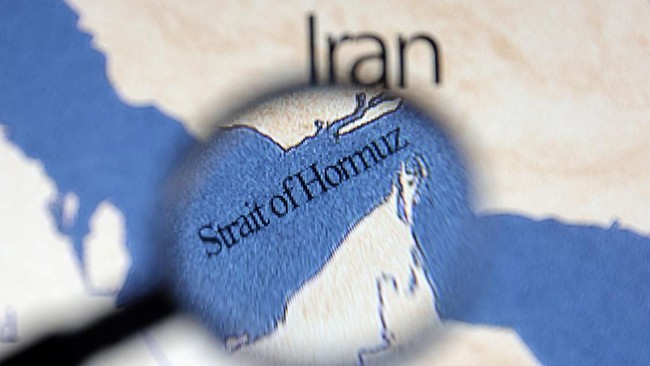
The de facto blockade of the Strait of Hormuz by Iran in response to the United States-Israel war has caused one of the worst energy crises in decades. It is so severe that experts warn of the potential for a global recession.
Since the US and Israel launched the war on 28 February, Tehran has steadfastly blocked the Strait of Hormuz - obstructing the route that normally carries 20 million barrels of oil per day.
The Strait of Hormuz plays a crucial role in global economic stability. Tensions in this route can trigger inflation and have significant impacts on many countries that depend on the strait.
Citing Al Jazeera, nearly 2,000 ships are stranded near the narrow strait, located between Iran to the north and Oman and the United Arab Emirates to the south.
On Thursday, Iranian media reported that parliament is attempting to pass a law to collect toll fees from ships crossing Hormuz.
“According to this plan, Iran must collect fees to ensure the security of ships passing through the Strait of Hormuz,” said an official, as quoted by Al Jazeera on Saturday (28/3/2026).
“This is entirely reasonable. Just like in other corridors, when goods pass through a country, customs duties are paid. The Strait of Hormuz is also a corridor. We ensure its security, and it is reasonable for ships and tankers to pay customs duties to us,” he added.
The closure of the Strait of Hormuz has caused global oil prices to soar above US$100 per barrel - a surge of around 40% from pre-war levels - forcing countries, particularly in Asia, to ration fuel and cut industrial production. Affected countries have lobbied Iran to allow ships to pass through the strait, which is the only route for exporting oil and gas from most Gulf producers.
Iran has demanded international recognition of its right to exercise authority over the Strait of Hormuz as one of five conditions to end the war.
On Sunday, Iranian parliament member Alaeddin Boroujerdi told the UK-based Persian-language satellite TV channel Iran International that the country has charged US$2 million or approximately Rp33 billion to several ships to pass through the strait.
“Now, because the war has costs, of course, we must do this and collect transit fees from ships passing through the Strait of Hormuz,” he said.
Meanwhile, Secretary-General of the International Maritime Organisation (IMO), Arsenio Dominguez, told Al Jazeera that currently nearly 2,000 ships are waiting on both sides of the strait to sail through it.
The maritime intelligence service Windward said this buildup indicates that “many operators have chosen to hold positions outside Hormuz rather than immediately committing to long-distance route diversions.”