
This Is How the Tradition of Distributing Money During Eid Began
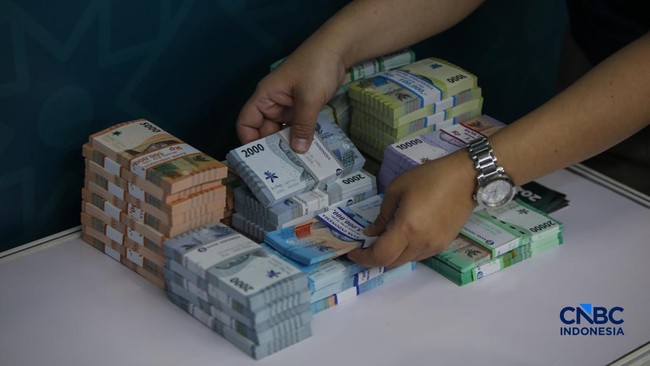
The distribution of money during Eid has become a tradition in Indonesian society. Usually, the money is given to relatives, especially children. Some also call it ‘salam tempel’. So, where did the origins of this habit come from?
Based on various sources, this tradition bears similarities to the Chinese custom of distributing angpao during Chinese New Year. The money is placed in red envelopes featuring Chinese script and distributed to relatives, particularly those who are unmarried or still young.
It is possible that Indonesian Muslims were ‘influenced’ by this Chinese tradition. Considering the long-standing cultural relations between the two groups. Sometimes, influences from other cultures are absorbed unconsciously, leading to acculturation and assimilation.
Nevertheless, the tradition of distributing money also occurred in the Middle East.
Citing Britannica, during the Fatimid Dynasty, which existed from 909 to 1107 AD, there was a tradition of distributing money, clothing, or similar items to children during Eid al-Fitr. Meanwhile, under Ottoman rule from the 600s to 1300s AD, something similar happened. In fact, the giving of gifts had entirely become cash.
In Indonesia, it is not known exactly when this habit began. However, the giving of cash to relatives referred to as Tunjangan Hari Raya (THR) can be confirmed to have started after the 1950s.
This is because, in that year, the government issued a policy in the form of Holiday Allowance to help workers face Eid al-Fitr. After this regulation, THR became inseparable from the arrival of Eid.
However, in the case of Jakarta, Jan Luiten van Zanden in Indonesian Economy 1800-2010 (2011) notes that the prices of basic necessities in the capital surged by hundreds of percent in 1959, reaching 325% of the initial prices in 1950.
During this difficult situation, one group that suffered was the working class, who were often paid low wages. They were in a precarious position due to being in the poverty zone and unable to afford basic necessities.
The situation worsened when Eid arrived. Prices of basic necessities skyrocketed further, while their income did not increase. As a result, they were unable to celebrate the day of victory joyfully and remained grappling with poverty.
Such conditions then gave birth to a policy requiring companies to provide double income outside of monthly salaries, or known as Tunjangan Hari Raya (THR).
Some companies began voluntarily giving THR to workers. Because it was not mandatory, this led to new problems and widened inequalities.
Therefore, as written in the book Politics of Labour in the Liberal Democracy Era of the 1950s (2015), the Sentral Organisasi Buruh Seluruh Indonesia (SOBSI) demanded that the government create an official policy regarding the provision of THR.
In various forums, SOBSI seriously advocated for a government regulation on the obligation of companies to provide THR equivalent to one month’s salary to help workers in need ahead of Eid. SOBSI was established on 29 November 1946 in Yogyakarta. From the beginning, SOBSI fought for the welfare of workers in daily life. In addition, SOBSI also had a mission to eradicate poverty and anti-corruption.
In its development, SOBSI operated based on Marxist theory. And because of this, the labour organisation aligned with the Indonesian Communist Party (PKI). Many PKI members also became SOBSI members. Not surprisingly, SOBSI was considered one of the ‘bases’ of the PKI. As the number one labour organisation in Indonesia during the Old Order era, one of the important issues SOBSI fought for was the provision of THR to workers.
However, SOBSI’s role ended in 1966. President Suharto, who was anti-communist, also dissolved SOBSI because it was seen as close to the PKI. Many of its members were arrested and detained without court evidence.
After that event, there was no longer a labour organisation as large as SOBSI, which had 2 million members.