
This is How Indonesia Keeps Inflation Below 3.5% Until 2027 Amid Global Turmoil
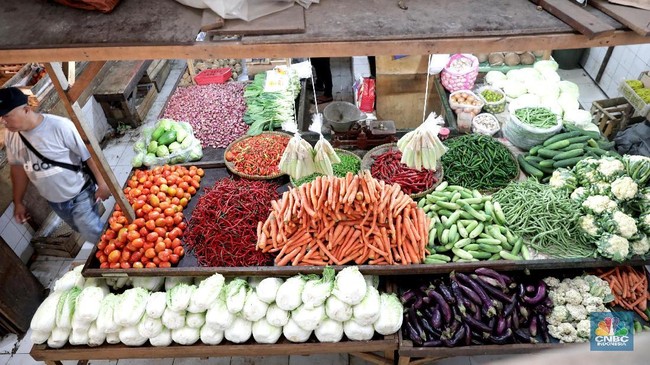
Jakarta, CNBC Indonesia - The Indonesian government assures that price pressures will be kept low until 2027, even as global supply chains are disrupted and amid the effects of conflict in the Middle East between Iran, the United States, and Israel.
In the initial draft document of the 2027 Government Work Plan (RKP), the government confirms it will continue to maintain the inflation target within the range of 2.5% plus or minus 1%, or below 3.5%.
“Monetary policy in 2027 will be directed to keep inflation within the target range of 2.5±1.0 percent,” quoted from the draft RKP 2027 document prepared by the Ministry of National Development Planning/Bappenas, Friday (8/5/2026).
Based on the RKP 2027, inflation control is focused on four agendas. First, stabilising supply and prices through food assistance, affordable food initiatives, and evaluation of maximum retail prices for food commodities.
The second agenda is increasing domestic production through the development of food and horticulture zones, assistance for production facilities and infrastructure, processing and storage of food products, as well as strengthening central and regional food reserves.
The third agenda is ensuring smooth distribution through improved inter-regional connectivity and expanded inter-regional cooperation.
Fourth, improving the quality and integration of food data, strengthening planning, and coordinating government-set price policies appropriately to curb inflation, maintain purchasing power, and support sustainable growth.
This inflation rate serves as a foundation for maintaining the quality of Indonesia’s economic growth, targeted at 5.9% to 7.5% as outlined in the RKP 2027.
This inflation target serves as a benchmark for the government to maintain price stability and public purchasing power, at a time when commodity price fluctuations are high due to war.
In the RKP 2027 document, the escalation of such geopolitical conflicts increases the risk of rising energy and commodity prices.
Crude oil prices in mid-April 2026 were around US$100 per barrel, or up 76.43% year-to-date (YtD), thereby increasing the risk of imported inflation, constraining monetary easing space, and driving capital shifts to safe-haven assets.
Volatility is also occurring in coal and crude palm oil (CPO), two major Indonesian export commodities, which have risen 23.95% and 12.98% year-to-date, respectively.