
This Country Becomes Victim of US-Israel War vs Iran, in Dire Straits
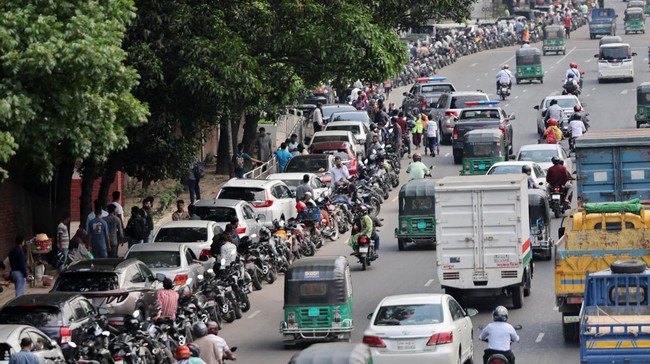
The Cyclone Ditwah disaster continues to leave deep scars on Sri Lanka’s residents. This has been exacerbated by the Iran-United States war.
According to Reuters, one of the disaster’s victims, Indrani Ravichandran and her family, are forced to live in the only remaining part of their house after floods destroyed their village.
The cyclone that struck last November brought unprecedented impacts to the country. Over three days, Sri Lanka’s central highlands were lashed with up to 500 mm of rain, triggering massive floods and landslides that swept away homes and settlements.
The humanitarian toll was immense, with 643 people killed and 173 others missing. Indrani recounted how she and her family had to flee in the dark as floodwaters swept through part of their home in Kandy District.
She said the water rose so quickly that they barely had time to save anything. In the darkness, heavy rain, and slippery terrain, they also feared stepping on venomous creatures but fortunately survived.
The flood damage is even said to surpass the infrastructure impacts of the 2004 Indian Ocean Tsunami. Although the death toll was not as high as the tsunami, the scale of physical destruction is considered more severe, according to economist Ganeshan Wignaraja.
Amid recovery efforts, Sri Lanka now faces additional pressure from the conflict between the United States, Israel, and Iran. The global repercussions of the war come at a very inopportune time for Sri Lanka’s economy, which has not yet recovered from the 2022 crisis.
The country, once known for its economic progress, is now confronting what is termed a “triple shock”. These pressures stem from the flooding disaster, surging energy prices, and the threat of drought in some regions.
In recent weeks, the government has been forced to implement fuel rationing and price hikes. Additionally, a four-day workweek has been introduced, electricity tariffs raised by up to 40%, and water and power outages enforced.
Fuel and cooking gas shortages have triggered panic buying among the public. The situation echoes the 2022 crisis when the country ran out of foreign reserves and defaulted on external debt.
That crisis previously sparked massive protests that led to the ousting of President Gotabaya Rajapaksa. Now, there are fears that Sri Lanka could slide back into economic crisis.
Despite the government previously taking various recovery measures, such as removing electricity subsidies and raising income tax to 36%, conditions had temporarily improved before being hit by Cyclone Ditwah.
According to the World Bank, the disaster affected nearly two million people and 500,000 families across districts. Economic activities, basic services, and livelihoods have been disrupted.
Total losses are estimated at US$4 billion, or about 4% of Sri Lanka’s GDP, according to the United Nations. President Anura Kumara Dissanayake has even called it the worst economic disaster in the country’s history.
The government has distributed aid, including 50,000 rupees for partial home repairs. It has also promised up to 5 million rupees for completely destroyed homes and around 1 million rupees for families of the deceased.
However, more than 165,000 people remain displaced and awaiting permanent housing assistance. Their situation is further complicated by economic pressures from the ongoing global conflict.
Reconstruction funding is still far from sufficient, with the government having received only about US$750 million, or one-fifth of the needs. The international aid response is also considered slower than during the 2004 tsunami.
India was the quickest to provide assistance through “Operation Sagar Bandhu”. India deployed warships, helicopters, over 1,000 tons of logistical aid, and around US$450 million in funding.
In contrast, China provided limited aid of less than US$2 million. The Sri Lankan government has requested additional support from Beijing to rebuild damaged infrastructure.
The government claims that most homes with minor damage have received repair assistance. However, delays in compensation for those who lost homes and businesses entirely are acknowledged.
Disaster management officials state that the government is preparing safe land for rebuilding. The focus is on reconstructing with higher disaster-resilient standards for the future.
Sri Lanka’s foreign reserves currently stand at around US$7 billion. Although deemed sufficient for the short term, economists warn of rising risks if the Middle East conflict’s impacts persist.
Additionally, Sri Lanka faces the threat of losing foreign exchange income from migrant worker remittances. Last year, the country received about US$7 billion from workers abroad, mainly in the Gulf region.
With these various challenges, the government’s handling of reconstruction and economic stability will be a major test. This will also determine the future direction of President Dissanayake’s leadership.