
This Company Has Existed Since the Time of Prophet Muhammad, Not in Arabia
In the modern era, numerous companies drive the economy as key instruments of growth. However, entrepreneurial activities have existed since ancient times, even during the era of the prophets.
This company is not located in the prophet’s birthplace but in Japan, a leading Asian nation renowned as a hub for many centuries-old enterprises.
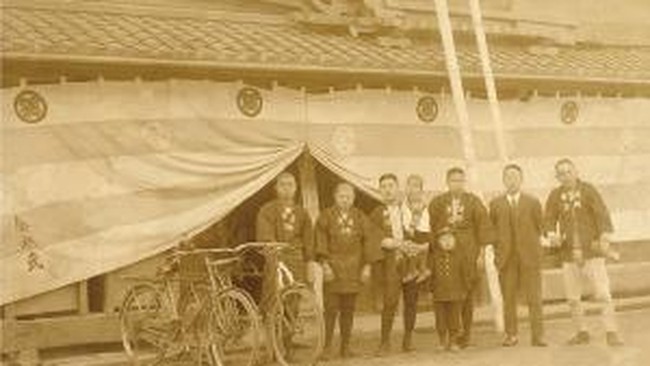
Among these venerable firms, Kongō Gumi stands out. This Osaka-based construction company is regarded as one of the world’s oldest businesses, with a history spanning over 14 centuries.
For more than 1,400 years, Kongō Gumi has weathered storms, navigated ups and downs, and remained a beacon and testament to the enduring strength of tradition and innovation.
Initially established as a construction firm specialising in Buddhist temples, Kongō Gumi evolved into a broader construction enterprise.
It has built numerous magnificent temples, including the Hōryū-ji temple complex (607 AD), Koyasan (816 AD), and Osaka Castle (1583 AD).
Kongō Gumi was founded by a family of Korean wood craftsmen who arrived in Japan to assist in constructing Shitenno-ji, one of Japan’s oldest Buddhist temples. The company was established in 578 AD, over 1,448 years ago.
The origins of Kongō Gumi trace back to 578 AD, when Prince Shōtoku of the Japanese Imperial Court commissioned it.
Marking the Dominance of Buddhism
The founding of Kongō Gumi coincided with the establishment of Buddhism as the dominant religion in Japan during the Asuka period (592-710 AD). This era saw increased demand for temple construction.
At that time, in Mecca, Saudi Arabia, a future prophet named Muhammad was estimated to be around eight years old. It is believed that Kongō Gumi began operations when Prophet Muhammad was seven or eight years old, meaning the company started its business concurrently with the childhood of Prophet Muhammad SAW.
It should be noted that Kongō Gumi positioned its business as a specialist in constructing religious buildings.
This business model endured for centuries, from the time Prophet Muhammad SAW received revelations, migrated to Medina, passed away, until Islam became one of the world’s largest religions. The business also witnessed the feudal era, the Meiji Restoration, world wars, and the modern economy.
Surviving 14 Centuries
Kongō Gumi’s survival for over 14 centuries is no accident. It results from a combination of cultural, business, and institutional factors that enabled this Japanese temple construction firm to endure various changes over time.
The primary foundation of its sustainability lies in preserved cultural heritage values, trust, and reputation. The sector driven by this business holds high spiritual and historical identity value in Japan. Demand for maintaining religious buildings remains relatively stable due to its ties to tradition and cultural identity.
Additionally, Kongō Gumi has maintained quality and credibility in its executions. It preserves woodworking techniques across generations, using joinery methods without nails.
Like many other old Japanese businesses, Kongō Gumi relies on family business strengths. It is passed down with a long-term orientation and tends to make cautious business decisions. Although family-run, leaders are selected based on competence to ensure leadership quality.
Beyond internal factors, Kongō Gumi’s continuity is supported by external backing and adaptability. The Japanese government is known for actively preserving cultural buildings like temples and historical sites, indirectly sustaining demand for traditional construction.
On the other hand, facing financial pressures in the early 2000s, Kongō Gumi received support from Takamatsu Corp., an Osaka-based construction conglomerate, which stepped in to help sustain the historic company.
In 2006, Kongō Gumi officially became a wholly-owned subsidiary of Takamatsu, yet it retains its name, crafting traditions, and temple construction specialisation. Currently, the company employs around 100 miyadaiku (traditional temple carpenters) and still involves one family member as a symbol of family heritage continuity.
The Ups and Downs of Kongō Gumi
The company has faced various challenges throughout its history. The Heian period (794-1185) brought political turmoil and power struggles that disrupted stability in Japan and affected the construction industry.
Moreover, during the Kamakura period (1185-1333), Japan experienced social and economic changes, including the rise of the samurai class, requiring Kongō Gumi to adjust its services to meet evolving societal needs.
Natural disasters, such as earthquakes and fires, were common threats to projects and company infrastructure. These challenges not only demanded immediate recovery efforts but also the development of innovative techniques to withstand future disasters.
Additionally, economic fluctuations and shifts in market demand posed further obstacles for Kongō Gumi, forcing the company to adapt strategies to maintain a steady project pipeline.
The company has continually innovated, including adopting new materials and techniques during the Meiji period (1868-1912).
This era marked a turning point for Japan becoming a modern nation. Japan underwent rapid modernisation and westernisation. Recognising the need to integrate new technologies, Kongō Gumi began utilising modern construction materials like bricks, tiles, and steel frames, alongside traditional carpentry methods.
The flexibility of its leadership