
This Anomaly Proves the Super Rich Differ from the Middle Class
Jakarta, CNBC Indonesia - The slowdown in the residential property market apparently does not apply to the wealthy elite. While sales of middle- to lower-end homes are sluggish, super-premium houses in elite areas continue to attract buyers.
Bank Indonesia recorded a 25.67% year-on-year drop in primary residential property sales in the first quarter of 2026. The weakness is particularly evident in the middle-segment homes, which are starting to feel the pressure from reduced purchasing power and heightened consumer caution.
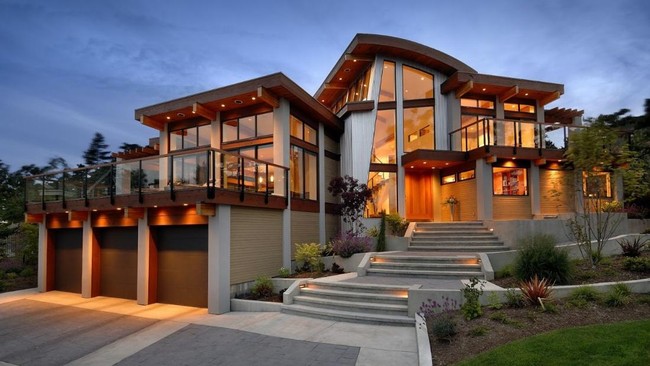
However, a different picture emerges in premium areas such as BSD and Gading Serpong. Homes with fantastically high prices remain popular amid an economy that has not fully recovered.
“If we’re talking about Banten, it’s a bit anomalous. There’s an upper segment in BSD and Gading Serpong where prices are in the tens of billions to double digits,” said Vemby, Chairman of the Banten Provincial Chapter of AREBI, to CNBC Indonesia on Monday (11/5/2026).
This phenomenon makes the upper-class property market appear to move on its own amid the general slump in the residential sector. Several luxury housing projects are even said to have sold out in a short time after being marketed.
“At Nava Park BSD, even up to Rp 30 billion, Rp 80 billion. Those sell out quickly, sir,” he continued.
According to Vemby, one factor making premium homes remain in demand is the very limited number of units. Developers intentionally release products exclusively to maintain value and market appeal.
“The units aren’t many, at most a dozen or 20. So it’s indeed limited and special,” he said.
He explained that buyers of premium homes usually wait for specific projects well in advance. Therefore, when units start being marketed, transactions can move quickly even though the economy is not fully stable.
“But those kinds of items are released little by little, sir, maybe twice a year at most sometimes. Well, perhaps they’re eagerly awaited, so there’s a niche market,” said Vemby.
This situation also shows that the current economic turbulence is more felt by the middle class than by upper-class consumers. The premium housing market is still supported by buyers with strong liquidity, making it less sensitive to economic slowdowns.
“We were also surprised; in this kind of market, the money is always there, and purchases keep going,” he added.
In contrast to the premium segment, the middle-end housing market is experiencing a noticeable slowdown. Consumers now tend to be more calculating before buying property due to economic pressures and high living costs.
“The other segments, middle and lower, have dropped quite a bit. Especially the middle segment that’s hit the hardest,” said Vemby.
Additionally, property buying patterns have started to change in recent years. Investors who were once active in snapping up properties are gradually decreasing, replaced by buyers for actual housing needs.
“In the past, there were many investors. Now it’s more end-users, so transactions aren’t as fast as before,” he said.